The Yankees Bulk up the Offense With Luis García Jr.
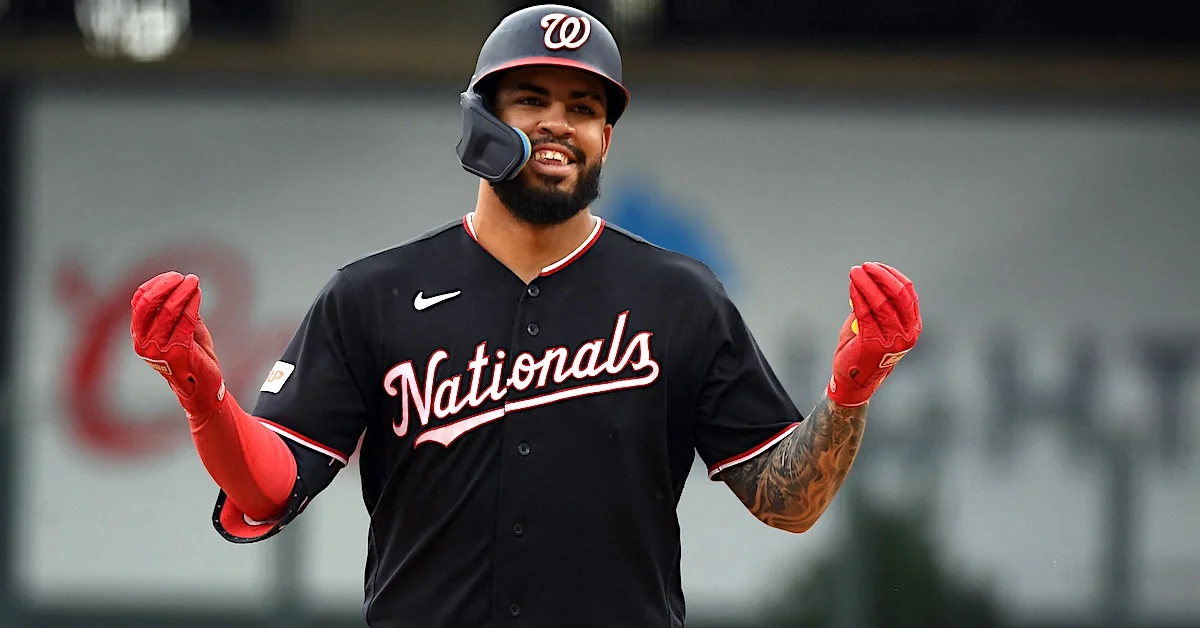
The Yankees acquired another bat for their offense on Sunday, bringing in first baseman/second baseman Luis García Jr. in return for pitchers Jack Cebert, Ben Grable, Yovanny Cruz, and Jake Bird. Scratched from Sunday’s lineup due to the strong possibility of a trade being completed, García has had a breakout season, at least when it comes to power, hitting .283/.313/.560 with 23 home runs in 104 games, for a wRC+ of 134 and 2.2 WAR.
The offense has been a real sore spot for New York lately, so making an addition here was a primary concern for the club. When the Yankees woke up for an off-day on the morning of June 1, they ranked second in baseball in wRC+ and fourth overall in runs scored. Aaron Judge had gone 1-for-4 with two RBI the night before, and that was the last time we saw him in a game. Before first pitch that day, the three-time MVP was removed from the lineup due to lingering shoulder soreness. Later, after imaging revealed a stress fracture in Judge’s right rib cage, he was placed on the IL.
Since losing Judge, the Yankees have had the worst wRC+ in baseball, at 87, and have ranked 26th in the league in runs scored. That they have still managed to play barely winning baseball, going 27-26 since then, is thanks to their elite pitching. Crunching some numbers, if the Yankees had merely had a league-average pitching staff over the last two months, they would have about six fewer wins right now, which is basically their entire cushion in the wild card race.
Now, it would be exaggerating things to say that Judge’s absence is responsible for all of this missing offense, since one player can only do so much in baseball, but his injury is still a major factor here. As I’ve mentioned previously, most of the Yankees’ disaster scenarios in the preseason ZiPS simulations involved losing Judge for some or all of the 2026 season.
There’s no official timetable for Judge’s return as we head into deadline day, and with All-Star outfielder Cody Bellinger now out until at least early September with a hamstring strain — not to mention the even-longer absence of Giancarlo Stanton with a right calf strain — the Yankees simply do not have the luxury of waiting for their big bats to return if they’re serious about running down the Rays in the AL East.
Nobody will confuse García Jr. with a superstar, but he also might end up being the best offensive player moved at this trade deadline. In Washington, ZiPS believed García was due for some regression (as all of the projection systems did), expecting him to post a .273/.309/.467, 110 wRC+ line for the rest of the season. However, ZiPS sees García’s left-handed power bat as being particularly well-suited for Yankee Stadium, bumping that projection up to .270/.308/.487 (117 wRC+). ZiPS forecasts similar numbers from him in 2027.
The immediate effect of the acquisition is fewer matchups against right-handed pitching for Paul Goldschmidt, who is slashing .201/.232/.349, for a 59 wRC+, when facing righties this year, compared to a 178 mark against lefties. Now 38, the seven-time All-Star has not been a productive batter against same-handed pitching for some time; the last time he even put up a .700 OPS against righties was in 2023. García has generally been protected from facing lefties, only starting in 12 of Washington’s 37 games against southpaws in 2026. With García probably the better defensive first baseman, Ben Rice is free to stick as the team’s full-time DH for the time being.
Speaking of defense, García has been a dreadful second baseman in recent years, which is why the Nationals moved him to first base this season. But his second base experience at least gives the Yankees some additional options, especially when Judge, Bellinger, and Stanton get back into the lineup. In this scenario, perhaps, García could play some second base, with Jazz Chisholm Jr. sliding over to third, where the incumbent third baseman, Ryan McMahon, has struggled offensively this year.
It’s not hard to see why Washington decided to trade García, one of the few constants on the roster during this long-term rebuilding phase. He’s still young, but he has only one year of club control left after this one, meaning the Nationals did not consider him to be part of their core the way they do James Wood. García is a good source of power, but he has never been a high-on-base guy, and he can hardly be called a foundational talent. For a team like Washington that is really looking for pitching, the opportunity to acquire a quartet of arms was hard to resist.
| Year | BA | OBP | SLG | AB | R | H | 2B | 3B | HR | RBI | BB | SO | SB | OPS+ | WAR |
|---|---|---|---|---|---|---|---|---|---|---|---|---|---|---|---|
| 2027 | .267 | .306 | .480 | 510 | 75 | 136 | 25 | 3 | 26 | 108 | 31 | 80 | 8 | 116 | 2.1 |
Back in March, Jack Cebert was barely on the radar for the Yankees, and we ranked him 27th among their prospects. My colleague Eric Longenhagen has described the 24-year-old Cebert as maybe the biggest riser in the New York system this year. He’s a well-built hurler who throws strikes and has good breaking pitches, but still lacks an offspeed weapon. His raw numbers aren’t super impressive, but he does miss bats, and he’s improved as he’s gotten more experience at Double-A. After allowing a home run in each of his first eight starts for Double-A Somerset, he hasn’t given up any in his five starts since. Eric now thinks of Cebert as a 40+ FV prospect who “already looks like a backend starter.”
I’m surprised at how solid Cebert’s ZiPS projection in Washington is already; he could very easily make the 2027 rotation if the Nats project him similarly.
| Year | W | L | ERA | G | GS | IP | H | ER | HR | BB | SO | ERA+ | WAR |
|---|---|---|---|---|---|---|---|---|---|---|---|---|---|
| 2027 | 5 | 6 | 4.49 | 23 | 20 | 116.3 | 117 | 58 | 16 | 38 | 99 | 92 | 1.2 |
| 2028 | 5 | 6 | 4.29 | 22 | 19 | 113.3 | 110 | 54 | 14 | 36 | 97 | 96 | 1.4 |
| 2029 | 5 | 5 | 4.17 | 21 | 18 | 112.3 | 109 | 52 | 14 | 34 | 96 | 99 | 1.6 |
| 2030 | 5 | 5 | 4.09 | 21 | 18 | 110.0 | 105 | 50 | 13 | 33 | 94 | 101 | 1.6 |
| 2031 | 5 | 5 | 4.09 | 21 | 18 | 110.0 | 106 | 50 | 13 | 34 | 93 | 101 | 1.6 |
| 2032 | 5 | 5 | 4.15 | 20 | 17 | 106.3 | 103 | 49 | 12 | 33 | 89 | 100 | 1.5 |
| 2033 | 5 | 5 | 4.12 | 19 | 16 | 102.7 | 100 | 47 | 12 | 32 | 85 | 100 | 1.4 |
The lone current big leaguer in this deal is Yovanny Cruz, a Cubs prospect way back from the before COVID times. He walked too many batters, then suffered a spate of injuries that cost him the entire 2021 season and parts of several seasons since. He’s bounced around, signed by the Red Sox, Padres, and then the Yankees. He still throws a 100-mph heater with a splitter and slider that can reach the low 90s. Cruz, who turns 27 later this month, earned a call-up after striking out 13 batters per nine innings in Triple-A while keeping his walk rate within a respectable range. The Nats need arms in the bullpen, and he’s become a rather interesting one. Like Cebert, ZiPS sees Cruz as already playable in Washington.
| Year | W | L | ERA | G | GS | IP | H | ER | HR | BB | SO | ERA+ | WAR |
|---|---|---|---|---|---|---|---|---|---|---|---|---|---|
| 2027 | 6 | 7 | 4.01 | 50 | 0 | 60.7 | 50 | 27 | 7 | 26 | 75 | 103 | 0.3 |
| 2028 | 6 | 6 | 3.92 | 49 | 0 | 59.7 | 49 | 26 | 7 | 25 | 73 | 105 | 0.4 |
| 2029 | 6 | 6 | 3.92 | 48 | 0 | 59.7 | 49 | 26 | 7 | 24 | 72 | 105 | 0.4 |
| 2030 | 6 | 6 | 4.01 | 48 | 0 | 58.3 | 48 | 26 | 6 | 24 | 69 | 103 | 0.4 |
| 2031 | 6 | 6 | 4.08 | 48 | 0 | 57.3 | 48 | 26 | 6 | 24 | 67 | 101 | 0.3 |
| 2032 | 6 | 5 | 4.14 | 46 | 0 | 54.3 | 47 | 25 | 6 | 23 | 62 | 100 | 0.2 |
Ben Grable dropped to the 11th round in last year’s draft because of a couple of elbow surgeries. Exclusively used by the Yankees in relief, he’s been extremely effective at two levels. Grable has gained velocity since he was drafted, and his fastball now sits 94-97 with a ton of movement. Eric doesn’t use the term “monster pitch” to describe just any offering, but he did describe Grable’s heater as such. Alas, the 24-year-old is still trying to figure out his secondary pitches.
| Year | W | L | ERA | G | GS | IP | H | ER | HR | BB | SO | ERA+ | WAR |
|---|---|---|---|---|---|---|---|---|---|---|---|---|---|
| 2027 | 2 | 3 | 4.37 | 52 | 0 | 47.3 | 43 | 23 | 7 | 18 | 48 | 95 | 0.0 |
| 2028 | 2 | 3 | 4.24 | 55 | 0 | 51.0 | 44 | 24 | 6 | 19 | 51 | 98 | 0.2 |
| 2029 | 3 | 2 | 4.08 | 56 | 0 | 53.0 | 46 | 24 | 6 | 19 | 53 | 101 | 0.2 |
| 2030 | 3 | 2 | 4.02 | 58 | 0 | 53.7 | 46 | 24 | 6 | 19 | 53 | 103 | 0.3 |
| 2031 | 3 | 2 | 4.02 | 58 | 0 | 53.7 | 47 | 24 | 6 | 19 | 53 | 103 | 0.3 |
| 2032 | 3 | 2 | 4.08 | 58 | 0 | 53.0 | 47 | 24 | 6 | 19 | 52 | 101 | 0.3 |
Also joining the Nationals is a more familiar name, Jake Bird, who is long past his prospect days. Bird had a moment with the Rockies a few years ago but has since alternated between bad and inconsistent seasons. I liked the trade that brought him to New York a year ago, but he’s been downright lousy in Yankee pinstripes, and has spent a good chunk of his time with the franchise pitching for Triple-A Scranton/Wilkes-Barre. His secondary numbers aren’t as awful, with a high BABIP being the main culprit in bloating his ERA, so the expectation here is that he’ll eat up some innings in a relatively low-leverage middle-relief role for the Nats over the next couple of years.
| Year | W | L | ERA | G | GS | IP | H | ER | HR | BB | SO | ERA+ | WAR |
|---|---|---|---|---|---|---|---|---|---|---|---|---|---|
| 2027 | 2 | 3 | 3.88 | 56 | 0 | 60.3 | 55 | 26 | 6 | 22 | 65 | 107 | 0.4 |
| 2028 | 2 | 2 | 4.13 | 53 | 0 | 56.7 | 52 | 26 | 6 | 21 | 59 | 100 | 0.3 |
In summation, the Yankees got more than a year of a player whose bat should play well in Yankee Stadium and lengthen their lineup a bit, while the Nationals received some interesting pitchers who may be able to help quickly. Both teams picked up pieces they sorely needed, without doing much, if any, damage to their futures. Maybe that’s boring, but it makes for a good trade.