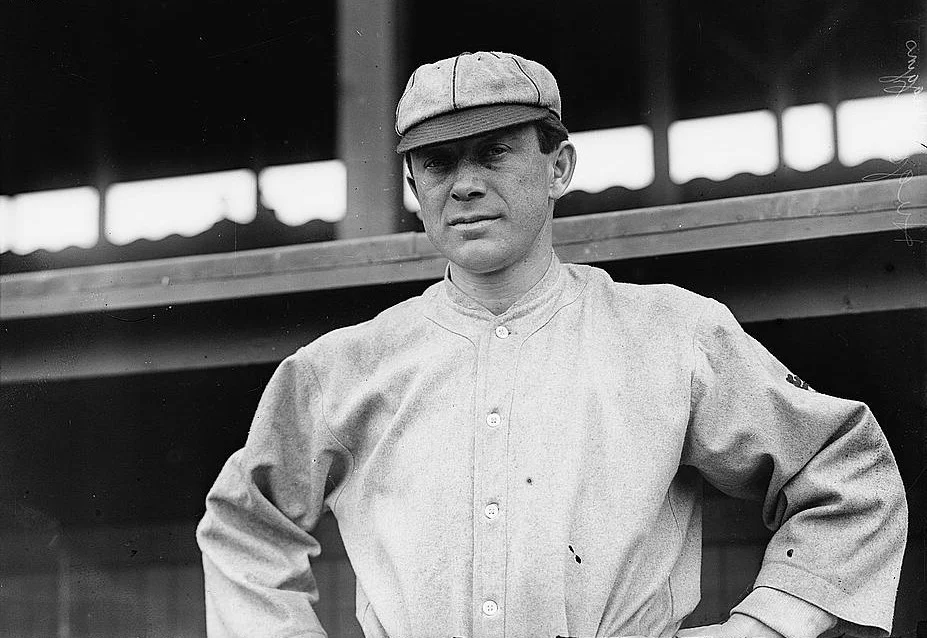
One of the most emotionally instructive moments in postseason history won’t be found among Reggie Jackson’s three home runs, Kirk Gibson’s shot off of Dennis Eckersley, Joe Carter’s Series-ending walk-off, and other “thrill of victory/agony of defeat” moments but a relationship-breaking interaction between New York Yankees manager Miller Huggins and his pitcher Bullet Joe Bush in the fatal eighth inning of Game 5 of the 1922 World Series. Bush humiliated Huggins, simultaneously disillusioning him about his relationship to his players, and Huggins never got over it. “Any ballplayers who played for me on either the Cardinals or Yankees could come to me if he were in need and I would give him a helping hand,” Huggins once said. “I made only two exceptions, Carl Mays and Joe Bush. If they were in the gutter, I’d kick them.”
This is mentally unhealthy, but it’s a seductive way of thinking. In the game of Interpersonal Battleship, public embarrassment scores high on both the Friend-Frenemy-Enemy axis and the Severity of Offense Axis, and it seems correct, not to mention prudent, that a hit in that quadrant should sink a relationship in one blow. As Harlan Ellison said, “Fool me once, shame on you; fool me twice and I’m a pervert.” There is a place for forgiveness, but there are insults and injuries so severe that they unmask the friend-turned-malefactor as a cruel, self-serving android who should never have been trusted at all.
One is supposed to get over these injuries quickly, but there is an alternative: Dive in and really luxuriate in pain. You might find it motivational, but the risk is that it destroys you. Huggins was too busy to implode during the regular season, but winters? The guy never married, lived with his sister some of the time. Most of his pursuits were solitary. Isolation leaves a lot of time for introspection and rumination, some of which can be positive, but too much can leave one’s soul in a state of fermentation that rapidly takes one past wine to vinegar.
Huggins wasn’t a complete introvert: After his early death, New York Times columnist John Kieran wrote, “He was not a glad-hander, not the hail-fellow-well-met type. He was reserved with strangers, quiet with acquaintances and only revealed himself to close friends. With those he knew and liked, Hug shed all his reserve. To the fans in general he must have seemed a serious and even grumpy fellow… but to those who knew him behind the scenes and across the dinner table, he was a different man entirely. A ready and frequently witty talker, a student of men and a reader of books, a fellow who was frank, friendly and informal.”