Jo Adell’s Cleanup Role Highlights Cleveland’s Search for October Answers
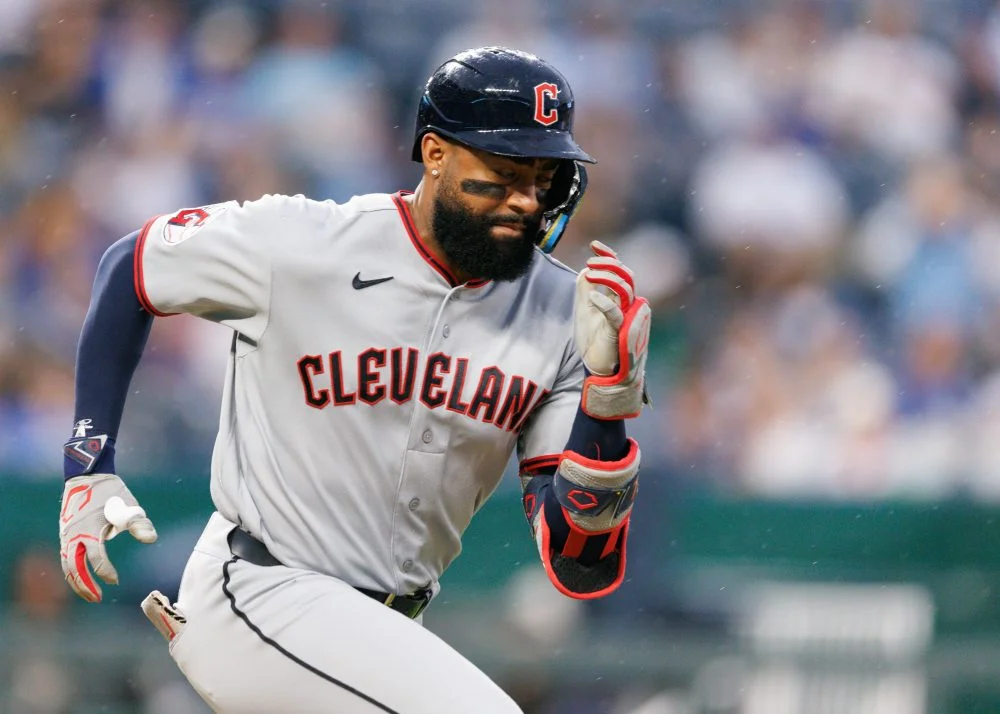
Jo Adell batting cleanup for Cleveland in a season-ending playoff game says as much about the Guardians’ lineup options as it does about Adell. In Monday’s Game 6 against Tampa Bay, Cleveland put the designated hitter fourth despite facing a right-handed starter, a matchup that made the choice harder to explain as a simple platoon play. The move suggests the club had run short of better choices, or at least of alternatives it trusted more in that spot. Cleveland fell two wins shy of a pennant. By then, the lineup decision had become a small but telling summary of the roster problem behind the postseason run.
A different cleanup hitter each October
Cleveland has turned to a succession of unlikely candidates in high-stakes October games. The common thread isn’t that these players shared a profile; they didn’t. Instead, the cleanup spot has moved among players whose cases rested on a brief run of production, a favorable matchup, or the hope that a young player would grow into the job.
In the 2022 Wild Card Series against Tampa Bay, Oscar Gonzalez started in right field and hit fifth. His walk-off home run in the 15th inning of Game 2 completed a sweep after the teams had gone scoreless through the first 14 innings. That moment gave Gonzalez an unusually prominent place in the story of the series, though a postseason breakthrough doesn’t by itself establish that a player can anchor a lineup over a full season. A week later, Gonzalez had climbed to fourth in the order for Game 5 of the ALDS against the Yankees, where Cleveland’s season ended.
Lane Thomas took the same lineup spot during the 2024 ALCS, after helping the Guardians beat Detroit in the ALDS. His case was more specific: Thomas hit left-handed pitching well, and Cleveland used him fourth when it had that platoon advantage. That’s a rational way to build a lineup when a manager can identify a matchup worth targeting. It also means the role depends on circumstances. The Yankees again ended Cleveland’s season in five games.
Last fall, Kyle Manzardo was the cleanup hitter in Cleveland’s Wild Card elimination game against Detroit. The young first baseman was viewed as a possible long-term answer at the position, but that promise didn’t translate into a sustained major-league role. He spent the final two months of the season with Triple-A Columbus. The gap between a player’s projected future and his place on the current roster can be especially visible in October, when every lineup decision carries the weight of a short series.
Four players, one lineup problem
These assignments reflect distinct bets. Gonzalez was a modestly priced international signing who took a winding route to the majors and delivered an unexpected burst of value. Thomas represented Cleveland’s preference for exploiting platoon matchups. Manzardo’s place in the order carried hopes for the future as well as a response to the immediate need. Each choice made sense on its own terms; together, they point to a club repeatedly searching for someone who could hold the role.
Adell’s situation was different. He arrived as an in-season trade pickup with name recognition, but the article’s assessment is that his production didn’t justify a cleanup role against a right-hander. Cleveland used him there because the alternatives looked weaker. A player’s reputation can make a bold lineup choice seem more deliberate than it is. The test is still the production and the matchup, and this was a spot where Cleveland’s options appeared thin.
The pattern is hard to miss: Cleveland’s late-season cleanup hitters have tended to be players with a narrow case for the job, a role shaped by circumstance, or a future the club hoped would arrive. The accompanying analysis compares each player’s numbers in the season he took on that role with his production the following year. That comparison can’t establish that the lineup assignment caused what happened next, but it does put the choices in a longer view. A postseason spot can be a snapshot of a roster’s needs, not a verdict on a player’s career.
This is more significant than it looks. A cleanup hitter doesn’t have to be the team’s best player, and batting order alone can’t rescue an offense. Still, repeatedly turning to a different candidate suggests Cleveland hasn’t found a consistent answer for the middle of the order when the stakes rise. And this is the part most people overlook: a team can win games with tactical adjustments and still have a personnel gap that keeps returning when the schedule leaves little room to hide it.
The question behind the lineup card
For Cleveland, the issue isn’t whether Gonzalez, Thomas, Manzardo, or Adell had a defensible reason to bat fourth in a particular game. The sharper question is whether the club can identify a hitter whose production gives the manager a reason to put him there before an elimination game makes the choice urgent. If you're working in this space, that distinction matters: using a matchup is roster management; relying on a series of temporary answers may signal a longer-term need.
Here's the thing: October lineups magnify weaknesses because every at-bat is scrutinized, but they don’t create those weaknesses from nothing. A cleanup assignment can reflect the manager’s best available calculation on one night, while the succession of assignments across seasons reveals how often that calculation has had to change. The available evidence doesn’t prove Cleveland needs one specific kind of hitter. It does show the club has repeatedly filled a prominent role with players whose claims were limited by matchup, circumstance, or development.
That said, there’s no guarantee that a steady regular in the spot would have changed the outcome of any of these series. Baseball gives no such certainty. What this means for you as a reader is simpler: the lineup card is worth reading as evidence of the choices a team has, not just the choices it makes. Cleveland’s October history leaves one open question for the next run: can the Guardians find a middle-of-the-order hitter who earns the spot before another elimination game forces their hand?
A recurring answer, but never quite the same one.