Austin Wells’ Second-Half Rebound Puts Yankees’ Catcher Plans in Focus
Austin Wells’ second-half rebound gives the Yankees a choice this offseason: trust their starting catcher and find a modestly priced backup, or pursue a larger upgrade. The decision turns on how the club reads a season that began with a .504 OPS at the All-Star break and finished with a much stronger stretch. That split leaves room for two explanations: Wells may have found his footing at the plate, or his early struggles may have reflected a health problem that took time to address. The front office has to weigh both possibilities before deciding how much uncertainty it can carry at a position that affects the lineup and the pitching staff.
Health clouds the season’s split
Wells hit .229/.343/.441 with seven home runs over the final two months of the regular season. He carried that improvement into the playoffs, going 5-for-15 with four RBI. A short playoff stretch can’t settle questions about a full season, but it did give the Yankees another look at his bat against high-pressure pitching. His eighth-inning attempt to stretch a double into a triple in Game 1 of the ALDS drew attention, but his swing also ended Drew Rasmussen’s no-hit bid on a night the pitcher had been difficult to hit. One play captured the risks of aggressive baserunning; the other offered a reminder that Wells could still make an impact at the plate.
The slump may have overlapped with persistent headaches after Wells took foul tips to his mask. He landed on the injured list in early June with what the team described as cervical headaches, then returned after two weeks. He had passed concussion tests following the foul tips, one against Boston on April 23 and another in Milwaukee on May 9. Wells was hitting .175 through 20 games before the Boston game; two of his four home runs before the IL stint came in the two-week span between those incidents. That sequence gives the club a reason to examine the possibility of a health connection, while the timing alone can’t show how much the headaches affected his performance. Catchers also take repeated contact behind the plate, so managing their health is part of evaluating how often they can be counted on to play.
That timeline doesn’t establish what caused his early-season struggles, and the samples are small. Wells told Brendan Kuty of The Athletic, “I think you look at the sample of two months there and say, ‘That wasn’t me. That wasn’t who I am.'” He switched to a hockey-style mask after returning and said he was “definitely going to be more careful and paying closer attention” to his health. His own view matters, but it doesn’t remove the uncertainty: a strong finish can reflect recovery, adjustment, or some combination of the two. This is more significant than it looks, because the explanation the Yankees settle on will shape whether they treat the rebound as a reason to stand pat or as a welcome stretch that still needs insurance.
Defense offers a steadier signal
Wells remained effective behind the plate through both stretches. Before his injury, he recorded 3 Fielding Run Value over 401 innings and ranked fifth in Statcast’s Framing metric. After returning, he added 7 Fielding Run Value over 559 innings and again finished fifth in Framing. Those measures offer a more consistent account of his season than the changing offensive results, though they don’t answer how much the Yankees should expect from his bat. His defense gives the team a reason to keep him in a prominent role even if his hitting settles somewhere below the late-season level.
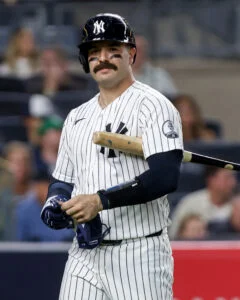
That defensive consistency makes the late-season bat matter. If New York believes the stronger version of Wells is likely to return, it can focus on a reserve catcher rather than replacing its starter. A dependable backup would give the club cover for rest days and unexpected absences, while preserving Wells’ chance to build on his finish. The Yankees spent much of last season being linked to available catchers as they looked to improve a lineup missing Aaron Judge and questioned their internal options. J.C. Escarra was sent down in June, while Ali Sanchez served as a stopgap. Those moves show why the backup question isn’t merely about filling a roster spot: the club needs someone it can use when Wells isn’t available, and it has to decide how much offense to expect from that player.
Backup search or bigger upgrade?
A lower-cost plan could pair Wells with a defense-first veteran such as Austin Hedges, if New York can pry him from Cleveland, or former Yankee Kyle Higashioka. The club could also keep the search in-house: Escarra and Sanchez have both shown plus defense in their limited major-league time. Their bats could be workable in occasional starts if Wells produces above average when available. That approach would place more weight on Wells’ ability to carry the position and on the reserve’s readiness to handle a lighter workload. It’s a narrower bet, but it would let the Yankees address the position without making a larger commitment.
If the Yankees remain unconvinced by Wells’ rebound, the market offers more substantial options. Ryan Jeffers and Tyler Stephenson sit near the top of the free-agent group, and New York showed some interest in trading for both during the season. Carson Kelly is another possibility in that tier. A trade for Hunter Goodman or Shea Langeliers would represent a larger commitment. These names point to different levels of ambition, but the central question stays the same: does the club see Wells as a starter whose bat may recover, or as a good defender whose uncertain offense needs a more forceful response? The numbers here are underwhelming as a case for treating the full season as settled; they’re more useful as a prompt to decide what risk the Yankees can tolerate.
[Related: New York Yankees Offseason Outlook]
What the decision could signal
The Yankees’ catcher strategy will hinge on whether they view Wells’ first half as a warning or a health-interrupted outlier. His defense gives the club a solid baseline; his post-injury hitting will determine how much it needs to spend or trade to cover the position. If you're working in this space, the practical distinction is clear: a backup search assumes Wells can take the lead, while a bigger upgrade acknowledges that his offensive floor remains uncertain. That said, the late-season and playoff results give the Yankees a reason to leave the door open to the first plan.
There’s no clean answer in the available evidence. The defensive record looks steady across both stretches, while the offensive record changed sharply and the possible health explanation remains unproven. A reserve could reduce the cost of that uncertainty by giving New York another option, but it wouldn’t tell the club whether Wells’ improved hitting will last. For now, the choice is about how much confidence the Yankees are willing to place in the rebound. A measured bet.
Photos courtesy of Vincent Carchietta and Tom Horak, Imagn Images