Lewis Hamilton Leads Tight Austin Practice as Verstappen and Ferrari Close In
Lewis Hamilton finished final practice for the United States Grand Prix at the top of the timing sheet, but the order behind him suggests qualifying in Austin could be a close contest. Max Verstappen was second, Charles Leclerc third, and Mercedes pair Kimi Antonelli and George Russell completed the top five. The fastest times came amid a busy late session in which track limits, tire choices and small gaps shaped the picture.
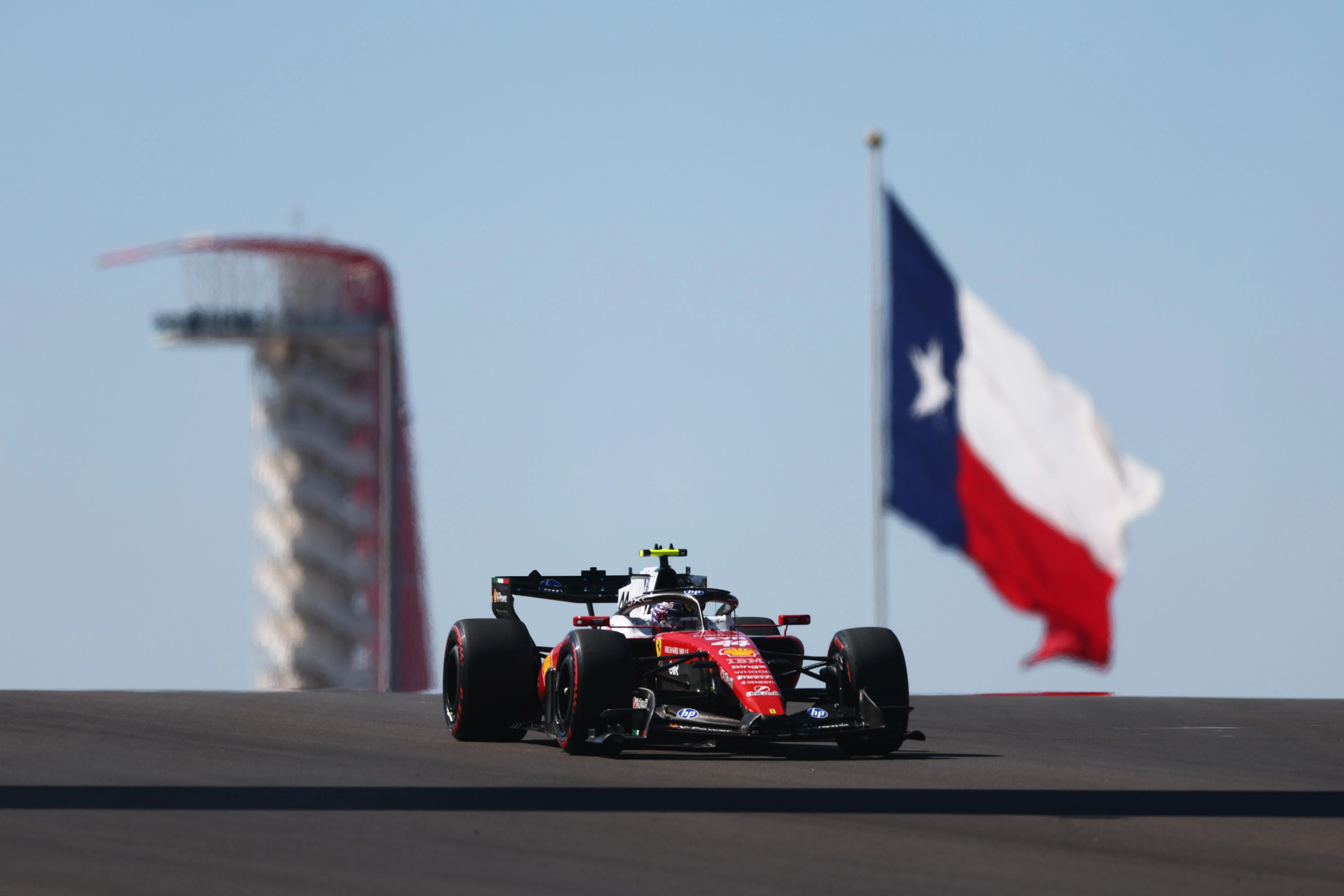
Hamilton’s 1:34.893 was the quickest lap that stood when the checkered flag fell. Verstappen ended 0.168 seconds back on a 1:35.061, with Leclerc third. The Ferrari driver had briefly gone fastest with a 1:34.810, but officials deleted the lap for exceeding track limits at Turn 10. That call put Hamilton back at the head of the classification.
There’s a meaningful caveat in reading the order: the leading drivers set their best times on different tires, and some apparent benchmarks disappeared. Verstappen’s earlier 1:35.702 came on mediums, while Hamilton’s first move to the top, a 1:36.716, was set on softs. Leclerc also reached the front on mediums before his later soft-tire lap was erased. The final classification offers a useful reference, but it doesn’t settle every question about relative pace.
A crowded fight at the front
The session began at 12:30 p.m. local time under partly cloudy skies, with the air at 80 degrees Fahrenheit. Sergio Pérez, Gabriel Bortoleto and Franco Colapinto were among the first drivers out. Others, including Hamilton, Verstappen, Lando Norris, Oscar Piastri, Leclerc and Oliver Bearman, waited in the garage as teams chose when to start their running.
Pierre Gasly was first to post a notable benchmark, going fastest with a 1:37.592 on the C3 medium tire. Hamilton soon lowered that to 1:36.716 on softs. Then the pace sharpened: Liam Lawson briefly took the lead with a 1:36.420 on mediums, Piastri followed with a 1:36.243 on softs, and Verstappen moved ahead with his medium-tire 1:35.702. Hamilton answered with a 1:35.561.
That sequence showed how quickly the leaderboard could change as drivers completed representative laps. At one point, Hamilton led Verstappen, Norris, Russell and Isack Hadjar. Hamilton, Norris and Russell had set their times on softs; Verstappen and Hadjar were on mediums. Verstappen’s place near the top on the harder compound stood out, though practice alone can’t establish how the teams will compare over a full race distance.
Leclerc added another data point in the second half of the session, taking the lead on mediums. Antonelli then moved into third on softs. Ferrari had brought small upgrades to Austin, and Leclerc’s pace offered an encouraging sign for the team, but his fastest lap later being deleted complicates any straightforward reading of its position.
Late laps, and limits that mattered
With 20 minutes remaining, several front-running drivers were back in the garage, including both Ferraris, Verstappen and the McLaren pair. Antonelli and Russell, by contrast, went out on fresh C4 soft tires. Antonelli put together a rapid lap, going fastest in the first two sectors and crossing the timing line in 1:35.015. It would have been a new benchmark, but officials deleted it for exceeding track limits at Turn 9.
Verstappen then went quickest through the first sector and stayed ahead of Leclerc’s benchmark through the second. His 1:35.061 put him at the top, briefly. Hamilton’s 1:34.893 soon displaced him, before Leclerc’s 1:34.810 appeared to take the lead. Leclerc’s time was also deleted, this time for a track-limits breach at Turn 10. Antonelli and Leclerc both showed the potential to challenge Hamilton, but neither kept the lap that would have put them ahead.
Track limits could remain a defining detail in qualifying. Officials deleted 207 lap times across the two Friday practice sessions, and race officials relaxed limits at several locations, including Turns 12, 15 and 20. The deletions in final practice at Turns 9 and 10 underline how much a fast lap can depend on staying inside the permitted track boundaries, even as drivers search for time.
There was also a close encounter involving Russell, Esteban Ocon and Nico Hülkenberg, a reminder that traffic could add another complication as drivers prepare for qualifying. Hülkenberg ended the session seventh, putting Audi’s driver inside the top ten with less than ten minutes to go. That result raises the prospect of a strong qualifying showing, though practice position alone can’t guarantee a place in Q3.
Incidents add to the qualifying picture
Bortoleto was noted by race officials for potentially impeding Hamilton during a push lap in the closing minutes. The incident could draw attention after the session, while on track, the final laps also brought a pair of lock-ups involving Red Bull drivers.
Verstappen locked his RB22 entering Turn 15, sending smoke across the circuit as he flat-spotted his tires. Hadjar later locked up at Turn 1 after encountering Alexander Albon on the racing line. The drivers had a brief moment before continuing. Those incidents didn’t change the top of the final classification, but they added to a session in which traffic and precision both mattered.
Hamilton led the final order, ahead of Verstappen, Leclerc, Antonelli and Russell. Piastri was sixth, Hülkenberg seventh and Norris eighth, with Gasly and Hadjar completing the top ten. Lawson finished 11th, followed by teammate Arvid Lindblad. Bortoleto, Bearman, Colapinto, Fernando Alonso, Ocon, Lance Stroll, Albon, Carlos Sainz, Pérez and Valtteri Bottas filled the remaining places.
My read is that Austin’s qualifying contest is open enough to turn on execution. Hamilton has the fastest time that counted, Verstappen was close behind, and Leclerc and Antonelli each produced a deleted lap that would have challenged the benchmark. If drivers can keep their fastest efforts within track limits and find clear space on the circuit, the final practice order points to a genuine fight at the front.