Milwaukee Brewers Win First World Series Title With Historic 11-2 Postseason Run
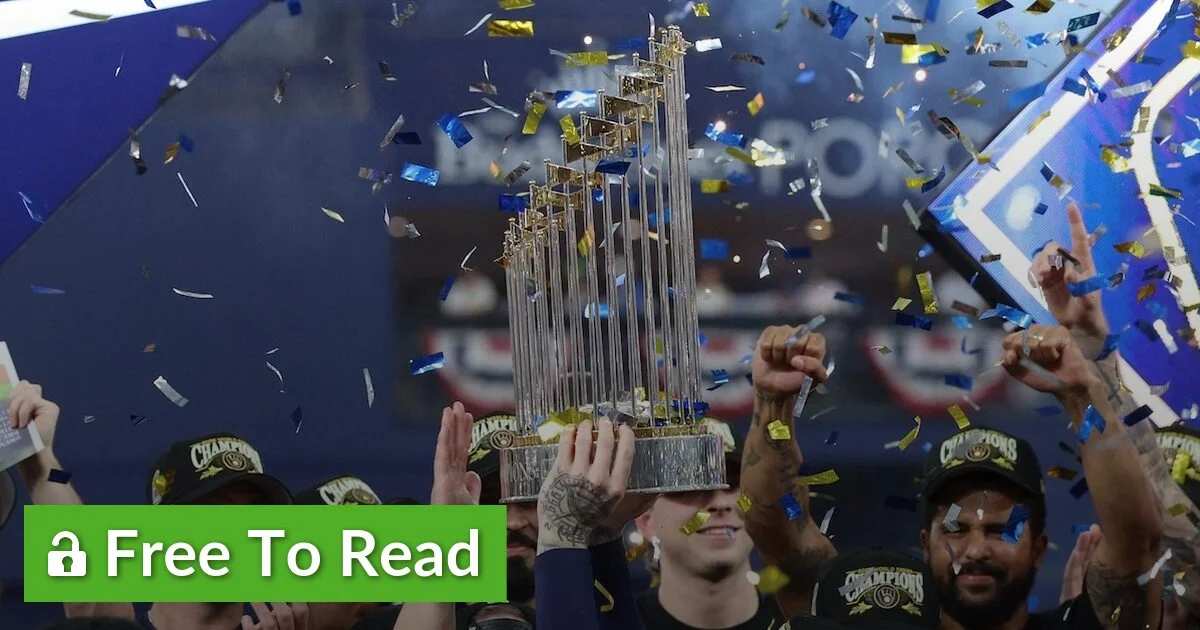
The Milwaukee Brewers’ first championship is also a story about how hard they were to knock off. They won the World Series with an 11-2 postseason record, after an eight-game winning streak and a run built on rallies, timely hitting, and a bullpen that kept opponents from turning leads into wins. The title arrives 57 years after their only season as the Seattle Pilots, 56 years after a used-car salesman moved the club to Milwaukee at the end of spring training, and 44 years after their first pennant. Tuesday’s near-sweep ended in a 12th-inning Rays rally; on Wednesday, Milwaukee finished the job with a 4-1 win.
The players behind the title
William Contreras took World Series MVP after hitting .381/.435/.429, throwing out four would-be base stealers, and winning 10 of 13 ABS challenges. Jackson Chourio made the choice a close one: he tied a 98-year-old record held by Babe Ruth with 10 hits in the first four games, then finished with a tournament-leading 11 hits and .458 average.
Cooper Pratt collected six consecutive hits across Games 4 and 5 and hit .421/.455/.684. His seven RBIs and .684 slugging percentage led all players. In relief, Aaron Ashby set a postseason record with 18 scoreless innings in a row; over 5.1 World Series innings, he allowed one baserunner and struck out nine. And Jacob Misiorowski, the likely National League Cy Young winner, closed the World Series with two strong starts. The right-hander had appeared to run low on fuel in the first two postseason rounds, but his final 10.2 innings brought one run allowed.
There was a second championship connection, too. Chourio, Contreras, and reliever Antonio Senzatela had also won the World Baseball Classic with Team Venezuela. They joined Alex Bregman and Luke Gregerson of the 2017 Astros and Team USA as the only players to win both titles in one calendar year.
A short list of champions
The Brewers’ eight-game streak began with Game 4 of the Division Series against San Diego, continued through a four-game sweep of the two-time defending champion Dodgers in the League Championship Series, and carried into their first three World Series wins against Tampa Bay. That run matched a single-season record set by the 2004 Red Sox, 2005 White Sox, 2014 Royals, and 2019 Nationals. The mark was impossible before 1985, when the League Championship Series expanded from best-of-five to best-of-seven.
Milwaukee is also the fifth team since the Wild Card Era began in 1995 to win a championship after losing no more than twice. They came close to joining the 1999 Yankees and 2005 White Sox as the only such clubs to lose just once. The Rays’ comeback on Tuesday put an end to that possibility.
Since division play and multi-round playoffs began in 1969—the same year the Pilots joined the new American League West alongside the expansion Kansas City Royals—the Brewers are the 13th champion to finish with two or fewer postseason losses. They also came within one win of becoming only the second club to sweep both the LCS and World Series.
| Wild Card Era | Season | W | L | W-L% | Division Series | League Championship Series | World Series |
|---|---|---|---|---|---|---|---|
| Yankees | 1999 | 11 | 1 | .917 | 3-0 (Rangers) | 4-1 (Red Sox) | 4-0 (Braves) |
| White Sox | 2005 | 11 | 1 | .917 | 3-0 (Red Sox) | 4-1 (Angels) | 4-0 (Astros) |
| Yankees | 1998 | 11 | 2 | .846 | 3-0 (Rangers) | 4-2 (Cleveland) | 4-0 (Padres) |
| Astros | 2022 | 11 | 2 | .846 | 3-0 (Mariners) | 4-0 (Yankees) | 4-2 (Phillies) |
| Brewers | 2026 | 11 | 2 | .846 | 3-1 (Padres) | 4-0 (Dodgers) | 4-1 (Rays) |
| Pre-Wild Card Era | Season | W | L | W-L% | Division Series | League Championship Series | World Series |
| Reds | 1976 | 7 | 0 | 1.000 | — | 3-0 (Phillies) | 4-0 (Yankees) |
| Athletics | 1989 | 8 | 1 | .889 | — | 4-1 (Blue Jays) | 4-0 (Giants) |
| Mets | 1969 | 7 | 1 | .875 | — | 3-0 (Braves) | 4-1 (Orioles) |
| Orioles | 1970 | 7 | 1 | .875 | — | 3-0 (Twins) | 4-1 (Reds) |
| Tigers | 1984 | 7 | 1 | .875 | — | 3-0 (Royals) | 4-1 (Padres) |
| Reds | 1990 | 8 | 2 | .800 | — | 4-2 (Pirates) | 4-0 (Athletics) |
| Athletics | 1974 | 7 | 2 | .778 | — | 3-1 (Orioles) | 4-1 (Dodgers) |
| Orioles | 1983 | 7 | 2 | .778 | — | 3-1 (White Sox) | 4-1 (Phillies) |
The 1976 Reds remain the only team to get through an entire postseason without a loss. That feat came in a smaller bracket: two rounds, with a best-of-five LCS. The club was the second straight Big Red Machine team to win the championship, stocked with future Hall of Famers Johnny Bench, Joe Morgan, and Tony Perez. The roster also featured 17-time All-Star and former MVP Pete Rose, in his first full season at third base; nine-time All-Star and five-time Gold Glove shortstop Dave Concepcion; five-time All-Star left fielder George Foster; four-time Gold Glove center fielder Cesar Geronimo; three-time All-Star right fielder Ken Griffey Sr.; and 1976 NL Rookie of the Year Pat Zachry.
They went 102-60 in the regular season, short of the 108-54 record their 1975 predecessors posted. But the earlier team needed a seven-game World Series win over Boston after sweeping Pittsburgh in the NLCS. The ’76 Reds were more ruthless. They came from behind in all three NLCS games against Philadelphia; in the clincher, they erased a 3-0 seventh-inning deficit and a 6-4 ninth-inning deficit before Griffey’s walk-off single won the pennant. They trailed the Yankees in only one World Series game, and for just three innings.
Milwaukee won by waiting for its chance
The Brewers came into October as baseball’s best regular-season team, with 103 wins and a +214 run differential. Their defining trait in the playoffs was patience under pressure. They trailed at some point in eight of their 11 wins, then found a way back while the bullpen held the opposition down. Milwaukee’s relievers combined for a 1.38 ERA across 65 innings, with Ashby’s record-setting scoreless streak at the center of that effort.
Twice the Brewers overcame four-run deficits. In the NLCS clincher, Shohei Ohtani finally broke through with a three-run homer in the second inning against Dustin May. In World Series Game 2, Tampa Bay scored four times in the first inning off Logan Henderson. Neither lead held.
Even their two losses came down to one run. In Division Series Game 3 against San Diego, Milwaukee fell behind 2-0 after three innings, tied the score briefly in the fifth, and put the tying run at second and the go-ahead run at first. Christian Yelich then grounded into a game-ending double play.
World Series Game 4 was nearly a different kind of ending. Tampa Bay led 1-0 and 2-1, but the Brewers pushed the game to extra innings. Pratt homered in the top of the 12th, a swing that could have clinched the title if Milwaukee had held on. Instead, the Rays rallied. The Brewers had called on Shane Drohan, their seventh reliever of the night, to pitch for the first time in 12 days; the decision may have helped keep the series alive.
What the run totals add
The win-loss record only tells part of the story. To compare the Brewers with past champions, the next table uses Pythagenpat winning percentage, which estimates a team’s expected record from runs scored and allowed. It adds one champion that lost three postseason games but still outscored its opponents by a wide margin.
| Team | Season | W | L | W-L% | RS | RA | R Dif | Pyth |
|---|---|---|---|---|---|---|---|---|
| Orioles | 1983 | 7 | 2 | .778 | 37 | 12 | +25 | .864 |
| Red Sox | 2007 | 11 | 3 | .786 | 99 | 46 | +53 | .810 |
| Reds | 1976 | 7 | 0 | 1.000 | 41 | 19 | +22 | .809 |
| Orioles | 1970 | 7 | 1 | .875 | 60 | 30 | +30 | .788 |
| White Sox | 2005 | 11 | 1 | .917 | 67 | 34 | +33 | .780 |
| Tigers | 1984 | 7 | 1 | .875 | 37 | 19 | +18 | .770 |
| Yankees | 1999 | 11 | 1 | .917 | 58 | 31 | +27 | .765 |
| Yankees | 1998 | 11 | 2 | .846 | 62 | 34 | +28 | .743 |
| Reds | 1990 | 8 | 2 | .800 | 42 | 23 | +19 | .736 |
| Brewers | 2026 | 11 | 2 | .846 | 59 | 33 | +26 | .735 |
| Mets | 1969 | 7 | 1 | .875 | 42 | 24 | +18 | .734 |
| Athletics | 1989 | 8 | 1 | .889 | 58 | 35 | +23 | .729 |
I’m using Pythagenpat, a variation on the Pythagorean winning percentage formula, as in some recent work on the subject. Bill James introduced the original formula in his self-published 1980 Baseball Abstract: Winning % = RS^2 /(RS^2 +RA^2). Later work by James and other sabermetricians found that a slightly lower exponent improved the estimates. Pythagenpat makes the exponent itself depend on the scoring environment: X = ((RS + RA)/G)^0.287. It’s the version we use on FanGraphs’ Projected Standings.
For this comparison, the calculation uses each postseason’s runs per team per game. Those averages ranged from 2.81 in 1983 to 5.18 in 1989; the 2026 postseason averaged 3.56. Milwaukee’s .735 Pythagenpat mark ranks below several clubs in the table, despite its 11-2 record. That’s a useful reminder: a team can win nearly every close game without outscoring opponents by the largest margin.
Next, a closer look at the Brewers’ Wild Card-era company, followed by the earlier champions.
1998-99 Yankees
Joe Torre’s Yankees combined the homegrown Core Four—Derek Jeter, Andy Pettitte, Jorge Posada, and Mariano Rivera—with Bernie Williams. The 1998 and 1999 teams were the first two champions in the sport’s fourth and most recent threepeat. The run began with a 114-48 regular season, then an American League record.
New York opened the 1998 postseason by sweeping Texas and allowing one run over three games, a feat the Yankees repeated the following year. The ALCS against Cleveland’s powerful lineup—featuring Manny Ramirez and Jim Thome—was less straightforward. The Yankees fell behind two games to one, in part after Chuck Knoblauch’s costly mistake in the 12th inning of Game 2. They won the next three, then swept San Diego in the World Series. No. 9 hitter Scott Brosius earned MVP honors with a .471/.471/.824 line and two home runs.