Why Ricardo Blandon’s Cut Forced a Stop Against Rafael Espinoza
Why the fight was stopped
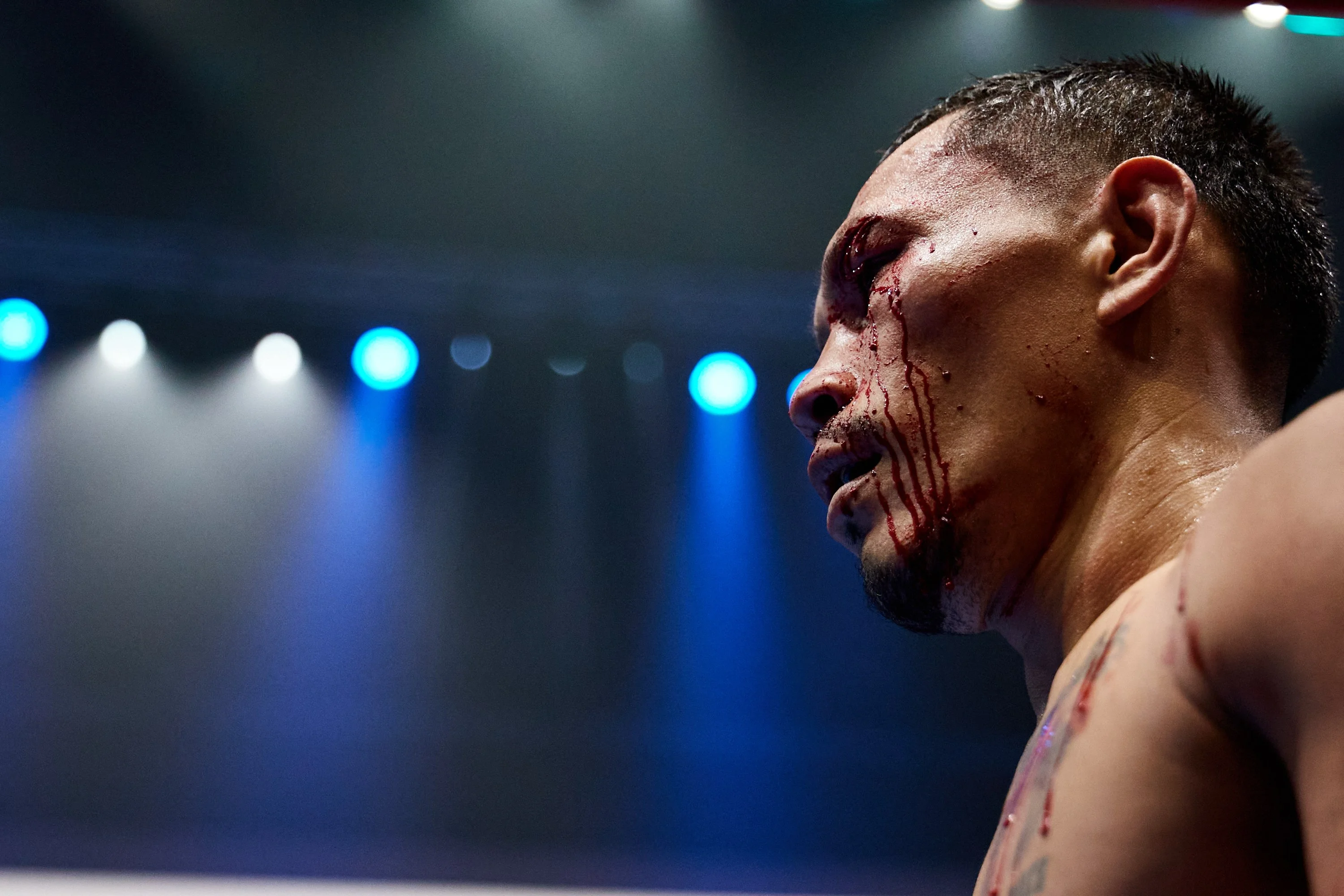
The case for stopping Ricardo Blandon’s fight with Rafael Espinoza came down to anatomy, not appearances. Ringside doctor Neil Scott says the cut exposed blood vessels above Blandon’s eye and left him unable to see clearly—conditions that made another punch dangerous. The wound’s size mattered, but its position and effect on the fighter mattered more.
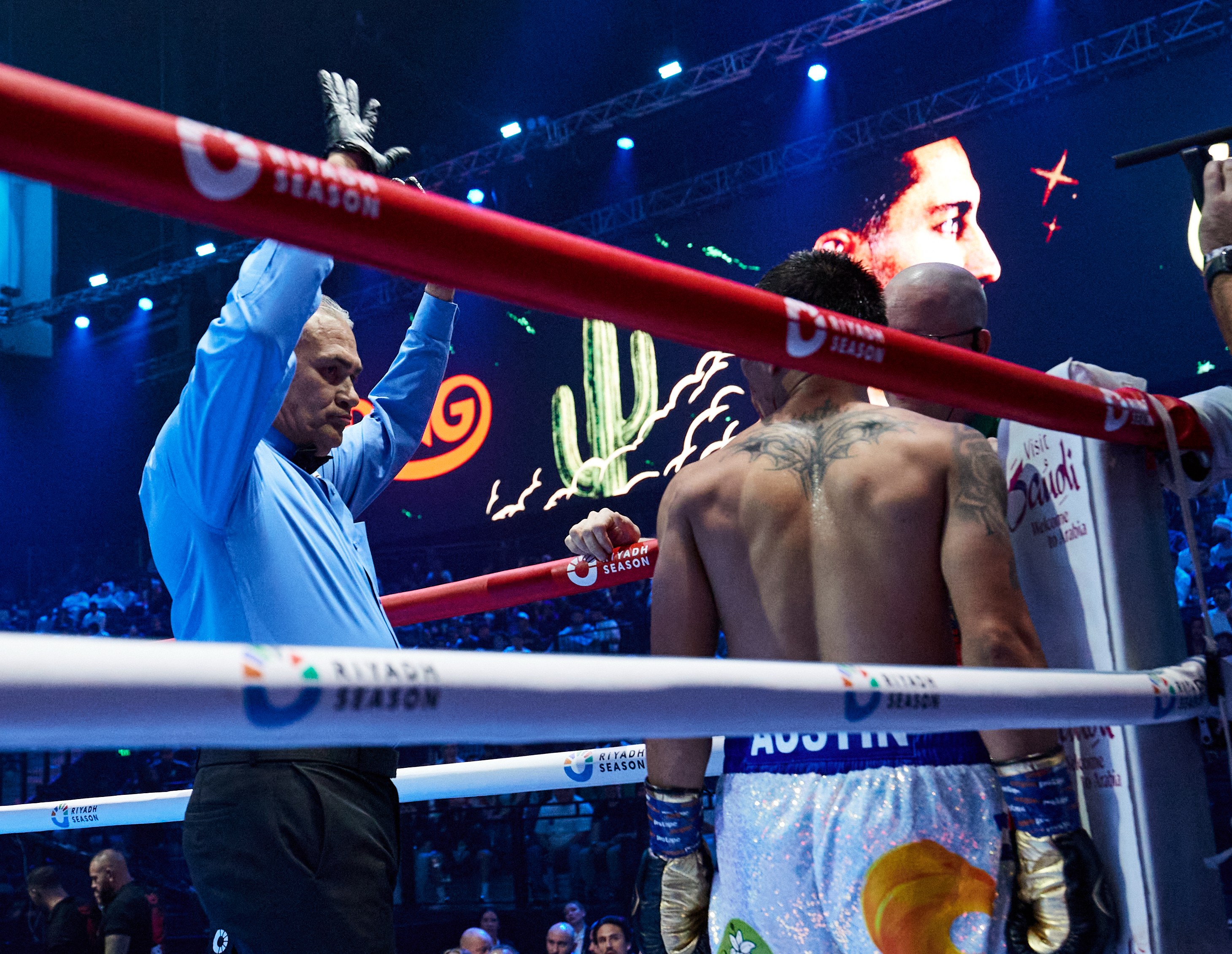
The stoppage came in the third round of their WBO featherweight title bout in Riyadh, Saudi Arabia, on the undercard of Saul “Canelo” Alvarez’s win over Christian Mbilli. Espinoza had taken control against Blandon, a Nicaraguan late replacement who accepted the fight days earlier after Lorenzo Parra withdrew. With just under two minutes left in the round, Espinoza landed a right hand that opened the wound. That timing put the referee and ringside doctor in a compressed decision window: they had to judge the injury while the contest was still active and the danger could recur with the next exchange.
DAZN commentators Chris Mannix and Malik Scott, watching from a London studio, questioned the decision. They argued Blandon could have been given time for his corner to treat the cut, at least until the round ended, and raised doubts about Dr Scott’s boxing experience. That debate reflects a familiar difficulty in televised boxing: viewers see a wound and a fighter who may still appear willing to continue, while the people at ringside must assess what another blow could do. The images can invite a quick verdict; the medical assessment depends on details the camera may not show.
Scott was at ringside, where he examined the injury directly. A former chief medical officer for the British Boxing Board of Control and a surgeon specializing in facial trauma, he had made the 26-hour trip from Wales. He has also treated Oleksandr Usyk, who suffered a cut in his 2021 fight with Anthony Joshua. His experience doesn’t make every ringside call immune to scrutiny, but it does establish that the decision came from someone with relevant medical expertise who examined Blandon in person.
“If we can, we will always give a corner a chance to work on the wound,” Scott told BoxingScene. “Unless the injury is unmanageable.”
That qualification is the key. A corner’s ability to treat a cut can matter, but it doesn’t make every injury safe to manage between rounds. The decision has to account for whether treatment can control the bleeding and whether the fighter can continue without taking an unacceptable risk. Here, Scott’s description points to a wound that crossed that threshold before the corner could make a meaningful difference.
Referee Janny Guzman initially directed Blandon to the red corner before the fighter was examined in a neutral corner. Scott said the wound was deep enough for him to see bone, but depth alone didn’t settle the question. Its position did. A cut can look alarming without threatening the same structures, while a less dramatic injury may carry a more serious functional or medical concern. This is more significant than it looks: in a fight, the visual impression is only one part of the evidence.
The risk was where the cut sat
The laceration began just below Blandon’s eyebrow, extended onto his eyelid and lay over the eye socket. Scott said the brow muscle had been torn down to bone, exposing the supraorbital blood vessels. Blandon’s eye had filled with blood, impairing his vision. Those details describe more than a surface wound: they explain why Scott was concerned about both renewed bleeding and Blandon’s ability to see incoming punches.
“One more punch and he would have had an arterial bleed,” Scott said.
That risk can be hard to judge from a broadcast image. A dramatic-looking cut may be manageable if it’s limited to less vulnerable tissue. Conversely, an injury near important vessels or the eye can demand a more cautious response even when the footage doesn’t convey its depth. The practical question isn’t simply whether a fighter can answer the referee or wants to continue. It’s whether the injury can safely withstand the physical demands of the next round.
The source points to Amanda Serrano’s cut in her rematch with Katie Taylor: although it looked severe, the wound was confined to her eyelid and carried a different risk. The comparison doesn’t mean one cut was harmless or that the other outcome should be copied. It shows why cuts can’t be judged by appearance alone; where the wound lies and what it affects can change the medical picture. The distinction was covered in a previous report on Serrano’s injury.
After the stoppage, Vaseline slowed the bleeding, prompting renewed claims that Blandon could have continued. But a treated wound at rest isn’t the same as one exposed to another full-force punch. The visible improvement after the fight couldn’t show what would have happened if Espinoza had landed again, and it couldn’t reverse the vision impairment Scott described. If you're watching from home, that’s the distinction to keep in mind: what looks controlled after a pause may behave differently under pressure.
What the argument reveals
The disagreement also shows how boxing presents a difficult judgment as a simple broadcast moment. Viewers may see a fighter standing and a cut that appears to have stopped bleeding, then wonder why the contest ended. The people making the call have to consider the injury’s location, the possibility of renewed bleeding, the fighter’s vision and the likely conditions of continued combat. No single image settles all of that.
And yet, questions about a stoppage deserve a clear explanation. Scott’s account gives one: he says the wound exposed vessels above the eye and impaired Blandon’s sight, while another punch could have caused an arterial bleed. Those specifics make the decision easier to understand than a general claim that the cut was too severe. They also clarify why the later use of Vaseline doesn’t answer the central question about what was safe during the fight.
Here's the thing: a stoppage can disappoint viewers and still be the right call on the information available to the doctor and referee. The late replacement context and Espinoza’s control help explain the circumstances of the bout, but they don’t settle the medical judgment. What matters here is Scott’s direct examination and the particular risks he identified. A short pause might have changed the appearance of the wound; it wouldn’t necessarily have changed the anatomy beneath it.
Why the distinction matters
For boxing, the episode is a reminder that a cut isn’t a single category of injury. Its location, depth and effect on vision can all shape whether treatment is enough to let a bout continue. That doesn’t mean every cut near the eye requires a stoppage, or that all ringside decisions will be beyond debate. It means discussion is more useful when it asks what the injury involved, rather than relying only on how it looked on screen.
If you're working in this space—as a fan, broadcaster or corner member—the details matter. Broadcast commentary can raise fair questions, especially when the audience sees no immediate explanation, but a ringside assessment has access to the fighter and wound directly. Scott’s account doesn’t erase the disagreement; it gives it something concrete to weigh. The hard part is that the explanation often comes after the moment has passed.
Afterward, the bleeding slowed. The risk during the fight was different.
Scott’s account makes the decision clearer: the cut’s location, the exposed vessels and Blandon’s impaired vision shaped the call. The debate may continue because boxing rewards toughness and audiences naturally want to see a contest reach its end. But toughness can’t establish that a vulnerable injury is safe, and the fighter’s willingness to continue can’t answer every medical question.