Devin Haney and Liam Paro Set for Welterweight Unification Fight in San Francisco
A title fight and a homecoming
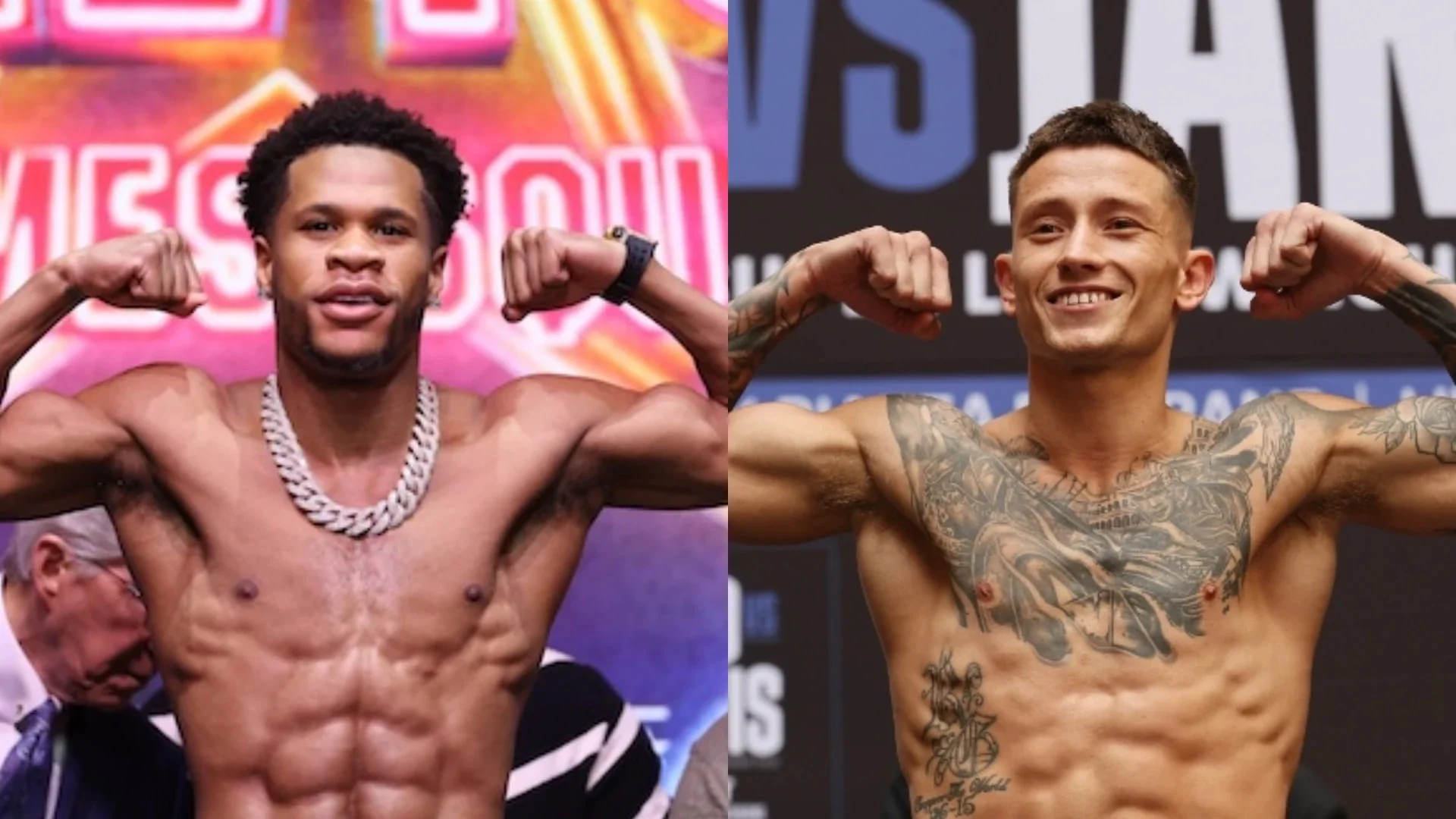
Devin Haney’s first fight under a new DAZN deal brings together two separate stakes: a chance to unify welterweight titles and a return to the Bay Area, where his career began in Oakland. The unbeaten boxer will defend his WBO belt against Australia’s IBF champion Liam Paro at San Francisco’s Chase Center on Dec. 19. For Haney, the location gives the contest a personal dimension; for Paro, it means attempting to leave with a title from a champion fighting close to home.
Unification bouts carry a different kind of pressure from ordinary title defenses. The winner doesn’t simply retain a belt; he brings another champion’s claim into the same corner, narrowing the field of titleholders. That makes this matchup consequential even before the wider welterweight picture comes into view.
Haney’s chance to add another belt
Haney, a three-division champion, is 33-0 with 15 knockouts and has a chance to add Paro’s title in front of a local crowd. He has said he’s comfortable taking fights on an opponent’s home turf, citing his victory over George Kambosos in Australia, where he became undisputed lightweight champion. This time, Haney says, he wants to bring Paro’s belt back to the Bay Area.
That earlier win gives Haney a useful point of reference, but the setting has changed. He’ll have the local support at Chase Center, while the task is to handle a champion who has already shown he can win away from home. A homecoming can sharpen a fighter’s sense of purpose; it can also raise expectations. This is more significant than a familiar venue and a familiar crowd: Haney’s performance will be judged against the ambitions attached to his move through the divisions.
Paro has already won on the road
Paro, 28-1 with 16 knockouts, has experience with the demands of a high-profile fight away from Australia. He won the IBF junior welterweight title by upsetting Subriel Matias in Puerto Rico, then moved up in weight and defeated Lewis Crocker by unanimous decision in Brisbane in June. The victory made him a two-division world champion.
Those results give Paro a case built on more than his title. He’s already handled a difficult road assignment against Matias, and he followed that with a move into a new weight division and a win over Crocker. The San Francisco challenge asks him to repeat that adaptability against a different sort of opponent: an unbeaten champion with local backing. No guarantee of an easy night for either man.
A matchup that took time to arrive
Paro recalled appearing on the undercard when Haney fought Regis Prograis at Chase Center three years ago. He said he joked then that “Haney versus Paro” had a natural ring to it. Now he’s returning to Haney’s backyard with a unification opportunity of his own, turning that old observation into a major fight.
Haney, 27, hasn’t fought since his Nov. 22 unanimous decision over former welterweight champion Brian Norman Jnr. Talks for a bout with unbeaten four-division champion Shakur Stevenson didn’t produce a fight, and Haney instead turned to Paro. Paro had also been discussed for the Dec. 13 card featuring Erislandy Lara and Tim Tszyu in Australia. The path to this pairing reflects how quickly plans can change in boxing, where a fight that doesn’t come together can redirect two champions toward a different prize.
Promoters see value in the stakes
Top Rank President Todd duBoef described the contest as a high-stakes meeting between champions. He also pointed to the promotion’s work with Haney’s team during the boxer’s 2022 run to undisputed lightweight champion. Premier Boxing Champions and No Limit, Paro’s Australian promotional partner, helped arrange the fight.
That group effort underscores the commercial and sporting appeal of a unification bout: each side brings a champion, a title and an established promotional relationship. Still, the labels and pre-fight praise only set the stage. The bout itself has to answer the question that the promotional language can’t: whether Haney can take Paro’s belt, or whether Paro can win another title fight outside his home country.
The longer route toward undisputed status
Bill Haney, Devin’s father, trainer and manager, has said the long-term objective is an undisputed welterweight championship. That goal is taking shape while fellow champions Ryan Garcia and Teofimo Lopez Jnr negotiate their own unification fight for Feb. 6 in Las Vegas. These parallel plans show how the division’s title race could be shaped by more than one matchup at a time.
Bill Haney has pointed to his son’s previous appearance at Chase Center, where Haney beat Prograis for a title at 140 pounds, as a foundation for another major Bay Area event. The Dec. 19 fight would carry that local championship campaign into the 147-pound division. If you’re following the welterweight picture, the distinction matters: every successful unification brings a champion closer to the family’s stated objective, while a loss would alter the route.
No Limit Boxing CEO George Rose said his team had pursued a Haney fight since Paro won the IBF belt. Rose praised Haney for accepting the matchup and called him the world’s best welterweight, while presenting Paro’s challenge as an opportunity to prove himself against one of the division’s leading names. That’s a promoter’s assessment, and the fight will provide the more useful measure.
Norman and Ramos add another path
The co-main event pairs Norman with former welterweight title challenger Abel Ramos. Norman said he plans to approach the bout with discipline after learning from setbacks and past rounds. Ramos, making his first appearance in San Francisco, expects his aggressive style and Norman’s willingness to engage to make for an entertaining fight for the Chase Center crowd and DAZN viewers.
The winner could move into the title picture if Haney or Paro doesn’t go directly into a fight with Garcia or Lopez. That possibility gives the co-main event a practical connection to the main event: it may help shape which contenders remain in view as champions pursue unification. But the outcome depends on what happens in the ring, not on the card’s preferred storyline.
What Dec. 19 could clarify
Unification is the immediate prize in San Francisco, while the surrounding welterweight matchups could influence who meets next. The card won’t settle every question in a division with several champions and competing plans, but it can provide a clearer picture of which routes remain open. And this is the part most people overlook: even a decisive win may leave the winner with a choice between pursuing another champion and defending the belt just won.
Here’s the thing: Haney-Paro has enough at stake to matter on its own, regardless of how quickly a larger undisputed title plan comes together. Haney gets a homecoming and a chance to add a belt; Paro gets another opportunity to establish himself against a leading name. The co-main event adds another contender to watch. For viewers, the result should say something about the division’s next moves, even if it doesn’t determine them.