Seventeen Years Without a Ring: Reading Brian Cashman's Yankees Tenure
Brian Cashman has now run the Yankees longer than almost anyone in franchise history. He's passed Ed Barrow and George Weiss, the two Hall of Famers who once defined the front office, and his tenure is closing in on 30 years. The uncomfortable part is the trophy count. Cashman has presided over a long stretch without a World Series title, and the only one that can be unambiguously credited to him is 2009.
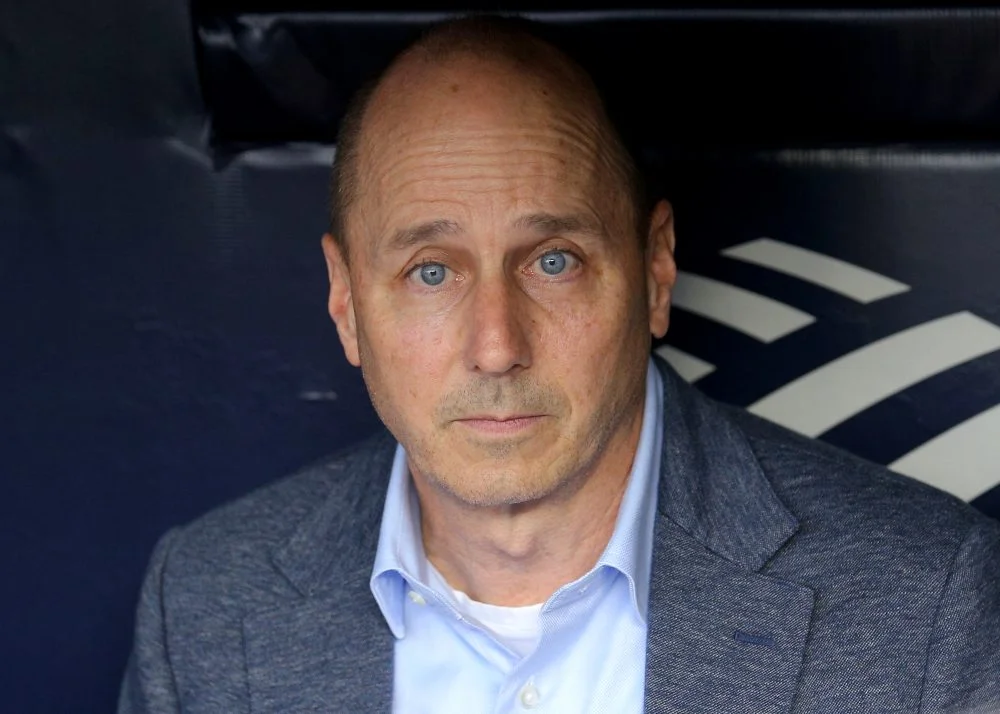
My aim here is to look at Cashman as a team builder, year by year, and figure out why the titles have been so scarce.
A drought with a long memory
Seventeen years without a championship, and counting, is a long time even by Yankees standards. The gap already outlasts the 11-year drought of George Steinbrenner's most volatile stretch (1982-1995), and it's closing in on the post-dynasty years under CBS and the early Steinbrenner period (1965-1976). Only the franchise's chaotic founding era (1903-1922) produced a longer gap, and that stretch was an ugly one. The club was owned by a casino operator and a Tammany Hall figure. Its star first baseman, Hal Chase, was frequently selling out his own team. The ballpark was so poorly built that crews laid duckboards in the outfield to keep Willie Keeler from tumbling into a ravine while chasing fly balls.
Even after the more earnest "Two Colonels," Jacob Ruppert and Tillinghast Huston, bought the club in 1915, the team remained a clown show. They hired the sober Miller Huggins as manager in 1918, bought Babe Ruth in 1920, and pried general manager Barrow away from the Red Sox in 1921. Real stability didn't arrive until Yankee Stadium opened and Ruppert bought out his partner in 1923.
Different team, different rules
That was a primitive club operating in chaos. Today's Yankees compete in a league that has figured out the fundamentals of roster management. They have advantages Ruppert and Barrow never had, and some constraints of their own. The biggest change is the postseason. Baseball has used a multi-round, tournament-style playoff format since 1969, and winning the World Series is far harder now. DiMaggio's teams won four straight titles from 1936 to 1939. My read is they'd have struggled to match that if they had to win best-of-five or best-of-seven series against another contender just to reach the Fall Classic.
The trade-offs cut both ways. Modern Yankees are bound by guaranteed long-term contracts, while their predecessors could cut an underperformer without consequence. But those early clubs also lacked a developed farm system. The Yankees started building a minor league chain in 1932, yet they mostly played the hand they'd been dealt at the start of each season. Their minor leaguers competed for minor league pennants rather than feeding the big club.
The talent pool was narrower, too. Before the draft, the Yankees could sign any amateur or minor league player they wanted, but they were barred from signing players of color. The idea of signing a player from Japan would have drawn a scoff. The Dominican Republic hadn't yet emerged as a talent producer, and the Cuban market was dominated by the Washington Senators, whose players were, of course, white. Cashman's scouts work through the draft, but they also have every race and nation that plays baseball open to them. The modern Yankees also collect revenue streams Ruppert and Barrow couldn't have imagined. Cashman's teams haven't always topped the payroll charts, but they've never operated on an austerity footing.
Counting the rings, and who gets the credit
So why only one title in nearly 30 years? The count looks harsh until you see the 1998, 1999, and 2000 champions in the record book. Cashman was the GM of record for all three, but calling him their main architect is a stretch. His predecessors, Gene Michael above all, did more to build those clubs than he did.
The real shift came after the 2005 season, when Cashman's contract came up for renewal and he gained primacy over the advisers who surrounded George Steinbrenner. Every move the Yankees made in the first seven years of his career carried his signature, but not every one of them was his idea. Splitting his tenure into four distinct periods is the cleanest way to separate what Cashman built from what he inherited.