Bills' Slot Weakness and Single-Coverage Tendencies Set Up Week 10 Matchups
Buffalo's single-coverage bet
Buffalo has a coverage habit that's hard to ignore. No team in the NFL has played more single coverage over the last month than the Bills, and they've done it on 56% of their snaps. That's a deliberate choice, and it's exposing them in the slot. Single coverage has a clear upside: it frees defenders to rush the passer or crowd the box. It also leaves someone alone against a receiver, and when a team leans on it this heavily, the real question is where the leftover risk lands. In my view, that's a reasonable trade on paper, but only if the slot holds up.
Omar Cooper Jr. is built for this look
The Jets' rookie has been one of the more productive receivers against single coverage, and the underlying numbers back that up. Cooper sits in the 98th percentile in both separation and yards per route run against single coverage. He's earning a target on nearly 25% of his routes against that look. Percentile rankings are only as useful as the sample behind them, so I'd watch whether this holds across more snaps. Still, a receiver who wins consistently one-on-one is exactly what a passing game wants to see.
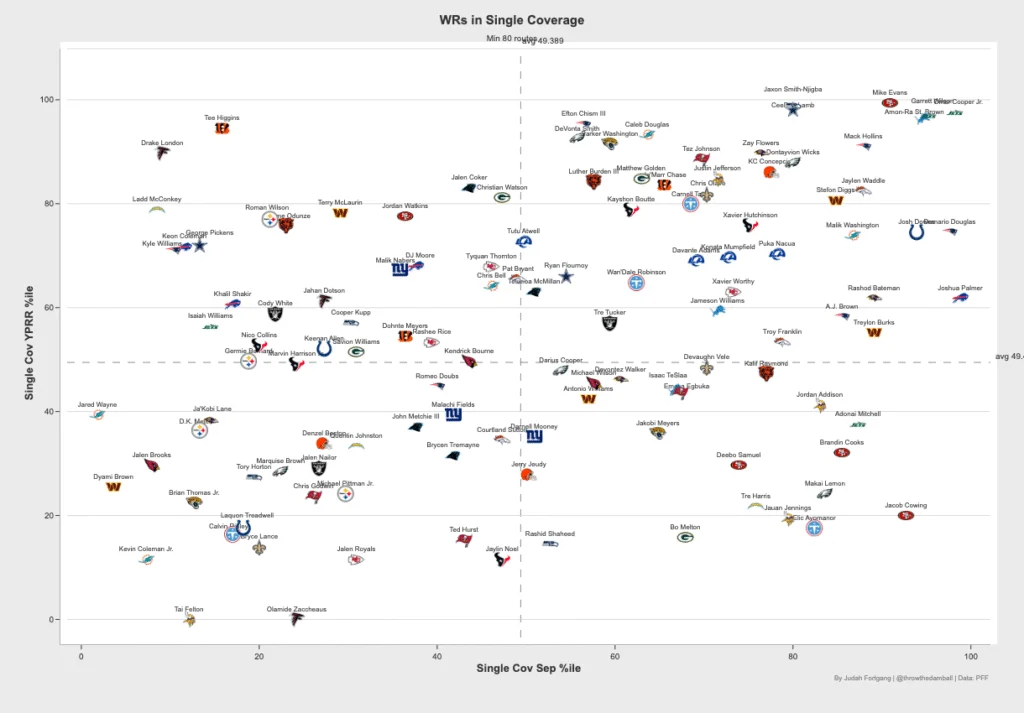
The slot is where Buffalo has really bled. Opponents have attacked Bills slot defenders at the fifth-highest rate in the league, and Buffalo has allowed the second-most explosive plays from the slot. Cooper's usage will likely take him there often, and the Bills' offense should put up enough points to keep the Jets' passing game in motion. More scoring means more volume, and volume is what turns a good route winner into a big stat line. (and this is the part most people overlook) Efficiency and volume are different questions. Here's the thing: the matchup helps with the first, but only if the game script delivers the second.
Seattle's backfield has room to work
The Seahawks are short on quarterback options. Sam Darnold is out, and Drew Lock is banged up. Seattle's answer last week was to lean on the ground game, running about 10% more than expected once game situation was accounted for. Lock never attempted a pass traveling more than 17 yards downfield, which doesn't read like an offense trying to air it out. Teams without a reliable passer usually shorten the field and hand the ball off, and that's the logic here. It's the least surprising play call in football, which is exactly why it tends to work.
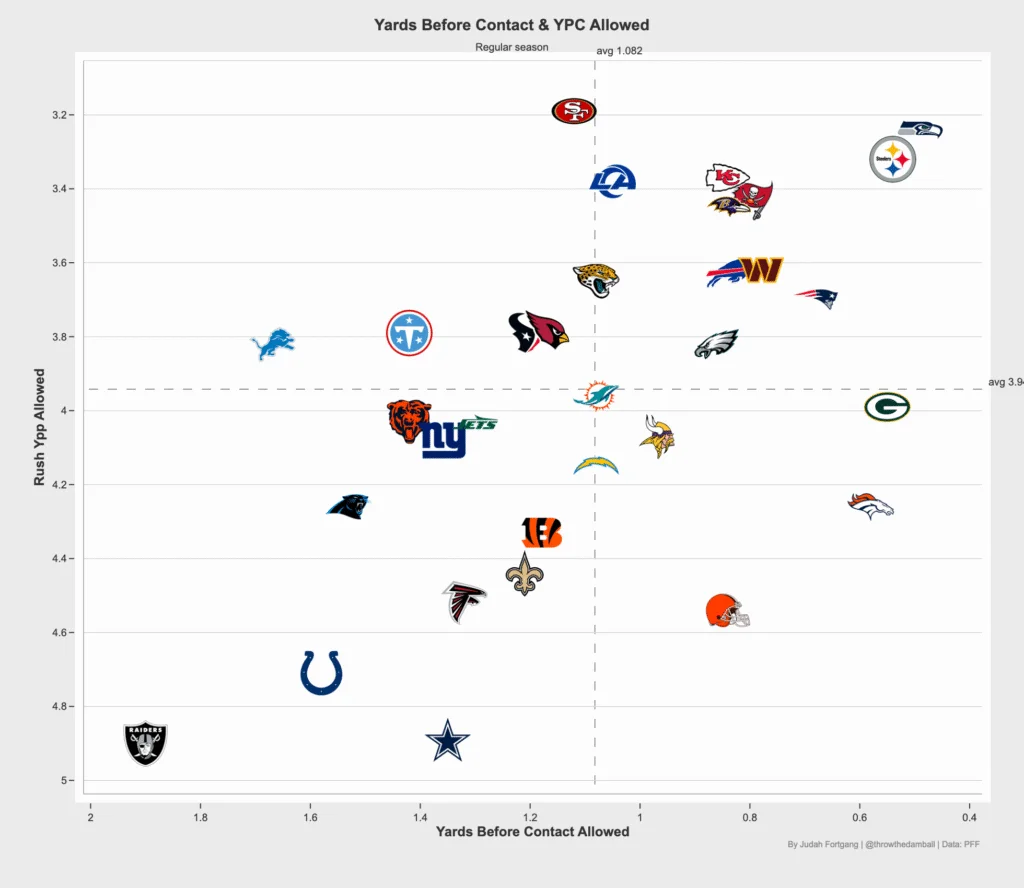
Las Vegas gives them a good place to keep doing it. The Raiders allow more yards before contact than any defense in the NFL, and they've surrendered the most yards per carry of any run defense. That's a meaningful weakness for a team already short on offensive answers. Run-defense numbers can swing with opponent quality and game script, so one matchup is a shaky basis for big conclusions. Still, yards before contact tells you whether a defense is getting pushed around at the line, and this one is. If you're trying to figure out where Seattle's offense goes this week, start there.
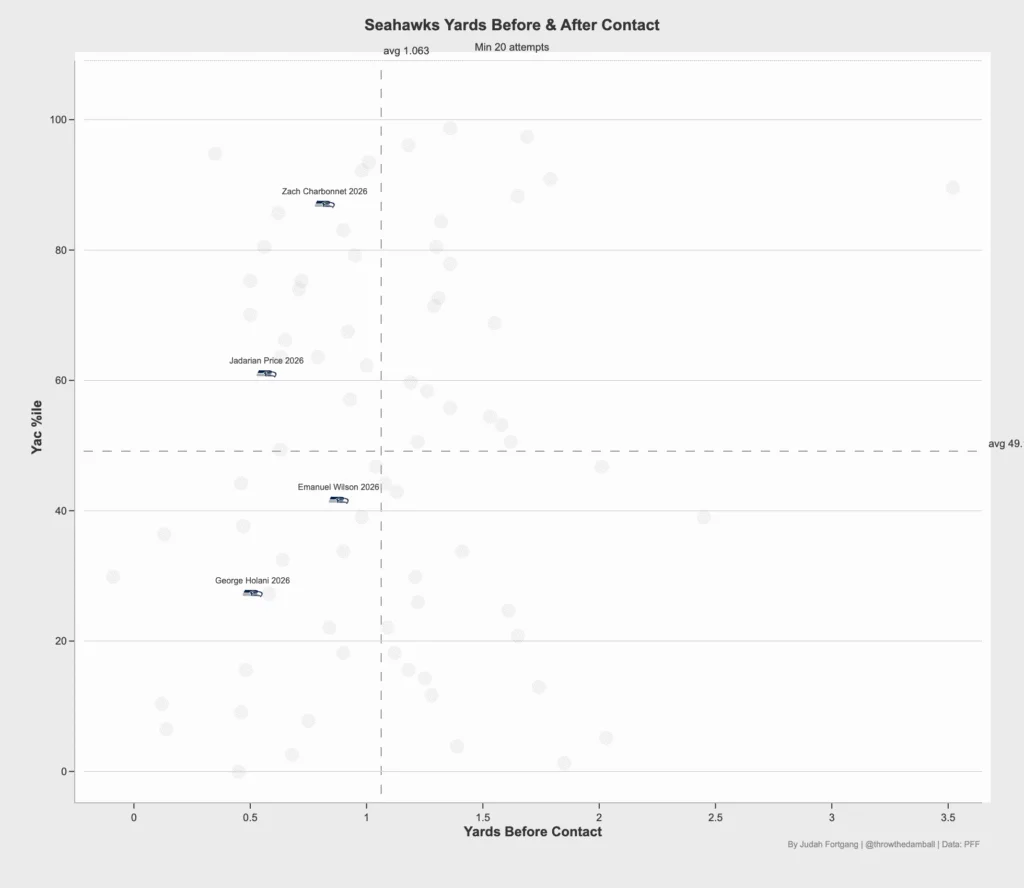
Seattle's backs have struggled to create their own room, but Zach Charbonnet and Jadarian Price have been solid after contact. This matchup should give them plenty of space before contact to work with. The Raiders' rookie quarterback, Fernando Mendoza, is making his first start against what may be the league's best defense, which could produce short drives and more chances for the Seahawks' offense to stay on the field and keep feeding the backs. Short drives favor run-heavy teams, since they keep possessions moving without asking a banged-up passing game to carry the load. It's a clean setup on paper, and that's sort of the problem with it.
Charbonnet looks like the primary runner, with his roughly 70-30 split over Price suggesting he'll get the bulk of the carries. Price still should see enough touches to matter, though. He has the more explosive profile, and that's the kind of player who can turn a steady afternoon into a few long gains. Backs with explosive traits often get bigger roles when the game script turns or a lead tightens late. Watch the early snaps and third-down situations, because that's usually where a split shows its hand.
Coker's route profile fits how New Orleans defends
The Saints play single coverage and single-high safety looks at top-five rates in the NFL. That's useful information for Carolina's passing game, and Jalen Coker is the Panthers' most natural beneficiary. He ranks above the 80th percentile in yards per route run against both looks and leads Carolina in targets against each. He also commands a 27% target share against single coverage. The phrase "against each" matters here, because it means his production isn't a one-look fluke. If you're trying to understand why Carolina's offense might funnel through one receiver, start with that consistency.
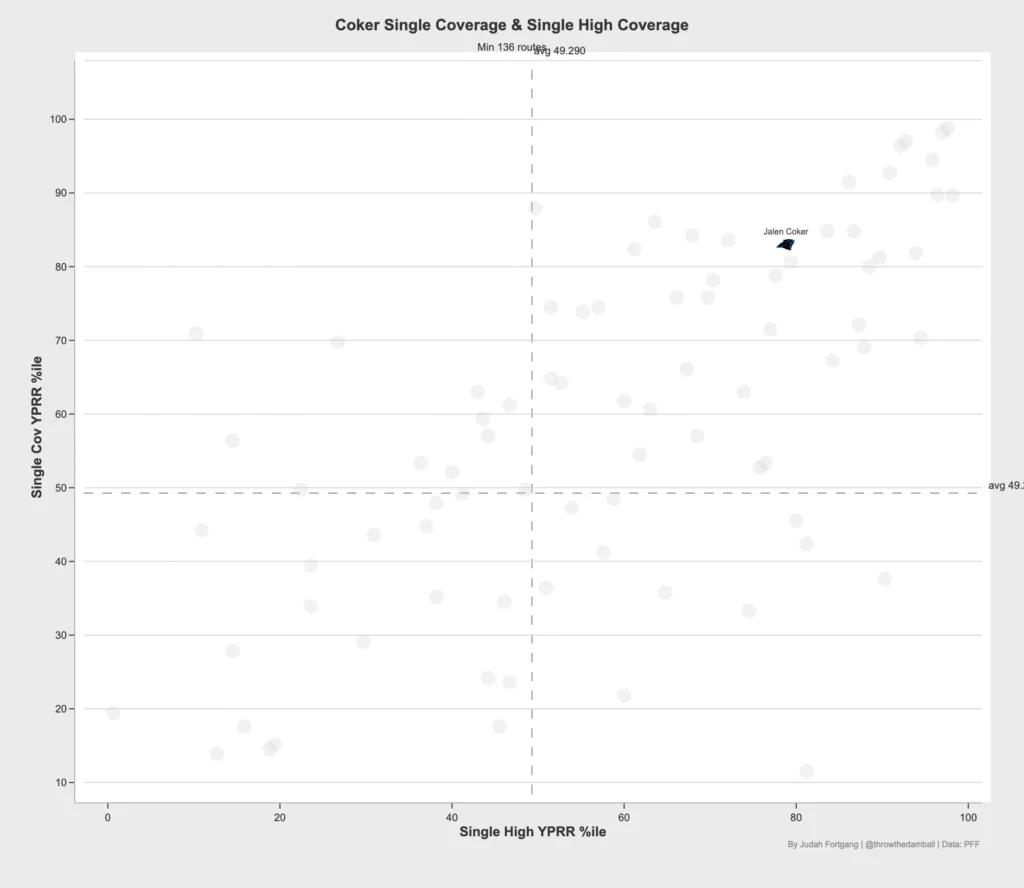
Bryce Young's job is to find him. If Carolina's passing game gets the favorable matchup the numbers suggest, Coker is the receiver with the clearest path to a heavy workload. That's the thread I'd follow in this game: a team that wants to throw against a defense that gives up space to the right receiver. The risk is that a quarterback under pressure or forced into checkdowns can waste a good matchup entirely. Matchup reads are only as good as the quarterback executing them.
What this means if you're tracking these matchups
Taken together, these threads share a pattern. Teams are building game plans around what a defense concedes rather than around reputations. Buffalo's coverage choice, Seattle's run-first answer, and Carolina's target funnel all depend on specific weaknesses showing up in specific situations. That's a sharper way to read a slate than chasing headlines, and it's the approach I'd recommend to anyone following these teams closely.
The skeptic in me wants to see these trends hold across a larger sample. Single-game and single-month splits are noisy, and a defense that looks exploitable in one stretch can tighten quickly once opponents adjust. If you're working in this space, the useful habit is to check whether an advantage shows up in both the underlying numbers and the actual game script, not just one of them. That's the test I'd apply before trusting any of these conclusions.
And yet the practical takeaway is simple. Expect Buffalo's slot to be tested, expect Seattle to lean on the run, and expect Coker to be the focal point if Carolina's passing game finds its footing. None of those are bold calls, but they're the places where the matchup data actually points.