Tampa Bay Rays Top 62 Prospects
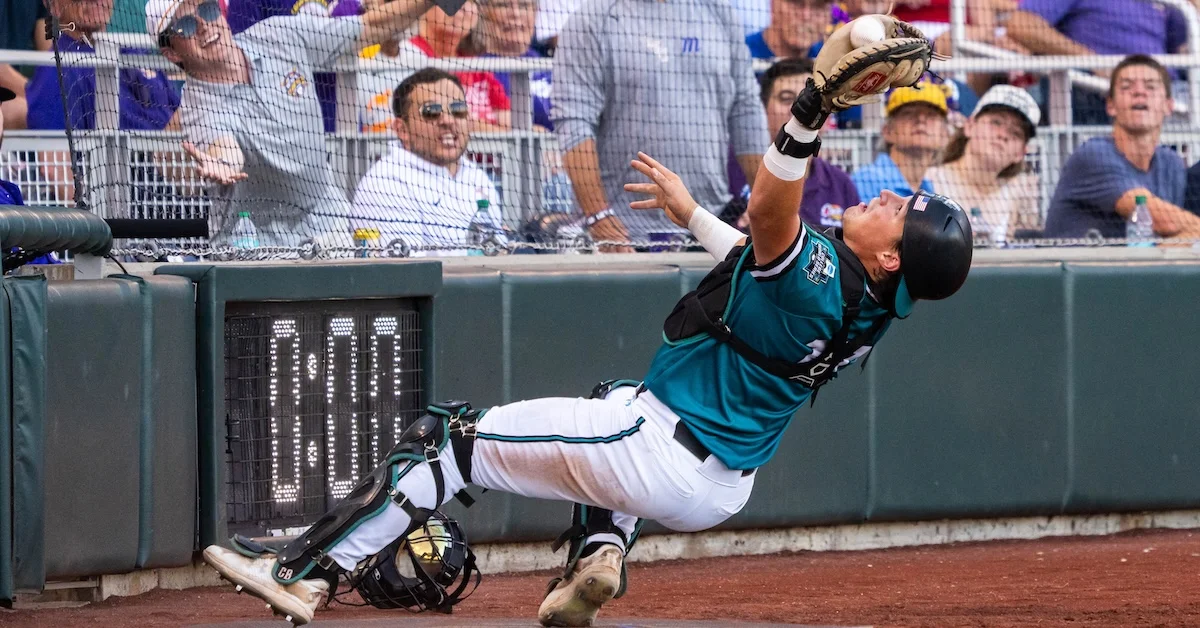
Below is an analysis of the prospects in the farm system of the Tampa Bay Rays. Scouting reports were compiled with information provided by industry sources as well as my own observations. This is the sixth year we’re delineating between two anticipated relief roles, the abbreviations for which you’ll see in the “position” column below: MIRP for multi-inning relief pitchers, and SIRP for single-inning relief pitchers. The ETAs listed generally correspond to the year a player has to be added to the 40-man roster to avoid being made eligible for the Rule 5 draft. Manual adjustments are made where they seem appropriate, but we use that as a rule of thumb.
A quick overview of what FV (Future Value) means can be found here. A much deeper overview can be found here.
All of the ranked prospects below also appear on The Board, a resource the site offers featuring sortable scouting information for every organization. It has more details (and updated TrackMan data from various sources) than this article and integrates every team’s list so readers can compare prospects across farm systems. It can be found here.
| Rk | Name | Age | Highest Level | Position | ETA | FV |
|---|---|---|---|---|---|---|
| 1 | Theo Gillen | 20.8 | AA | CF | 2028 | 50 |
| 2 | Caden Bodine | 22.6 | A+ | C | 2028 | 50 |
| 3 | Brody Hopkins | 24.4 | AAA | SP | 2026 | 50 |
| 4 | Taitn Gray | 18.9 | A | 1B | 2031 | 50 |
| 5 | Michael Forret | 22.2 | AAA | SP | 2026 | 50 |
| 6 | Carson Williams | 23.0 | MLB | SS | 2026 | 50 |
| 7 | Jacob Melton | 25.8 | MLB | CF | 2026 | 45+ |
| 8 | Brayden Taylor | 24.1 | AA | 3B | 2027 | 45+ |
| 9 | Nathan Flewelling | 19.6 | A+ | C | 2029 | 45+ |
| 10 | Jackson Baumeister | 24.0 | AA | SP | 2026 | 45+ |
| 11 | Jose Urbina | 20.7 | A+ | SP | 2028 | 45+ |
| 12 | Daniel Pierce | 19.9 | A | SS | 2030 | 45+ |
| 13 | Cooper Flemming | 19.9 | A | 2B | 2031 | 45+ |
| 14 | Ty Johnson | 24.8 | AAA | SP | 2026 | 45 |
| 15 | Anderson Brito | 22.0 | A+ | SIRP | 2027 | 45 |
| 16 | Jacob Kmatz | 23.7 | AA | SIRP | 2027 | 45 |
| 17 | Santiago Suarez | 21.5 | AAA | SP | 2027 | 45 |
| 18 | Dominic Fritton | 23.2 | A | SP | 2029 | 45 |
| 19 | Jadher Areinamo | 22.6 | AA | 2B | 2026 | 45 |
| 20 | Tre’ Morgan | 23.9 | AAA | 1B | 2026 | 45 |
| 21 | Victor Valdez | 17.8 | R | 2B | 2032 | 45 |
| 22 | Gary Gill Hill | 21.8 | AA | SP | 2027 | 45 |
| 23 | Andreimi Antunez | 19.6 | R | SS | 2029 | 40+ |
| 24 | Xavier Isaac | 22.5 | AA | 1B | 2027 | 40+ |
| 25 | Brendan Summerhill | 22.6 | A | RF | 2028 | 40+ |
| 26 | Slater de Brun | 19.1 | R | CF | 2030 | 40+ |
| 27 | Trevor Harrison | 20.9 | A+ | SP | 2028 | 40+ |
| 28 | Blake Morgan | 23.0 | A | SP | 2028 | 40+ |
| 29 | TJ Nichols | 24.0 | AA | MIRP | 2027 | 40+ |
| 30 | Dean Moss | 20.2 | A | RF | 2031 | 40+ |
| 31 | Fabricio Blanco | 17.7 | R | 2B | 2032 | 40+ |
| 32 | Aidan Smith | 21.9 | A+ | CF | 2028 | 40+ |
| 33 | Jacob Kisting | 23.2 | A+ | SP | 2028 | 40 |
| 34 | Aidan Cremarosa | 22.7 | A | SP | 2029 | 40 |
| 35 | Emmanuel Hernandez | 17.6 | R | SP | 2032 | 40 |
| 36 | Cooper Kinney | 23.4 | AAA | 3B | 2026 | 40 |
| 37 | Émilien Pitre | 23.7 | AA | 2B | 2027 | 40 |
| 38 | Warel Solano | 18.8 | R | LF | 2031 | 40 |
| 39 | Alexander Alberto | 24.7 | AAA | SIRP | 2027 | 40 |
| 40 | Trevor Martin | 25.5 | MLB | SIRP | 2026 | 40 |
| 41 | Owen Wild | 23.9 | AAA | SIRP | 2027 | 40 |
| 42 | Victor Mesa Jr. | 23.1 | MLB | CF | 2024 | 40 |
| 43 | Homer Bush Jr. | 24.7 | AAA | CF | 2027 | 40 |
| 44 | Adrian Santana | 20.9 | A+ | SS | 2028 | 40 |
| 45 | Gregory Barrios | 22.2 | AA | SS | 2027 | 40 |
| 46 | Austin Overn | 23.1 | AA | CF | 2027 | 40 |
| 47 | Will Simpson | 24.8 | AAA | 1B | 2027 | 35+ |
| 48 | Jean Paredes | 17.5 | R | CF | 2032 | 35+ |
| 49 | Deinys Gonzalez | 19.4 | R | C | 2031 | 35+ |
| 50 | Alex Cook | 23.5 | AAA | SIRP | 2026 | 35+ |
| 51 | Jacob Kuhn | 22.0 | A | SIRP | 2030 | 35+ |
| 52 | Junior William | 24.6 | A+ | SIRP | 2027 | 35+ |
| 53 | Alvaro Mejias | 21.1 | A | SIRP | 2028 | 35+ |
| 54 | Dom Keegan | 25.9 | AAA | C | 2027 | 35+ |
| 55 | Brailer Guerrero | 20.0 | A | RF | 2029 | 35+ |
| 56 | James Quinn-Irons | 23.0 | A | CF | 2029 | 35+ |
| 57 | Maykel Coret | 18.8 | R | RF | 2031 | 35+ |
| 58 | Emmanuel Cedeno | 18.8 | R | SS | 2030 | 35+ |
| 59 | Eliomar Garces | 18.8 | R | 2B | 2031 | 35+ |
| 60 | Yereny Teus | 22.9 | A | SIRP | 2028 | 35+ |
| 61 | Drew Dowd | 24.5 | AA | SP | 2027 | 35+ |
| 62 | Marcus Johnson | 25.5 | AAA | SP | 2026 | 35+ |
- All
- C
- 1B
- 2B
- SS
- 3B
- LF
- CF
- RF
- SP
- SIRP
- MIRP
50 FV Prospects
1. Theo Gillen, CF
| Age | 20.8 | Height | 6′ 2″ | Weight | 195 | Bat / Thr | L / R | FV | 50 |
|---|
| Hit | Raw Power | Game Power | Run | Fielding | Throw |
|---|---|---|---|---|---|
| 35/50 | 55/60 | 30/55 | 60/55 | 40/45 | 40 |
Gillen is among the more talented all-around hitters in the mid-minors and has had a stellar first half of production at High-A Bowling Green, more than doubling his home run total from the entire 2025 season in just 59 games. Since turning pro he has leaned into a higher-effort, power-hitting approach that has him striking out more than one would have anticipated when he was drafted (he was arguably the most advanced high school hitter in the class), but his growing power and natural bat control are allowing him to thrive. Though Gillen has struck out around 24% of the time so far as a pro (a fairly scary number for an A-ball hitter), his underlying contact rate (74%) is closer to average, and part of why he’s K’ing so much is because he’s running deep counts. Gillen does sell out for powerful swings in a way that causes his head to rattle around, and he can lose sight of the baseball doing this. But he moves the barrel around well and can make hard contact throughout most of the strike zone. There’s some push and pull happening here, as Gillen’s approach is going to cause him to strike out more than is typical for a hitter with this kind of contact feel, but he’s putting balls in play hard enough that he should recoup some of that. The result should be a potent cocktail of contact, power, and on base skill, potentially enough for Gillen to be an everyday player even if it turn out he can’t play center field.
We’re now two full seasons into Gillen’s conversion to center field, a move made necessary by a labrum surgery in high school that left him without the kind of arm needed to play the infield. He’s an above-average runner from home to first (lots of times in the 4.1 to 4.2 second range) and plus underway, but he isn’t especially skilled or smooth out there yet. He may develop into a passable defender there, but he’s unlikely to be the best defensive center fielder on whatever big league roster he’s on. The corner fit on defense will mute Gillen’s all-around impact, but he looks like a good enough hitter to be an everyday guy anyway. He moves into the Top 100 with this update.
2. Caden Bodine, C
| Age | 22.6 | Height | 5′ 10″ | Weight | 197 | Bat / Thr | S / R | FV | 50 |
|---|
| Hit | Raw Power | Game Power | Run | Fielding | Throw |
|---|---|---|---|---|---|
| 55/70 | 45/45 | 30/45 | 30/30 | 30/45 | 55 |
Bodine was ranked 18th on the 2025 FanGraphs Draft Board but was picked 30th by Baltimore and then traded to Tampa Bay as part of the Shane Baz deal during the offseason. He was arguably the best pure contact hitter in the entire draft, but his production came in a smaller conference, and Bodine had some issues blocking and receiving premium stuff with Team USA that made it seem plausible he wouldn’t be able to catch long-term. He has more or less put those concerns to bed. Bodine has been even harder to strike out in pro ball, he was quickly promoted to High-A Bowling Green and continues to make an elite rate of contact there, and he has drastically improved as a ball-blocker compared to just 12 months ago.
Bodine’s lower body strength and mobility looks much better than before. He moves laterally from various positions, and his technique has improved. He is also an accurate thrower with a roughly average arm (his pop times are in the 1.95-2.00 second range), though his caught stealing rate is a shade worse than average as of this writing. Where Bodine has the most room for improvement is in his framing. He has some idea how to receive borderline pitches, but he does so with the subtlety of an amateur magician, and he’s often late to the spot catching pitches that are mislocated. Overall, things are in a much better place for Bodine on defense than they were before the draft.
Bodine’s hitting (88% contact rate overall, 91% from the left side, 96% in-zone) is a seamless continuation of his college production (93% zone contact as a sophomore, 96% as a junior), and his swing has enough loft to hit for power even though his raw juice is middling. He produces all-fields spray with low-ball power as a lefty, and is more oppo-gap oriented as a righty with merely above-average feel for contact from that side. Opponents can limit Bodine’s power by locating down and away from him. It won’t stop him from hitting it, but he doesn’t do much damage with those pitches and is really only dangerous on the inner half. Any kind of offensive contribution from a catcher is a positive, and Bodine has a chance to be one of the better pure contact hitters in the sport while playing average defense. The Rays finally have their catcher of the future. He moves into the Top 100 with this update.
3. Brody Hopkins, SP
| Age | 24.4 | Height | 6′ 4″ | Weight | 200 | Bat / Thr | R / R | FV | 50 |
|---|
| Fastball | Curveball | Changeup | Cutter | Command | Sits/Tops |
|---|---|---|---|---|---|
| 70/70 | 50/60 | 40/55 | 55/60 | 30/45 | 96-99 / 101 |
Hopkins is a converted outfielder who spent his first couple of collegiate seasons at the College of Charleston, where he didn’t pitch very much. It wasn’t until he transferred to Winthrop that he began to regularly pitch in a starter role, and he still managed to lead the Eagles in home runs during his draft year even though he was becoming an arrow-up prospect on the mound. An incredible on-mound athlete and mover, Hopkins’ stuff took a leap within his first year as a pro, and he quickly became Seattle’s best pitching prospect before he was traded to Tampa Bay as part of the 2024 Randy Arozarena deal. In 2025, just his third season as a dedicated pitcher, Hopkins was able to post a 2.72 ERA across 116 innings at Double-A, and he did it with a totally new delivery.
Since the trade, Hopkins’ arm slot has raised from a purely sidearm angle to something closer to three-quarters. The change has made the movement of his fastball more vertically oriented. It comes at the cost of the freaky, uphill angle he was creating with his old arm slot, but Hopkins’ special down-the-mound athleticism (he’s so low to the ground that his shin is scraping the mound) still enables him to get to a low enough release point that he can attack at the belt. He has held 95-98 mph fastball velocity for more than 100 innings two years in a row (96-99, up to 101 this year), and he threw a starter’s ratio of strikes last season despite meaningful changes to his delivery.
Hopkins appeared poised to arrive in Tampa Bay ahead of his chalk 40-man timeline (especially if the big club were competing for a playoff spot, which they are), but he’s struggling to throw strikes so badly this year that he might not be reliable enough, even for a temporary late-season shift to the bullpen. As of publication, he is walking nearly a batter per inning. At the moment, this hasn’t tempered my excitement, as Hopkins entered the season with relief risk, he’s still new to pitching, and he’s a remarkable athlete whose delivery is so explosive that it’s going to take him time to corral. The Rays have also made further alterations to Hopkins’ stuff. He has ditched the sinker variant of his fastball and is throwing exclusively four-seamers now. Last year’s slurvey amalgam is also gone; he has more of a traditional curveball, and Hopkins is throwing more changeups (though they’re still a distant fourth pitch). He is going to be able to work the top of the strike zone with fastballs and cutters (90-94 mph), then bend his curve (83-87 mph) off of those against righties for whiffs. His changeups flash plus and have power sink around 90 mph. This is a mix that moves and finishes in all four quadrants of the zone, a pretty clean fit for a starter so long as Hopkins develops better feel for location. If he can’t, he’s going to be able to power his fastball past people in relief at an elite clip — Might this guy sit 100 as a reliever? — and be a premium closer. That might be Hopkins’ 2026 postseason role. Over time, he projects to be an impact member of the Rays rotation.
4. Taitn Gray, 1B
| Age | 18.9 | Height | 6′ 4″ | Weight | 220 | Bat / Thr | S / R | FV | 50 |
|---|
| Hit | Raw Power | Game Power | Run | Fielding | Throw |
|---|---|---|---|---|---|
| 20/50 | 60/70 | 20/60 | 45/40 | 30/40 | 50 |
Gray didn’t play much on the showcase circuit and first blew up at Super 60 (in indoor workout for Midwest prospects) prior to his senior season. He then had the most impressive Draft Combine batting practice among the high school players, putting balls out of Chase Field from both sides of the dish. It was a titanic, stock-altering showing in Phoenix, but Gray’s real contact skill (to say nothing of his defensive ability at catcher) was still a black box due to his lack of exposure to elite pitching. He ranked 40th on the FanGraphs Draft Board based purely on his intriguing upside, but went a little more than a round later than that and signed for just under $1 million.
Twelve months removed, Gray looks like an absolute steal for the Rays, as Gray (who isn’t catching and is only playing first base) is pulverizing Low-A pitching from both sides of the dish. Not only does he appear to have stable, usable bat-to-ball skills, but that appears to be true from both sides of the plate, as he is posting contact rates in the mid-70s as both a left- and right-handed hitter. Gray’s build (he looks like he was going to Oregon to play tight end rather than catcher) and swings evoke Josh Bell, but by some measures, he is already hitting the ball a little bit harder than Bell ever has. As of publication, his hard-hit rates are above 50% from both sides of the plate, his max exits are a shade above the big league average (in the 110-112 mph range), and he still has room for more strength on his 6-foot-4 frame.
Even though he teleported from one end of the defensive spectrum to the other (he has feel for leveraging his size when stretching for throws, but otherwise he is not a good defensive first baseman right now), Gray is among the more prominent arrow-up prospects in the sport during the first half of 2026 and a potential middle-of-the-order masher without an obvious offensive flaw. He is currently on the IL due to surgery to remove loose bodies in his elbow, and is expected to return at some point after the All-Star Break. He moves into the Top 100 with this update.
5. Michael Forret, SP
| Age | 22.2 | Height | 6′ 3″ | Weight | 190 | Bat / Thr | L / R | FV | 50 |
|---|
| Fastball | Slider | Changeup | Cutter | Command | Sits/Tops |
|---|---|---|---|---|---|
| 50/55 | 50/50 | 50/55 | 50/50 | 60/70 | 92-95 / 97 |
Forret (pronounced with the emphasis on the second syllable, as in Leonard Fournette) is a strike-throwing developmental success who was drafted out of a Florida junior college and trained at Tread Athletics. He had a 1.58 ERA across 74 innings in 2025 and finished his season at Double-A Chesapeake, then was traded to the Rays during the offseason as part of the Shane Baz deal. He began the 2026 season at Double-A Montgomery and was promoted to Durham in early June.
This is Forret’s 40-man platform year and he has a chance to make his big league debut with the Rays toward the end of the season, assuming he isn’t on a conservative innings cap after his workload last year. He has mid-rotation projection here at FanGraphs largely because of his fantastic feel for location. Forret can manipulate his fastball and breaking ball shapes to suit his needs depending on the handedness of the hitter, and he learned a kick change at Tread that quickly became his best bat-missing pitch. He can operate east/west with sinkers, sliders, and cambios when he wants, or elevate his fastball with upwards of 18 inches of vertical break on his best four-seamers. Forret’s fastball generated a plus miss rate in 2025 despite sitting 92 mph because of its lift and his command of it. He attacks righties around their hands with the fastball and then dots sliders on the black away from them, while he jams lefties around theirs with cutters and sliders, and then forces them to choose between covering elevated fastballs or his sinking cambio. Aside from the ceiling on Forret’s changeup, which feels high based on its newness and the quality of his arm action, he is going to mostly have average stuff that plays up because of premium command.
6. Carson Williams, SS
| Age | 23.0 | Height | 6′ 1″ | Weight | 180 | Bat / Thr | R / R | FV | 50 |
|---|
| Hit | Raw Power | Game Power | Run | Fielding | Throw |
|---|---|---|---|---|---|
| 20/30 | 55/60 | 40/55 | 55/55 | 70/80 | 70 |
Williams was a two-way high school player who was talented enough to be considered a prospect as both a shortstop and a pitcher. The Rays gave him a $2.3 million bonus to keep him from heading to Cal and developed him solely as a hitter. He quickly developed into a Gold Glove-caliber shortstop defender, and despite serious underlying swing-and-miss issues, he was able to slug an average of 20 annual homers during each of his first four full seasons, culminating in a 2025 big league debut. Williams has so far been unable to find his footing in the majors due to all of his strikeouts, and as of publication he is back at Triple-A, where he has accumulated about 700 total plate appearances, basically an entire big league season’s worth, across the last two years. He has enough roster days with the big club to graduate from prospect eligibility, but his play has been been sporadic enough when he’s been up that he doesn’t yet have the at-bats.
Williams is an unbelievable athlete and a flashy defender who is as creative as he is talented. His range, body control, and plus-plus throwing arm make many tough plays look routine, and make some seemingly impossible plays possible. He is getting a weekly rep at second and third base in Durham for the sake of developing versatility, but on all but a couple of big league rosters, WIlliams would be the best defensive shortstop by a lot, and he is likely to win some hardware throughout his career for his defensive prowess.
How bad then are Williams’ strikeout issues allowed to be for him to remain a productive player? He has never had a contact rate above 67%, and he’s been more in the 61-63% range the last two seasons as he’s faced upper-level pitchers and their Kryptonite breaking balls. Though Williams generates roughly average raw thump with his athletic swing, he hasn’t become much stronger in his early 20s or shown any kind of measurable power increase since 2023. In fact, his hard-hit rates have actually slid as he has struggled to find the fat part of the bat against better stuff. If pitchers make a mistake to him on the inner third, he punishes it, and though the days of hoping Williams would develop plus raw power are likely over, he has enough juice and patience to be dangerous. There really isn’t an example this century of a shortstop making this little contact (Javier Báez was up at 67%) and having a 2,000-plus plate appearance career, but Williams’ defense is so exceptional that he might post some 2-WAR seasons on defense alone. The bummer version of his outcome looks something like Adalberto Mondesi, but if he can improve just enough to get into the 64-66% contact range, then we’re talking about some frustrating, but ultimately productive, 2 to 3 WAR seasons.
45+ FV Prospects
7. Jacob Melton, CF
| Age | 25.8 | Height | 6′ 3″ | Weight | 208 | Bat / Thr | L / L | FV | 45+ |
|---|
| Hit | Raw Power | Game Power | Run | Fielding | Throw |
|---|---|---|---|---|---|
| 35/40 | 60/60 | 50/60 | 60/60 | 45/45 | 40 |
Melton was one of a few toolsy, weird-swinged Pac-12 outfielders in the mix for a 2022 first round pick (org mate Brock Jones was another), but he fell to the second. He mitigated his whiff issues in the low and mid-minors and quickly flirted with the big leagues, as Melton hit 23 bombs and stole 46 bases in 2023, then reached Triple-A in 2024. He played in just 67 games in 2025 (32 of them in the majors with Houston) because an ankle injury cost him about two months. He was incredibly productive when healthy and had sexy data (79% contact rate, 58% hard-hit) in a less reliable sample size, but still had (and has) an awful lot of visually-assessed strikeout risk, and more of a tweener look on defense. Melton was traded from the Astros to the Rays as part of the Brandon Lowe three-team swap during the offseason, began the 2026 slate with Triple-A Durham, and promptly sprained his other ankle. He returned in a rehab capacity in mid-June and was reassigned to Durham just before list publication.
The Rays have altered Melton’s swing, which now has a pronounced open stance akin to Luis Gonzalez. How this will impact his output remains to be seen, but in the small, early-season sample from before he got hurt, Melton was lifting the ball much more than in the prior two seasons (15 degrees of launch on average, up from eight). Melton’s hands are incredibly strong and fast once they get moving, but he tends to let the baseball travel pretty deep in the hitting zone, and sometimes he’s just too late to make any contact at all. Like many hitters with this high-effort style of swinging, he ends up underneath a lot of elevated fastballs and is likely to have a below-average hit tool against big league stuff, even though his 2025 data was comfortably above average in this regard.
If Melton can play center field, that’s more acceptable, and it looks like he can. He has plus-plus top speed, and the Rays have been positioning him deep in the outfield so he can do more gap-to-gap running rather than try to read balls hit over his head. He looked pretty good out there in the little bit of early-season ball he was healthy for. Considering how Cedric Mullins is struggling in 2026, Melton might soon get an opportunity to be the club’s everyday center fielder. There’s definitely hit tool risk and volatility here, and the new swing adds variance (some of which is positive) to Melton’s outcomes. He will likely play Rock, Paper, Scissors and have a career similar to the one Colton Cowser is having, where there are some leans years because of all the strikeouts.
8. Brayden Taylor, 3B
| Age | 24.1 | Height | 6′ 1″ | Weight | 190 | Bat / Thr | L / R | FV | 45+ |
|---|
| Hit | Raw Power | Game Power | Run | Fielding | Throw |
|---|---|---|---|---|---|
| 30/40 | 45/50 | 45/50 | 60/60 | 60/60 | 50 |
Taylor has had concerning underlying swing-and-miss issues since his draft year at TCU, but until last season, he had always hit for enough power to be productive anyway thanks to a swing geared for extreme lift. Since he was promoted to Double-A late in 2024, Taylor’s strikeouts have gotten out of control and he hit under .200 across 138 games there combined in 2024 and 2025. It precipitated a swing change — his hands are starting lower and his bat is more vertical than before — that has him covering elevated fastballs much better than he was. Taylor is missing far fewer in-zone pitches with this new swing, his strikeout rate is down to a career-best 20.9% (it was 27.7% last year), and his more granular contact data is also better than ever — his 85% in-zone contact rate as of this writing is practically a miracle.
Taylor continues to do the other stuff that made him a good prospect even when he was striking out a ton. He doesn’t chase, his approach produces consistent pull-side lift, he runs well, and he plays great defense at second and third base. Taylor’s age and prolonged exposure to Double-A pitching might be part of why he’s suddenly hitting better, so a real test will be a second-half promotion to Durham. He’s tracking like a lock to be added to Tampa Bay’s 40-man roster after the season and, if he can sustain this rate of contact at Triple-A later this summer, a potential Top 100 evaluation. His offensive tools are still a little light for that at the moment, but Taylor’s other skills are going to make him a heavily used role-player, especially with the Rays.
9. Nathan Flewelling, C
| Age | 19.6 | Height | 6′ 2″ | Weight | 200 | Bat / Thr | L / R | FV | 45+ |
|---|
| Hit | Raw Power | Game Power | Run | Fielding | Throw |
|---|---|---|---|---|---|
| 20/35 | 45/60 | 20/55 | 40/30 | 30/40 | 45 |
Flewelling was a Gonzaga commit in Alberta who the Rays scooped up for $774,000. He had a fairly successful first full season in pro ball thanks largely to a very, very patient approach, which helped him walk at a 20.4% clip against unseasoned A-ball arms. Still, he slugged just .341 last season, which was disappointing considering how impressive Flewelling’s BP session was at the Draft Combine. The 2026 season has been different. Flewelling is destroying righties as a 19-year-old at High-A Bowling Green and has an OPS over .900 against them as of publication. He’s hunting pitches on the inner third and is willing to run deep counts until he gets one, and when he does, he has the quickness in his hands to do big pull-side damage.
While he executes a borderline passive approach and has great timing, Flewelling does not have great plate coverage. He’s looking to do uppercut damage as often as possible, and is very vulnerable up and away. Even against righties, his contact rate is pretty fringy, down at 70% (and it’s way worse against lefties). That’s okay for a catcher with as much power as Flewelling projects to have at maturity, provided he’s also bringing something to the table on defense. But that’s where it gets trickier forecasting Flewelling’s future. He is a slow-twitch athlete who often takes too long to leave his crouch, and he’s a well-below average framer and receiver. He’s also, again, a 19-year-old Canadian kid who was sushi raw at the time he was drafted and is at least surviving in the Midwest League right now. He has the size of a catcher at a sturdy 6-foot-2, his ground game isn’t bad, and his best throws are above-average; his issues are a lack quickness and inconsistency.
You could make a good argument that even if Flewelling doesn’t catch, he hits righties well enough to be a good platoon first baseman. Here he’s graded as if that’s his floor. His hit tool risk and crudeness on defense keep him a shade outside the 50 FV tier for now, but he absolutely has that kind of upside.
10. Jackson Baumeister, SP
| Age | 24.0 | Height | 6′ 4″ | Weight | 226 | Bat / Thr | R / R | FV | 45+ |
|---|
| Fastball | Slider | Curveball | Changeup | Cutter | Command | Sits/Tops |
|---|---|---|---|---|---|---|
| 60/60 | 50/50 | 60/60 | 55/60 | 55/55 | 40/45 | 92-95 / 97 |
Baumeister came to Florida State with a lot of profile as a two-way high school prospect. He ran an ERA over 5.00 in his two seasons there (though his FIP was 3.24 in his draft year), but his uncommon athleticism and vertical fastball ride made him an early-round draft prospect anyway. The Orioles took him 63rd overall in 2023, and though he was having a walk-prone 2024 season, the Rays made him part of that year’s Zach Eflin trade return. Baumeister’s pitch usage changed after the trade. He threw fewer curveballs and more of his 83-87 mph cutter/slider, and he cut his walks a ton. In 2025, Baumeister had a unexpected dip in his bat-missing ability and only struck out 7.36 per nine (down from 12.19) at Double-A, where he was again assigned to start 2026. He’s back to punching a ticket per inning, and while his walk rate is once again in a problematic area, Baumeister’s fastball and cutter/slider strike-throwing has been fine under the hood.
That’s not to say that Baumeister is devoid of relief risk. He strides open and falls way off toward the first base side, and there’s also some violence about the head and neck on release. Some of the sliders he’s throwing for strikes are pitches that are simply backing up into the zone and being looked at for strikes because Double-A hitters struggle to pick up the ball out of his hand. All that effort is helping to create over seven feet of extension, which facilitates his fastball generating plus-plus miss despite average velocity. His changeup has become his most impressive looking pitch, with late sink and tailing action that will often freeze hitters or cause them to flail at one out of the zone. Baumeister’s deep mix of breaking balls includes an upper-80s cutter, a slightly slower but similarly shaped slider (which is reserved for use against righties), and a mid-70s curveball with impressive depth. It’s slow, but it tunnels off his fastball well enough to trick hitters who think they’re getting elevated cheese. Of the several looming offseason 40-man additions likely to be made to the Rays’ pitching staff, Baumeister’s stuff is second only to Brody Hopkins’ in being nasty and deep enough to get big league outs right away. For Baumeister, that will probably be in an inefficient five-and-dive capacity at first, but he has true mid-rotation upside if his command takes another step forward in his mid-20s.
11. Jose Urbina, SP
| Age | 20.7 | Height | 6′ 3″ | Weight | 180 | Bat / Thr | R / R | FV | 45+ |
|---|
| Fastball | Slider | Changeup | Cutter | Command | Sits/Tops |
|---|---|---|---|---|---|
| 60/65 | 50/55 | 30/50 | 55/60 | 30/45 | 95-99 / 101 |
Urbina signed in 2023 and his stuff began to climb throughout 2024; he was sitting 92-94 at the end of May, but by the end of the season, he was sitting 94-97 for five innings at a time. Last year, he sat 94-98 and touched 100 across 96.1 innings of 2.15 ERA ball, mostly at Low-A. This season, Urbina is again throwing slightly harder, as his fastball is parked in the 96-99 mph range and has touched 101.7 mph. Perhaps even more remarkable than Urbina’s raw arm strength has been his ability to throw strikes despite his very long arm swing. He issued just 2.8 free passes per nine innings last year and is a smidge under 10% so far this season. To the eye, he still has comfortably below-average feel for fastball location, but he is a remarkable athlete with incredible arm speed, and his control is in a great place for someone this age who throws this hard.
Urbina’s feel for his slider and cutter is superior to that of his fastball. They’re two distinct pitches, with the slider occupying the 83-86 mph range while the cutter is more 86-89. These pitches lack explosive movement, but when A-ball hitters are geared up for 101 and then get something different, they tie themselves in knots trying to adjust. His cutter is also snuffing out opponent contact quality, and batters have a .216 xwOBA against that pitch so far in 2026.
There are some nits to pick with Urbina’s fastball shape — it mostly tails, and he’s missing bats at a merely above-average rate, below expectation for such a speedy heater — and with how he plans to attack lefties. Some of his breaking balls are slow enough to look like curves, and while Urbina throws a changeup, he’ll go entire outings (sometimes a couple in a row) without showing it, and when he does, it’s only one or two per outing. He’s 20, so it’s a thing he can develop later, but it’s not in place right now. Urbina is a great pitching prospect — emphasis on the “prospect” part, because there are some clear things he needs to iron out if he’s going to reach his mid-rotation ceiling. He might spend his first 40-man season entirely in the minors and then compete for a big league spot in 2029.
12. Daniel Pierce, SS
| Age | 19.9 | Height | 6′ 0″ | Weight | 185 | Bat / Thr | R / R | FV | 45+ |
|---|
| Hit | Raw Power | Game Power | Run | Fielding | Throw |
|---|---|---|---|---|---|
| 20/30 | 45/55 | 20/50 | 60/60 | 45/60 | 60 |
Pierce was one of several high school shortstops to come off the board in the middle of the 2025 first round, about 30 spots ahead of where I had him ranked on draft day due to my reservations about his hit tool and what was only an average grade on his defense. So far in pro ball, Pierce has been a much better defender than that. He has big range, plus-plus actions, and can sizzle the baseball with the flick of his wrist. Some of my pre-draft concerns are still present — Pierce has a tight lower body, and he isn’t the most accurate thrower — but this is a very special athlete who can do some things on defense that few other shortstops can, and that’s what is driving the leap from Pierce’s pre-draft 40+ FV grade.
Pierce is still a well below-average contact hitter, but he and the Rays have changed his swing and approach to be more selective and pull-oriented. He concedes the entire outer third operating like this and is going to swing inside a ton of breaking balls, but he is genuinely selective in executing this approach, and he’s a physical kid who, at age 19, already has the strength in his hands to be dangerous when pitchers dangle a mistake on the inner third. Trevor Story and Zach Neto are the apex versions of this stocky, power-over-hit shortstop archetype, while Danny Espinosa or Nick Ahmed‘s peak years are more reasonable to hope for in terms of Pierce’s offensive production, and Gabriel Arias and José Barrero constitute the floor. Pierce’s glove is going to facilitate a big league role of some kind, but how he interacts with better breaking ball execution is going to dictate his upside as a hitter. He’s currently on the IL recovering from a shoulder contusion.
13. Cooper Flemming, 2B
| Age | 19.9 | Height | 6′ 3″ | Weight | 190 | Bat / Thr | L / R | FV | 45+ |
|---|
| Hit | Raw Power | Game Power | Run | Fielding | Throw |
|---|---|---|---|---|---|
| 25/55 | 40/55 | 25/55 | 40/30 | 30/40 | 40 |
A Vanderbilt commit, Flemming signed for slot ($1.8 million) as the 53rd overall pick and began his pro career in Charleston with the rest of the Rays’ 2025 high school draftees. He’s the most proficient contact hitter of that group and is off to a productive start overall, with a contact and power blend that has his wRC+ hovering around 120 as of publication. Flemming looks hitterish, his hands work well, and he can alter the posture of his upper body and tuck his hands in to snatch pitches near his belt buckle.
Flemming isn’t an especially flexible guy. He swings with a stiff lower body a lot of the time, and he can end up swinging over the top of soft stuff more often than he should. This issue is present on defense, too, where Flemming doesn’t bend or run all that well. He’s playing all three non-first base infield spots and looks most capable at second base, where he’s comfortable operating around the bag, even when someone is in his lap. Flemming is a tall kid with lots of room for strength, and the version of him projected here is as a physical 2B/3B who destroys righties but struggles against lefty breaking stuff, especially if he is always tight in his lower body the way he is now. That’s exciting upside, and it’s very encouraging that Flemming made a seamless contact-hitting leap to full-season ball.
45 FV Prospects
14. Ty Johnson, SP
| Age | 24.8 | Height | 6′ 6″ | Weight | 215 | Bat / Thr | R / R | FV | 45 |
|---|
| Fastball | Slider | Changeup | Command | Sits/Tops |
|---|---|---|---|---|
| 60/60 | 55/60 | 30/30 | 50/55 | 90-94 / 97 |
Once a walk-prone college pitcher at Ball State, the Cubs shortened Johnson’s arm action and he was dominant during his pro debut season at their A-ball affiliates before he was part of the Isaac Paredes swap in the middle of 2024. Johnson had a dominant 2025 (110.1 innings, 12.15 strikeouts per nine, 8.8% BB%, 34.7% K%, 2.61 ERA) and entered 2026, his 40-man platform year, with a shot to finish the season in the big leagues and then compete for a rotation spot in 2027. Even though Johnson missed April with a lower back injury, he is once again posting a sub-3.00 ERA (this time in Durham) and making a case for a near-term big league roster spot. This is despite him throwing just two pitches. Often when a pitcher is said to be a “two-pitch guy,” he actually has three or four, but only two of them are good. In Johnson’s case, he really only has two, as he’s averaging about one changeup per start and the rest are either fastballs or sliders.
On its own, Johnson’s fastball is an impact pitch despite mediocre velocity. It’s angle, vertical movement, and Johnson’s ability to hide it from hitters helps it play like a plus bat-missing pitch. His super short arm action helps an otherwise fairly unathletic Johnson keep his delivery consistent enough to locate his fastball in effective locations, which are usually at the top of the strike zone or toward the glove-side half of the plate. His slider, which is firm but short, in the 84-87 mph range, lacks great pure movement on its own, but it tunnels nicely off of Johnson’s fastball, whether he’s dotting it on the corner or dropping it into the top of the zone. He uses a 50/50 split against righties, and his slider plays like a plus pitch against them. For lefties, he’ll back door the slider and then elevate his fastball. Both of these pitches not only miss bats at a pretty good clip, but there’s also something about Johnson’s stuff that is limiting the quality of opponent contact when they do put his pitches in play.
Johnson’s true command talent is probably a little worse than his walk rate has been to this point. He often spins out on his heel as he finishes his delivery and isn’t the most balanced, graceful guy. He definitely has sufficient feel to be a starter, but probably not so good that his stuff will play way up because of it. There will probably be more severe big league consequences for being as predictable as Johnson is, but his efficiency and deception should still let him play a meaningful role in a good team’s rotation.
15. Anderson Brito, SIRP
| Age | 22.0 | Height | 5′ 10″ | Weight | 170 | Bat / Thr | R / R | FV | 45 |
|---|
| Fastball | Curveball | Changeup | Cutter | Command | Sits/Tops |
|---|---|---|---|---|---|
| 70/70 | 55/55 | 30/40 | 60/60 | 30/40 | 96-99 / 100 |
Brito was coming off a 2025 Fall League performance in which he K’d two batters per inning when he was traded to the Rays as part of the Brandon Lowe three-team swap with the Pirates and Astros, Brito’s original club. He was undoubtedly one of the better pitching prospects in last year’s AFL, but whether or not he’s a starting pitching prospect is up for debate. This forecast has him projected in a relief role due to Brito’s lack of size or command. He’s a strong, sturdily-built 5-foot-10, which is still shorter than is typical for all but the most athletic, Stromanesque starters to be.
Still, Brito should be a damn good reliever. He’ll touch 100 with due north vertical movement, he has a nasty 86-91 mph cutter/slider, a 12-to-6 curveball that has taken a bit of a back seat to the firmer breaker this year, and a changeup that he struggles to control. Brito will dump his curveball into the zone and then elevate 99 for whiffs, or he’ll aim his fastball for the heart of the zone and then finish hitters with his cutter. For whatever reason, a lot of his cutters are being incorrectly classified as changeups in Brito’s pitch data, which clouds one’s ability to assess aspects of their performance this year, especially since Brito was shut down in late May with a forearm strain. Take my word for it, he has a really nasty fastball/breaking ball complement that is going to play in a setup man capacity.
16. Jacob Kmatz, SIRP
| Age | 23.7 | Height | 6′ 3″ | Weight | 210 | Bat / Thr | R / R | FV | 45 |
|---|
| Fastball | Slider | Curveball | Command | Sits/Tops |
|---|---|---|---|---|
| 60/60 | 60/60 | 70/70 | 50/50 | 94-96 / 98 |
Kmatz has been a revelation and might be the single most significant arrow-up prospect in the Rays system this year. He was moved to the bullpen, his delivery was changed to include a higher arm angle, and his repertoire was shaved down to three pitches. The changes have resulted in a huge velo spike, as Kmatz was sitting 91-92 last season as a starter and is now sitting 94-96 and bumping 98 with 20 inches of vertical movement, albeit from a high release point. He was utterly dominant during the first half at High-A Bowling Green and was promoted to Montgomery in June, putting him in the express lane to the Trop if he continues to dominate like this.
And Kmatz’s fastball isn’t even his best pitch — both of his breaking balls have been even better than his heater so far this year. The higher arm slot helps him hide his breakers, as they’re only ever descending; they don’t poop out of his hand in an identifiable way. He can work three levels, with his fastball above the zone, his slider in the zone, and his curve below it. This is late-inning stuff with strikes, so unlike a lot of other hard-throwing pop-up guys, we aren’t guessing about whether or not Kmatz will be reliable enough to be trusted in the eighth inning or later. This guy has a shot to debut this year, potentially in a stretch run or postseason capacity.
17. Santiago Suarez, SP
| Age | 21.5 | Height | 6′ 2″ | Weight | 200 | Bat / Thr | R / R | FV | 45 |
|---|
| Fastball | Changeup | Cutter | Command | Sits/Tops |
|---|---|---|---|---|
| 60/60 | 40/50 | 50/55 | 55/60 | 93-96 / 97 |
Suarez has been on the prospect radar since he pitched 39 very efficient innings in the 2022 DSL with Miami, then was traded to Tampa Bay in an offseason 40-man crunch deal for Xavier Edwards. Still just the age of a college prospect, Suarez has climbed to Double-A and is up to his usual super-efficient strike-throwing there, and despite a bloated ERA, he is on track for a 40-man roster addition after this season.
Suarez has a physically imposing mound presence. Not because of his size (he’s only listed at 6-foot-2, though he’s probably a little bit bigger than that), but because he has one of the more explosive moves down the mound in the minors. He generates seven feet of extension as a (supposedly) 6-foot-2 athlete, coming way off the rubber as he releases the baseball. His fastball plays up more than a tick because of this, and Suarez relentlessly pounds the strike zone with his fastballs, daring hitters to adjust quickly to his delivery and do something about it. Suarez takes a similar approach with his cutter, which he’ll throw as hard as 91-92 mph. It moves late but not a lot, and garners a lot of chase but not a ton of miss. It appears that the Rays have scrapped the slower breaking ball Suarez has previously used, and in its place a new changeup has emerged. This pitch is in its nascent stages, in the 85-89 mph range, and is more like a glorified sinker right now. Because Suarez is still searching for a plus second pitch, he remains in the 45 FV tier despite his precocious control and special athleticism. If his changeup improves throughout the summer and he pitches 120 innings or so this season, then he’ll be in consideration for the offseason Top 100 list as a good fourth starter.
18. Dominic Fritton, SP
| Age | 23.2 | Height | 6′ 1″ | Weight | 190 | Bat / Thr | L / L | FV | 45 |
|---|
| Fastball | Curveball | Changeup | Cutter | Command | Sits/Tops |
|---|---|---|---|---|---|
| 50/55 | 55/60 | 45/55 | 40/45 | 30/45 | 91-95 / 96 |
Fritton signed for just under $500,000 and the Rays have made some significant and important changes to both his delivery and his stuff. Though he was obviously a strong lower-body athlete at NC State (he was in the Wolfpack rotation for two and a half of his three seasons), Fritton wasn’t powering down the mound as much as he could, and the Rays have rectified that. Previously generating right around six feet of extension on average, now he is up around six feet, 10 inches. Fritton has a huge keister and gets incredibly low to the ground as he gathers all of his energy, and he’s beautifully balanced through release even though he’s definitely maxing out how big his stride can be. Combine this with a vertical arm slot and Fritton’s fastball has both an uphill approach angle and a backspinning axis, making it a potential plus pitch.
Fritton’s slider has added about five ticks and now has much more velocity separation from his curveball; i’s arguably just a cutter that tends to finish in the upper glove-side quadrant of the zone. His curveball spins at over 2,800 rpm on average, and has nasty bite and depth when it’s released well. Rounding out a four-pitch mix is Fritton’s changeup, which has bat-missing tail and benefits from the whippiness of his arm action. Other than his cutter, which has utility but isn’t the nastiest pitch from a pure stuff standpoint, Fritton has a shot to develop three above-average pitches, some of which are being enabled by one of the most exciting athletic and mechanical packages in the minors. Though Fritton currently has a bloated ERA at Charleston, which isn’t great for a college draftee, he has the upside of a future rotation piece and a shot to enter the Top 100 conversation in the next 18-24 months.
19. Jadher Areinamo, 2B
| Age | 22.6 | Height | 5′ 9″ | Weight | 180 | Bat / Thr | R / R | FV | 45 |
|---|
| Hit | Raw Power | Game Power | Run | Fielding | Throw |
|---|---|---|---|---|---|
| 35/60 | 30/40 | 30/40 | 45/45 | 30/40 | 50 |
Areinamo came to Tampa Bay in the Danny Jansen trade with Milwaukee as part of the Rays’ catcher swap meet at the 2025 deadline. He has one of the noisier, more entertaining swings in the minors, with a leg kick that looks like a Yermín Mercedes homage followed by a cacophony of hand movement. It allows the 5-foot-9 Areinamo to squeeze every bit of power out of his little body, and he has produced above the league average in each of his pro seasons, including a .252/.311/.429 line in roughly 85 games at Double-A Montgomery since the Rays acquired him.
Areinamo has impressive feel for the barrel, and is an above-average contact hitter despite his swing’s funk and his tendency to chase. He has a unique feel for hitting high pitches with power, and he hunts those even when they’re well above the zone, posting peak exit velos near the big league average, which is remarkable for a hitter this size. This is a guy with freaky enough barrel feel that he’s going to put the bat on the ball against premium stuff and create action, even when some of the contact is made light because Areinamo is offering at junk. It’s offense similar to Thairo Estrada (with a bit more launch) or Jonathan India, and while Areinamo isn’t the same quality of defender as those two, he should have a similar stretch as a second-division regular at second base.
20. Tre’ Morgan, 1B
| Age | 23.9 | Height | 6′ 1″ | Weight | 215 | Bat / Thr | L / L | FV | 45 |
|---|
| Hit | Raw Power | Game Power | Run | Fielding | Throw |
|---|---|---|---|---|---|
| 40/50 | 45/45 | 30/40 | 50/50 | 70/80 | 50 |
Morgan was the Eric Hosmer of college baseball for his three years at LSU, playing slick first base defense while bringing a competitive edge and moxy to Baton Rouge. He didn’t produce anything close to the typical in-game power output of a big league first baseman, and in pro ball, Morgan’s swing and approach have changed pretty dramatically a couple of times. He had something of a breakout 2024, when he walked as much as he struck out (11% both), slugged .483, and reached Double-A in his first full campaign. He spent 2025 entirely at Triple-A, walked a ton, and hit .274/.398/.412 with a .333 xwOBA but just eight home runs. Early-season knee inflammation kept him out for six weeks in April and May this year and, as of publication, he has only been back in Durham for a handful of games.
Morgan’s contact rate slipped from an above-average 79% in 2024 to a slightly below-average 72% in 2025. He has a cogent two-strike approach in which he cuts his stride and tries to put the ball in play, but his swing has some natural length that makes it tough for him to stay on top of high fastballs. He has what would ordinarily be considered a fringe hitting skill set for a first baseman, but Morgan is an incredible defender who is one of the better gloves there scouts have ever seen. He can stretch and contort his body to hold the bag in ways that only a circus acrobat could conceive of, he has incredibly soft hands on short hops, and he boasts premium range and athleticism when he’s the primary fielder. He’s going to bail out many teammates’ errant throws and also rob a bunch of would-be doubles down the line. Expect Morgan to produce like James Loney on offense and win a couple Gold Gloves during the next five years or so.
21. Victor Valdez, 2B
| Age | 17.8 | Height | 6′ 1″ | Weight | 190 | Bat / Thr | R / R | FV | 45 |
|---|
| Hit | Raw Power | Game Power | Run | Fielding | Throw |
|---|---|---|---|---|---|
| 25/60 | 45/55 | 20/50 | 40/40 | 30/45 | 45 |
Before signing day, Valdez was billed as perhaps the best pure hitter in the 2026 signing class. He’s short-levered, has great barrel feel, and is still projectable at an increasingly physical 6-foot-1. Valdez wasn’t obviously one of the more rangy, projectable athletes in the class early in the scouting process, nor at the time that some of its other top bonus players were starting to commit to deals. He began to stick out a little later as he got stronger and teams tracked more of his in-game performance, which is excellent. He moves the fat part of the bat around the zone and started doing so with more authority throughout 2023 and 2024. He has arguably the most balanced hit/power combination in the class and is got one of its more lucrative bonuses at $3.5 million. Valdez is a fast straight line runner but not the bendiest, rangiest athlete. My sources do not generally see him as a long-term shortstop fit, and instead think he ends up at either second or third base. After missing the first couple weeks of DSL play with an unknown injury, he played his first couple of games just before list publication.
22. Gary Gill Hill, SP
| Age | 21.8 | Height | 6′ 2″ | Weight | 170 | Bat / Thr | R / R | FV | 45 |
|---|
| Fastball | Slider | Changeup | Cutter | Command | Sits/Tops |
|---|---|---|---|---|---|
| 40/40 | 50/60 | 40/50 | 40/40 | 50/60 | 92-95 / 97 |
Gill Hill was an upstate New York high schooler and Fairleigh Dickinson commit who signed for just shy of $600,000 back in 2022. Considering his atypical geographical background, the pace and manner with which GGH has traversed the minors is impressive. He worked 136.2 innings in 2025, all at High-A, and posted a 3.82 ERA and a tiny 5.3% walk rate. After a few more starts with Bowling Green to start 2026, he was promoted to Montgomery, where Gill Hill’s strikeouts have dipped as he learns to attack advanced hitters with his deep (especially for this org) mix of well-commanded (but not especially nasty) pitches.
Most Rays pitching prospects have two pitches they use a lot and then one they use on occasion. Gill Hill has five — a four-seamer, a two-seamer, a cutter, a sweeper, and a changeup — that tend to move east/west because of his low-three-quarters arm slot, and the unexceptional life on his fastball forces him to mix and match all of them in basically any count. His best of these is his sweeper, an upper-70s offering with big lateral break, effective because of how well GGH locates it against righties. He’s rather vulnerable to lefties and is trying to navigate them without throwing many changeups. In fact, something is going on with auto pitch tagging over-assigning changeup labels to Gill Hill’s cutters. He hasn’t thrown all that many changeups this year (his usage is around 7% against lefties), and is instead trying to backdoor breaking balls and then elevate fastballs. More of a coordinated athlete than an electric one, he has special body control but isn’t especially projectable. He might refine the quality of his stuff with reps, but it’d be surprising if Gill Hill suddenly began throwing harder like we thought he might when he was a skinny teenager. As such, his projection is shifting into more of a low-variance backend starter area.
40+ FV Prospects
23. Andreimi Antunez, SS
| Age | 19.6 | Height | 5′ 10″ | Weight | 180 | Bat / Thr | R / R | FV | 40+ |
|---|
| Hit | Raw Power | Game Power | Run | Fielding | Throw |
|---|---|---|---|---|---|
| 25/45 | 50/60 | 25/55 | 50/40 | 30/45 | 70 |
Antunez is an exciting, hose-toting, hard-swinging teenage shortstop whose body composition presents a projection conundrum. He slashed .369/.447/.517 in his DSL debut and was promoted to the FCL for his second season, where he is currently hitting toward the top of the lineup and enduring some bad BABIP luck. Antunez can really swing it, and his best cuts have a breathtaking ferocity to them. He’s heavier than his listed weight (officially 143 pounds, Antunez looks closer to 180), but even so, he has surprising strength in his hands for a hitter this young and this size. Antunez is a short-levered athlete, and though his hands require extra movement to produce this kind of bat speed, his swing isn’t overly long. His contact rate (78% so far in pro ball, 75% in the FCL this year) and power data (his pro totals as of publication: 34% hard-hit, 110 mph max, 106 airborne max, 102 EV90) are all above-average for an hitter this age. There are some subcutaneous issues (below-average plate discipline and launch) that indicate he may not get to all of this power, but he’s too young to care too much about those details right now.
From all perspectives, Antunez has an exciting contact/power combo. He also has a huge arm, and can plant and fire from deep in the hole at shortstop. Antunez is a lower-waisted guy with a bigger lower body, and how he’ll mature as an athlete is tough to project. There’s a chance he fills out in such a way that limits his mobility at shortstop to a meaningful degree; he might simply be an awesome third baseman if that turns out to be true. This is a toolsy teenager with the upside of an everyday shortstop and the floor of a low-OBP third baseman.
24. Xavier Isaac, 1B
| Age | 22.5 | Height | 6′ 3″ | Weight | 240 | Bat / Thr | L / L | FV | 40+ |
|---|
| Hit | Raw Power | Game Power | Run | Fielding | Throw |
|---|---|---|---|---|---|
| 20/20 | 70/80 | 50/70 | 40/40 | 30/45 | 40 |
Isaac was a surprise first-rounder in 2022 but quickly looked like a savvy pickup, as the powerful lefty worked to drastically improve his conditioning and developed some of the most exciting power in pro baseball before he turned 20. Once he got to Double-A in 2024, his swing’s length and vulnerability to pitches up and away from him became more consequential, and his contact rate plummeted into an area below the big league’s most whiff-prone players. But Isaac was still 20, so young for Double-A that one bad six-week stretch seemed like something he could easily bounce back from if given a full season there in 2025. Instead, Isaac dealt with wrist and elbow injuries early in the year, missing the first half of April and the first half of May. After 40 total games, he was experiencing what he thought was dehydration, but when he received a brain scan as part of a checkup, doctors found a tumor, and Isaac had surgery a week later. That was about a year ago as of this update. Isaac asked the Rays that his condition be kept private, and it wasn’t until the offseason that the general public began to learn the details of what had happened. By the winter, Isaac was cleared for basically all normal life activities, including baseball. He participated in the eighth annual “Don’t Blink Home Run Derby” in the Bahamas in December, and got going during 2026 spring camp with few restrictions.
Isaac is again assigned to Double-A Montgomery (he entered 2026 with roughly half a season of games there) and looks like his usual self. That has been both exciting (Isaac has plus-plus juice, and he’s getting to it enough in games to produce a 130 wRC+) and at times frustrating (his contact rate is again under 60%). There’s something comforting about his return, strikeouts and all, considering what he has been through. Like the Yankees’ Spencer Jones, Isaac will probably strike out too much to be a consistent multi-year producer, but his power is so special that he’ll probably also have a year or two where he slugs 25 to 30 homers. He continues to struggle with pitches away from him, but he is now trying a strideless two-strike approach, and he’s doing okay with it even though he doesn’t always looked comfortable.
More so that with most grooved-swing mashers, Isaac has some feel for hitting with his hands, which are more dynamic than those of the otherwise comparable Jones. He’ll need to improve his contact rate at least a few percentage points just to clear the bar of big league viability, let alone sustain any kind of production, but this is a guy who is still young for his level and literally a year removed from brain surgery. He has also shown that he is open to making adjustments to his swing and conditioning multiple times, and that he can manifest those adjustments on the field. Let’s consider Isaac a lesson in perspective, both in how we think about his prospectdom and also bigger, more important things.
25. Brendan Summerhill, RF
| Age | 22.6 | Height | 6′ 3″ | Weight | 205 | Bat / Thr | L / R | FV | 40+ |
|---|
| Hit | Raw Power | Game Power | Run | Fielding | Throw |
|---|---|---|---|---|---|
| 35/50 | 45/50 | 30/50 | 55/55 | 40/50 | 50 |
Summerhill is a toolsy, projectible outfielder who entered his junior year as a potential first-rounder before injuries (a broken hand and strained hamstring) hurt his production. He ranked 38th on the FanGraphs Draft Board and was drafted 42nd overall. Summerhill has again dealt with injuries early in 2026, as he missed a month with fractured right wrist. Summerhill has been productive at Low-A Charleston (a pretty conservative assignment for a big conference college hitter) since his return, and has an exciting collection of tools that project to play down a bit due to some of the nitty gritty details of his skill set and his swing mechanics.
Summerhill is an above-average runner with below-average feel for defense. He played center field as a sophomore but not as a junior. His range has looked fringy there so far in pro ball, and his ball skills aren’t great, either. Even though Summerhill is more likely than not to move to a corner, it’s worth it for the Rays to try to develop him in center and see if he can improve as he picks up the reps he’s lost due to injury.
On offense, Summerhill has excellent barrel control, but his swing is long. He struggles to pull fastballs and most of his airborne contact is to the opposite field, which can be a warning sign when we’re talking about a college or low-level prospect. Because the Rays have been conservative with Summerhill’s assignment, we still don’t really know how consequential his swing length is going to be. He had an 87% contact rate as a sophomore, an 88% rate as a junior, and an 83% mark so far in pro ball. If he continues to be a plus bat-to-ball hitter with roughly average raw power, it’s not going to matter which position he plays. Summerhill is more likely to be a good corner platoon guy, but he has a chance to be a true everyday outfielder.
26. Slater de Brun, CF
| Age | 19.1 | Height | 5′ 10″ | Weight | 180 | Bat / Thr | L / L | FV | 40+ |
|---|
| Hit | Raw Power | Game Power | Run | Fielding | Throw |
|---|---|---|---|---|---|
| 25/50 | 35/40 | 20/40 | 70/70 | 30/45 | 35 |
de Brun was drafted by the Orioles with the comp pick they acquired by trading reliever Bryan Baker to the Rays before last year’s draft; he received a $4 million bonus to eschew a commitment to Vanderbilt. He is a muscular, top-heavy 5-foot-10, with wide, square shoulders and impressive strength for his size. He’s built a lot like Jasson Domínguez at the same stage, but his skill set is more in the young Brandon Nimmo mold — a patient speedster with advanced bat control — just without anything near the same kind of physicality. de Brun had a .616 OBP on the showcase circuit because of his plate discipline, contact ability, and speed. He can really bend into his lower half to adjust his barrel depth, but he has average bat speed and isn’t especially explosive or projectable. His speed should facilitate a center field fit even though his feel for defense is just okay; a lack of arm strength would shift him to left field if his reads remain inconsistent. de Brun has yet to play a pro game because he had wrist surgery during the offseason (before the Rays acquired him) and then a follow-up procedure during the spring. The hope is that he returns for the final few weeks of the minor league regular season.
27. Trevor Harrison, SP
| Age | 20.9 | Height | 6′ 4″ | Weight | 225 | Bat / Thr | R / R | FV | 40+ |
|---|
| Fastball | Slider | Changeup | Command | Sits/Tops |
|---|---|---|---|---|
| 55/55 | 40/45 | 45/60 | 30/45 | 93-96 / 98 |
Harrison was a local high schooler committed to Florida State who signed for just shy of $850,000. He didn’t pitch after the 2023 draft and was somewhat conservatively assigned to the Complex League to start 2024, overwhelming hitters with mid-90s velocity and a plus-flashing changeup. Last year he touched 100 and posted a 2.78 ERA across (most impressively) 107 innings, though he did struggle with walks after he was promoted to Bowling Green.
This year, Harrison’s stuff is down just a tick and his walks are in the same area they were when he was laboring through the end of last year, but there’s no reason to change his FV grade yet. He’s a big, physical (more mature than most guys his age), durable-looking righty with a great arm action, producing plus velocity without much violence. His fastball has played like an above-average bat-misser even though the shape of its movement and its approach angle aren’t ideal, which one might chalk up to a combination of Harrison’s arm strength and the deceptive quickness of his arm stroke. His slider is firm but short, like so many Rays pitching prospects. It’s an average pitch while his changeup projects better than that thanks to the quality of his delivery. Harrison continues to have a starter forecast despite his wayward control because of how his mix projects, and because he and his rec specs are built like an innings-eating machine.
28. Blake Morgan, SP
| Age | 23.0 | Height | 6′ 1″ | Weight | 190 | Bat / Thr | L / L | FV | 40+ |
|---|
| Fastball | Slider | Changeup | Command | Sits/Tops |
|---|---|---|---|---|
| 30/30 | 45/50 | 60/70 | 50/60 | 90-92 / 93 |
The Rays drafted Morgan, a senior sign, in the second-to-last round of the 2025 draft. They scrapped his curveball and, instead, Morgan is leaning heavily on a changeup that has quickly become a dominant weapon. This wasn’t a simple as Morgan throwing more changeups. He’s locating more consistently on the edge of the zone, and is throwing it three ticks harder than he was in college. This could be evidence of a grip change, though the movement on this pitch isn’t much different than before. This pitch has epic fade and tailing action, and is aided by Morgan’s arm stroke, which is quick even though he doesn’t throw all that hard. Hitters can know it’s coming and still miss it, which is happening often as Morgan eviscerates Low-A throwing changeup after changeup.
Morgan still has his college gyro slider, which averages 80 mph and has good depth but blunt movement. He has a good-looking delivery, and is a quality athlete with the body control and command of a big league starter. Some of his dominance to this point is simply because lower-level hitters are not capable of waiting out his changeup to hunt his 91-mph fastball. But it is a very good changeup, and there are avenues to meaningful upside for Morgan even if his other pitches turn out to be too light for him to start.
29. TJ Nichols, MIRP
| Age | 24.0 | Height | 6′ 3″ | Weight | 180 | Bat / Thr | R / R | FV | 40+ |
|---|
| Fastball | Slider | Changeup | Command | Sits/Tops |
|---|---|---|---|---|
| 50/55 | 50/55 | 40/50 | 50/55 | 93-97 / 99 |
Nichols was in our Top 100 mix during the offseason after he worked 133.2 innings in 2025, barely walked anyone (which was his issue in college), and was dominant with Montgomery down the stretch (0.97 ERA in six starts there to cap the year). He was ultimately kept just outside the 50 FV tier, as our assessment of Nichols’ stuff was that it was more average-to-above than plus. He got hurt in his first 2026 start and missed a month with shoulder inflammation, and though he is back and again pitching in the Biscuits rotation, his stuff is down a bit compared to last year.
In 2025, Nichols was up to 99 and sitting 94-97. His 84-88 mph slider generated an average rate of miss and chase, while his changeup’s performance was slightly better than that. This year, his fastball is down a tick on average and his peak velo (97) has dipped a bit more, while his changeup has tanked and he’s only garnered a couple whiffs with it the whole year. Nichols’ arm stroke is quick and deceptive, but he does a great job of repeating it and attacking the zone with both his fastball and slider, which has short, late movement. He needs to find that changeup before the end of the year for the Rays to add him to their crowded 40-man roster. If that pitch returns to form, then Nichols has no. 4 starter upside. If it doesn’t, he’s more of a backend option.
30. Dean Moss, RF
| Age | 20.2 | Height | 6′ 0″ | Weight | 180 | Bat / Thr | L / R | FV | 40+ |
|---|
| Hit | Raw Power | Game Power | Run | Fielding | Throw |
|---|---|---|---|---|---|
| 20/40 | 55/60 | 25/55 | 50/45 | 30/50 | 60 |
Moss really did the travel ball thing as a California native who became prominent on the showcase circuit early on, went to play baseball at IMG, and then became an early LSU commit. He signed for just shy of $1.3 million and debuted this year at Charleston. It’s encouraging that, so far in pro ball, the smedium-framed Moss has been able to make a good rate of contact in spite of his elaborate, full-body swing. He has enormous movements, akin to a lefty-hitting Javier Báez, which has helped him produce shocking power for his size. Moss often swings underneath elevated fastballs, and this projects to be more of an issue as he climbs, but he’s hitting right now and has a coherent two-strike approach in which he drastically cuts his stride. Moss is hitting for less power in Charleston than expected given his bat speed, but his best swings are still ferocious and exciting, and his peak exit velocities are too.
Where he hasn’t been good is on defense. Moss is playing a mix of second base and all three outfield spots. He isn’t the sort of athlete who can remain on the infield, and he doesn’t run as well as most center fielders. The ridiculous hip/shoulder separation Moss generates during his swing is also evident when he throws, and will make him a weapon in right field. He retains his pre-draft grade as a risky, underized corner outfield prospect with awesome bat speed.
31. Fabricio Blanco, 2B
| Age | 17.7 | Height | 5′ 11″ | Weight | 160 | Bat / Thr | S / R | FV | 40+ |
|---|
| Hit | Raw Power | Game Power | Run | Fielding | Throw |
|---|---|---|---|---|---|
| 25/60 | 30/40 | 20/40 | 50/50 | 30/50 | 40 |
Blanco is a small second base prospect with superlative feel for contact. He was one of the better pure hitters in the entire 2026 signing class and became more physical and potent throughout his commitment window, signing for an even million bucks in January. A lack of arm strength will limit Blanco to second base, so he might need to be a 70-grade hitter to profile as a true everyday player there as his size will almost certainly limit his raw power. Blanco has yet to play his first pro game as of publication due to what a source tells me is a stress reaction in his back, though it sounds like he should return before the end of the season.
32. Aidan Smith, CF
| Age | 21.9 | Height | 6′ 3″ | Weight | 190 | Bat / Thr | R / R | FV | 40+ |
|---|
| Hit | Raw Power | Game Power | Run | Fielding | Throw |
|---|---|---|---|---|---|
| 30/40 | 45/55 | 30/50 | 60/60 | 30/45 | 40 |
Smith got a cool $1.2 million in 2023 as Seattle’s fourth-rounder and was in the middle of his first full season when he was traded to Tampa Bay as part of the Randy Arozarena deal. His impressive combined batting line between the two orgs — .288/.401/.473 — was good enough for a 143 wRC+. FanGraphs readers were warned not to take Smith’s surface production at face value due to the grooved nature and length of his swing, which portended frequent tardiness against fastballs. That became a reality in 2025, as Smith posted a 70% contact rate and struck out in 31.2% of his High-A plate appearances. The .237/.331/.388 line he produced was still a bit above the Midwest League average, but it’s rare for A-ball hitters who whiff more than they put balls in play (like Smith did last year) to pan out.
It’s too early for a full-throated “I told you so,” however. This year, Smith’s swing has changed. His hands are now more vertical when he sets up, and his bat angle is more vertical at the start instead of level across his shoulder. We don’t quite know what kind of impact this is going to have because Smith missed the first month of the season with a hamstring injury and has barely played a month of games back at Bowling Green as of this update. His underlying data is better than it was last year and his contact rate is suddenly north of 80%, so even though he has a terrible triple slash line as of publication, readers should be in wait-and-see mode on his bat.
On defense, Smith runs well enough to try to develop in center field, but his feel for the position remains crude. He’s playing right field a little more often than he did last year, but is still in center 80% of the time. Even if it turns out he can stick there, Smith’s ability in center isn’t going to be a significant, value-altering aspect of his skill set. This remains a volatile power/speed outfield prospect whose grade hasn’t changed.
40 FV Prospects
33. Jacob Kisting, SP
| Age | 23.2 | Height | 6′ 5″ | Weight | 220 | Bat / Thr | R / R | FV | 40 |
|---|
| Fastball | Slider | Curveball | Changeup | Splitter | Command | Sits/Tops |
|---|---|---|---|---|---|---|
| 40/40 | 45/50 | 45/45 | 45/50 | 50/55 | 45/60 | 91-94 / 95 |
Kudos to the Twins for plucking Kisting out of Bradley in 2024, and then to the Rays for trading for him and tweaking his delivery enough for him to be having a breakout 2026 season. Kisting is a lower-slot sinker guy with an effortless delivery that allows him to command a deep mix. The combination of mechanical ease and strike-throwing ability make him one of the higher-floored pitching prospects in this org. Kisting commands his fastball to the top of the zone, in areas hitters have trouble squaring even though he doesn’t throw that hard. He has two different breaking balls — a short 82-85 mph slider and an upper-70s curveball — that he spots on the glove-side half of the plate, and he also has two different changeups. One of them is a modified split with more sinking action — sometimes it looks like Kisting is using a spike grip when he throws this one, but he might just be keeping his index finger off the baseball — and the other is a traditional changeup with more tail. They both reside in the mid-80s. This is an advanced pitchability righty who will likely become a low variance 45-FV prospect during the offseason if Kisting can show that he can sustain this kind of performance across more than the 73.2 frames he threw last year. The Rays got this guy for Eric Orze, and he’s going to be part of their rotation within the next few years.
34. Aidan Cremarosa, SP
| Age | 22.7 | Height | 6′ 3″ | Weight | 190 | Bat / Thr | R / R | FV | 40 |
|---|
| Fastball | Curveball | Changeup | Cutter | Command | Sits/Tops |
|---|---|---|---|---|---|
| 40/45 | 55/55 | 55/60 | 40/40 | 50/60 | 89-92 / 94 |
Cremarosa threw a no-no in May at Augusta, which is worth a watch if only because that ballpark has perhaps the best center field camera angle in minor league baseball and you can see the movement on every pitch really clearly. In Cremarosa’s case, his 2026 excellence (he has a 6-to-1 strikeout-to-walk ratio and a sub-1.00 WHIP as of publication) comes after a few very subtle changes were made to his stuff and delivery. Like so many pitchers the Rays have acquired, Cremarosa is now getting down the mound better than he was at Fresno and has plus extension, as well as a release height two inches below his college mark. He doesn’t throw hard at all, but his 90-mph fastball is two ticks harder than it was in college, and these changes in concert have his heater playing like a plus pitch against Low-A hitters.
Unlike a lot of Rays pitchers, however, Cremarosa throws a bevy of pitches, including curveballs of varying speeds and characteristics. His best pitch this year has been his changeup, which the skinny, stem-like Cremarosa sells with a quick arm action and locates with impressive consistency. A mid-80s cutter provides an in-zone option to set up his elevated fastball (which average 19 inches of vert) and his super slow curveballs, which range from 71-78 mph, bend in different directions depending on the handedness of the hitter. Some of them have a sweeper look, while others have a bit of arm-side tilt that make the pitch an option against lefties. It’s a blast to watch Cremarosa pitch, but because he doesn’t throw all that hard, he is more likely to be a kitchen sink fifth starter. A real breakout could occur if he shows up to camp next year having become stronger and throwing harder.
35. Emmanuel Hernandez, SP
| Age | 17.6 | Height | 6′ 3″ | Weight | 180 | Bat / Thr | R / R | FV | 40 |
|---|
| Fastball | Slider | Changeup | Command | Sits/Tops |
|---|---|---|---|---|
| 30/45 | 45/60 | 40/55 | 25/55 | 90-92 / 93 |
Hernandez is a deep projection DSL prospect with the frame, mechanics, athleticism, and repertoire foundation of a big league starter. He’s a lanky 6-foot-3, his delivery is balanced, graceful, and repeatable, and Hernandez can create bat-missing action on his upper-70s slider (with impressive consistency) and a mid-80s changeup (more erratically). Neither the movement nor the velocity of Hernandez’s fastball is great right now, but he’s so young and athletic that you have to think those things will improve, or at least stand a good enough chance to for Hernandez to be on your radar to a greater extent than is typical for a DSL pitcher.
36. Cooper Kinney, 3B
| Age | 23.4 | Height | 6′ 1″ | Weight | 200 | Bat / Thr | L / R | FV | 40 |
|---|
| Hit | Raw Power | Game Power | Run | Fielding | Throw |
|---|---|---|---|---|---|
| 30/40 | 50/55 | 30/50 | 40/40 | 30/40 | 45 |
Kinney was a South Carolina commit who signed for just over $2 million and missed what would have been his entire first full season due to a labrum surgery. He hit well in the mid-minors throughout 2023 and 2024 (he hit .289/.352/.494 as a 21-year-old at High-A in another injury-shortened 2024), and then in 2025, his 40-man platform year, Kinney struggled in Montgomery (.242/.299/.386) and went unselected both by the Rays and in the Rule 5 Draft. This year, he got off to a white hot start and was promoted to Durham after a month, though his performance has tanked since.
There was a point when the strapping young Kinney was a 20-year-old making a roughly average rate of contact and showing roughly average big league raw power and burgeoning physicality. But since leaving High-A, his appetite for breaking ball chase has been more thoroughly exposed, his contact rate has slid below 70%, and his raw power has plateaued. This has happened while Kinney’s fit on defense remains murky. He isn’t an especially good second or third baseman (he gets more reps at second, but is slightly better at third), though he at least has experience at three infield positions. Kinney’s swing is still very pretty and just 18 months ago, his report read like that of a fairly projectable 21-year-old with an average hit/power combo. Now Kinney is someone to monitor for a better eventual understanding of the strike zone, or maybe a late uptick in raw power, so he can play an infield platoon role that will probably need a defensive caddy.
37. Émilien Pitre, 2B
| Age | 23.7 | Height | 5′ 11″ | Weight | 185 | Bat / Thr | L / R | FV | 40 |
|---|
| Hit | Raw Power | Game Power | Run | Fielding | Throw |
|---|---|---|---|---|---|
| 50/60 | 40/45 | 30/40 | 50/50 | 45/60 | 50 |
Raised in a French-speaking suburb of Montreal, Pitre rode the bench as a freshman then hit well for two years at Kentucky, with more walks than strikeouts in both seasons and a .301/.420/.519 line as a junior. Like most of college baseball, Pitre enjoyed a huge power uptick in 2024, hitting 10 of his 11 career homers. He became the fourth-highest drafted Quebecer when the Rays took him in the second round in 2024 (Phillippe Aumont, drafted 11th overall in 2007, is the highest). He had just a fair first full season at Bowling Green in 2025 and was sent back there to start 2026, then was promoted to Montgomery after his strikeout rate was half (10.4%) what is was last year through his first 50 games.
A contact-oriented second baseman with a compact stroke, Pitre has some pull power on the inner third of the plate but otherwise tends to work the opposite field. He tracks pitches well and gently guides the barrel around the zone, willing to take what’s given a lot of the time. Gauging whether Pitre’s feel for contact has actually improved, or if his 2026 output at Bowling Green was the result of him simply repeating the level, is going to take some time as he generates data at Montgomery. Limited on defense to just second base, Pitre will either make enough contact to be an everyday option there or he won’t, and if he doesn’t, he has no utility role fallback unless he starts playing other positions.
38. Warel Solano, LF
| Age | 18.8 | Height | 6′ 1″ | Weight | 170 | Bat / Thr | R / R | FV | 40 |
|---|
| Hit | Raw Power | Game Power | Run | Fielding | Throw |
|---|---|---|---|---|---|
| 20/45 | 40/55 | 20/55 | 50/50 | 30/40 | 50 |
Solano has an exciting combination of bat speed, body projection, and 2025 contact performance, as he slashed .319/.391/.418 with a bunch of doubles and a 77% contact rate during his debut season. Solano doesn’t have great feel for other elements of the game. Part of why he might have been left in the DSL for a second consecutive year is because he isn’t a good defender. He played second and third base last season, but after a late start due to a minor injury, he is playing the outfield (he has also DH’d and only played in seven games). Solano is an electric in-the-box athlete with exciting rotational verve and bat speed. He also has room for big strength, and now that the Rays have ripped off the bandaid and moved him to the outfield, he can feel free to get stronger and stronger without worrying as much about retaining infield athleticism. He is among the higher-upside Rays DSL hitters, and is my favorite of the second-year guys.
39. Alexander Alberto, SIRP
| Age | 24.7 | Height | 6′ 8″ | Weight | 190 | Bat / Thr | R / R | FV | 40 |
|---|
| Slider | Cutter | Command | Sits/Tops |
|---|---|---|---|
| 55/60 | 60/70 | 30/35 | 96-99 / 101 |
Alberto has been a notable and frustrating prospect since he first debuted in 2021, tantalizing with his size and arm strength while struggling to throw strikes. He had an unusually efficient 2025 season from a strike-throwing standpoint, with “only” a 10% walk rate, but he wasn’t reliable enough for the Rays to put him on their 40-man. The White Sox Rule 5’d Alberto, but he didn’t throw strikes for them during the spring and was shipped back to the Rays. He was assigned to Montgomery at the season’s start, leveled hitters there during the first half, and was promoted to Triple-A in mid-June.
Alberto’s walks are down again (8.6%, a career low), he’s striking out a third of opposing hitters, and he’s touching 101. What’s most notable about his 2026 look is that his fastball has developed something approaching natural cut. In fact, enough of them have natural cut now that it’s being classified entirely as a cutter here. It doesn’t have the amount of cut that Emmanuel Clase’s cutter had, but it is as hard. Alberto’s mix has been pared down to this fastball and a slider with impressive depth for how hard it is, usually in the upper 80s. There’s probably still room for Alberto to improve his body control through better conditioning. He’s a gangly guy whose lower body isn’t strong or coordinated, and while his walks are down, he still has poor feel for location. Guys who throw this hard break late all the time, sometimes with meaningful late-inning impact. This evaluation is excited about Alberto’s long-term potential while acknowledging that he will also have spurts where he’s too wild to be effective in any capacity.
40. Trevor Martin, SIRP
| Age | 25.5 | Height | 6′ 5″ | Weight | 240 | Bat / Thr | R / R | FV | 40 |
|---|
| Fastball | Splitter | Cutter | Command | Sits/Tops |
|---|---|---|---|---|
| 60/60 | 40/50 | 50/55 | 30/40 | 93-96 / 97 |
Martin was a draft-eligible sophomore reliever in 2022 who rocketed up draft boards late in the spring when he punched out 16 hitters in a 6.2-inning relief appearance during a Regional elimination game, working 93-96 for most of that outing. The Rays attempted to upcycle Martin as a starter and he had mid-minors success, but they moved him to the bullpen in 2025. He reached Triple-A, was added to Tampa’s 40-man roster during the offseason, and opened 2026 on the bullpen taxi squad.
Martin’s fastball velo is up two ticks this year, and its secondary traits help it play like a true plus pitch. He leverages his size to create plus extension, and Martin has a low-ish arm angle but a vertical hand position on release, so he’s creating backspin on his heater from a lower release point. It’s a recipe for a fastball that plays like a power-pitcher’s bat-missing fastball at the top of the zone. Off of that Martin will bend in a tight, late-moving upper-80s cutter and a new splitter that he’s throwing much more than his changeup of years past. This grade projects Martin to carve out a more regular middle-inning role as his new split improves and becomes a way for him to deal with lefties.
41. Owen Wild, SIRP
| Age | 23.9 | Height | 6′ 2″ | Weight | 230 | Bat / Thr | R / R | FV | 40 |
|---|
| Fastball | Slider | Changeup | Command | Sits/Tops |
|---|---|---|---|---|
| 60/65 | 45/50 | 30/30 | 30/40 | 92-95 / 97 |
Wild’s velocity has been climbing since he turned pro and, now that he has moved to the bullpen, he has had a five-tick spike since college and is sitting 94 with plus-plus vertical life. His lively uphill fastball is the bedrock of a two-pitch middle relief fit. Wild’s breaking ball is a gyro slider with a little more vertical depth than is typical for that pitch type because of his high arm slot. It is generating roughly average swing and miss in 2026. Wild dominated Double-A hitters early this year and was quickly promoted to Durham, where he’s given up some hard contact but is still missing plenty of bats. He’s pretty likely to be put on Tampa’s 40-man after the season if he doesn’t join their bullpen before the end of this year.
42. Victor Mesa Jr., CF
| Age | 23.1 | Height | 6′ 0″ | Weight | 190 | Bat / Thr | L / L | FV | 40 |
|---|
| Hit | Raw Power | Game Power | Run | Fielding | Throw |
|---|---|---|---|---|---|
| 30/40 | 45/45 | 30/40 | 60/60 | 55/55 | 60 |
Mesa’s profile has done a near 180 since he signed for $1 million as the less-famous of the Brothers Mesa in 2018. Then viewed as a contact-oriented hitter who might become a table-setting leadoff man, he’s developed into a glove-driven extra outfield prospect who runs into some extra-base hits. Mesa chases a ton, which limits the overall quality of his output, but his swing has enough lift that he has three injury-shortened minor league seasons in which he has been on a 20-homer pace. His swing doesn’t let him get to the top third of the zone, where big league arms are going to execute consistently, so Mesa’s hit tool is pretty likely to mature below the major league average. His measureable power is also below average, and his peak exits are relatively pedestrian. It’s impressive punch for a such a little hitter, but not a separating big league tool.
The carrying skill here is Mesa’s defense. He’s especially good at breaking in on balls hit in front of him and is very comfortable going back on balls hit directly over his head. He has exceptional ball skills and a very dangerous arm that he loves to show off. Mesa is dangerous enough against righties to get the occasional at-bat against them and then act as a late-game upgrade on defense. He’s currently playing this sort of role on the Rays’ big league roster.
43. Homer Bush Jr., CF
| Age | 24.7 | Height | 6′ 3″ | Weight | 200 | Bat / Thr | R / R | FV | 40 |
|---|
| Hit | Raw Power | Game Power | Run | Fielding | Throw |
|---|---|---|---|---|---|
| 30/40 | 30/35 | 20/30 | 80/80 | 40/60 | 40 |
Bush was acquired from the Padres in the Jason Adam trade ahead of the 2024 deadline and posted a 122 wRC+ at Montgomery in 2025, his first full season in the Rays org. His 2026 season got off to a late start due to a thumb sprain, but Bush is back and trying to find his footing at Triple-A Durham. Bush’s speed is going to allow him to, at the very least, play the Terrance Gore pinch-running specialist role. He is among the most explosive and graceful runners in all of baseball, capable of reaching first base in four seconds flat from the right side of the dish. His speed gives him huge long-term ceiling as a center field defender if he can continue to improve there with lots of pro reps. The Rays have been positioning him deep in the outfield so Bush doesn’t have to read and break on so many balls hit over his head, and he was a +11 defender there in 2025. A long, oppo-oriented swing is going to mute Bush’s ability to do damage on offense, but he’s going to have roster utility as a runner and defender like most fifth outfielders do.
44. Adrian Santana, SS
| Age | 20.9 | Height | 5′ 11″ | Weight | 155 | Bat / Thr | S / R | FV | 40 |
|---|
| Hit | Raw Power | Game Power | Run | Fielding | Throw |
|---|---|---|---|---|---|
| 35/50 | 20/30 | 20/30 | 60/60 | 45/55 | 55 |
A Miami commit, Santana signed for just over $2 million, nearly $700,000 below the slot value as the 31st overall pick in 2023. He stole about 50 bases in each of his first two full pro seasons and has displayed slightly better contact ability in each year, but until the first half of this season, he had failed to produce an above-average slash line on offense because he hasn’t added any strength or bat speed yet despite having a very pretty left-handed swing.
Santana’s contact has been so soft that he’s run BABIPs below .300 in each of his two full seasons, which is pretty nutty when you consider how fast he is. He simply hasn’t added much in the way of muscle to his waifish 155-pound frame, and even this year, when Santana’s numbers have been a bit better, his hard-hit rate as a lefty has been under 20%. Now the age of a college draft prospect, it’s getting to the point where it’s tough to forecast the kind of strength Santana will need for his other skills to really play at the big league level, at least on offense. He has plus bat control, but his hit tool is going to play down due to a lack of contact quality and excessive chase. On defense, Santana has plus-plus range and enough arm strength for shortstop, even though his technique on deep throws isn’t textbook. This and Santana’s speed is going to enable a fairly narrow big league role as a bench infielder.
45. Gregory Barrios, SS
| Age | 22.2 | Height | 6′ 0″ | Weight | 180 | Bat / Thr | R / R | FV | 40 |
|---|
| Hit | Raw Power | Game Power | Run | Fielding | Throw |
|---|---|---|---|---|---|
| 35/50 | 30/30 | 20/20 | 60/60 | 45/60 | 60 |
Barrios was acquired from the Brewers in exchange for Aaron Civale a few weeks before the 2024 trade deadline and has struggled to hit since. He hit .240/.310/.286 over the second half of 2024 and .241/.292/.277 at Montgomery in 2025 while dealing with an elbow issue, and he’s off to a similar start back there this season.
There are times when it looks like Barrios is a child swinging a tree branch, but he still finds a way to put the bat on the baseball. His strikeout rates have been in the 12-15% range each year of his career, but in part because of poor contact quality and in part because he’s so chase-prone, his overall performance has now been well below the Southern League average each of the past two seasons. But Barrios plays a fun and effective style of defense. His first step is incredible, and he has plus range, acrobatic actions, and a surprisingly strong arm for a little guy. He’s a very skinny young fellow who projects to play a glove-first utility role in the big leagues.
46. Austin Overn, CF
| Age | 23.1 | Height | 6′ 0″ | Weight | 175 | Bat / Thr | L / R | FV | 40 |
|---|
| Hit | Raw Power | Game Power | Run | Fielding | Throw |
|---|---|---|---|---|---|
| 30/35 | 45/50 | 30/45 | 70/70 | 50/50 | 55 |
Overn was a notable but frustrating prospect at USC. He was also (kind of) a wide receiver on the football team, though he never got any real playing time. That might have been a result of him staying pretty small all throughout college, listed at 6 feet and 170 pounds on his initial football bio page and 175 upon his entry to pro ball. Part of what made Overn frustrating in college was the decline in his performance as a draft-eligible sophomore. He doubled his home run total but was worse in terms of every other hitting stat, and only had a 91 wRC+ in the Pac-12’s final baseball season. That said, he was still running really well — he was second in the conference in steals and has the speed to play center field.
Less than a year after turning pro, Overn had begun to add meaningful strength, and the Orioles overhauled his swing to feature bigger movements up and down his entire body as he unwinds. He struck out a ton early in 2025 using this new swing, but things improved from June onward; Overn was getting to more power, and he ended his first full season with a .249/.355/.399 line combined between High- and Double-A, with 13 homers and 64 stolen bases. He was traded to the Rays in the Shane Baz deal during the offseason and was on a 20-homer pace at Montgomery through the first two months of the season when he hit the IL with a strained oblique.
Overn’s swing has changed again, this time more subtly, as the angle of his barrel on load is flatter. It hasn’t yielded meaningful results yet, as he continues to strike out in excess, just north of 30%. For a minute in 2025 it looked like he he was primed for a true breakout, but that was before it became evident how much whiffing Overn was going to do as he sells out for power. He does enough in center field to play a lesser part-time role on a big league roster as a fifth outfielder/pinch-runner.
35+ FV Prospects
47. Will Simpson, 1B
| Age | 24.8 | Height | 6′ 3″ | Weight | 225 | Bat / Thr | R / R | FV | 35+ |
|---|
| Hit | Raw Power | Game Power | Run | Fielding | Throw |
|---|---|---|---|---|---|
| 35/45 | 55/60 | 40/50 | 30/30 | 45/50 | 50 |
A powerful, whiff-prone first baseman, Simpson was traded to the Rays as part of the Jeffrey Springs deal late in 2024, then had a pretty bad 2025 season that saw all of his power metrics dip. He’s bouncing back in 2026, as all of his data of this sort is once again plus or better — his hard-hit rate is just shy of 55%, he has hit a ball 114 mph this year, and he has a 108 EV90 — making last season look like a career anomaly. That’s not to say that Simpson is without risk as a prospect. His swing is grooved to the down-and-in quadrant of the zone, and he has consistently run sub-70% contact rates throughout his career, which isn’t great for a righty-hitting corner guy who has shifted from 3B/1B to 1B/RF. Guys who whiff to this degree tend to be Bobby Dalbec, and here Simpson is graded accordingly.
48. Jean Paredes, CF
| Age | 17.5 | Height | 6′ 1″ | Weight | 170 | Bat / Thr | L / L | FV | 35+ |
|---|
| Hit | Raw Power | Game Power | Run | Fielding | Throw |
|---|---|---|---|---|---|
| 20/50 | 30/45 | 20/45 | 55/50 | 35/45 | 50 |
Paredes signed for a cool million in January and has looked good in the DSL’s early going. He has good bat speed for his age and better looking feel-to-hit than what he’s shown on paper in a small sample. Paredes can dive and square up pitches away from him, and he has that classic low-ball lefty lofted swing on pitches down and in. Whether he’ll be able to cover fastballs at the belt as he climbs is still TBD. For now, Paredes holds his amateur FV grade as a well-rounded, young outfield prospect whose development is going to depend a lot on how much strength he can add, and how that impacts where he fits on defense.
49. Deinys Gonzalez, C
| Age | 19.4 | Height | 5′ 9″ | Weight | 170 | Bat / Thr | R / R | FV | 35+ |
|---|
| Hit | Raw Power | Game Power | Run | Fielding | Throw |
|---|---|---|---|---|---|
| 20/45 | 50/55 | 25/50 | 30/30 | 30/45 | 55 |
Gonzalez is a free-swinging complex-level catcher with mature power and a scary amount of chase. Despite using a strideless swing that has the look of someone else’s two-strike approach, he’s an explosive rotator who generates impressive power and bat speed despite conservative footwork, and his bat path has dangerous natural loft. Gonzalez has an ominous chase rate, and upper-level sliders will one day be an adventure for him, but he’s a good bad-ball hitter who has kept his strikeout rate in the teens each of the past two seasons despite this issue. Though he’s going to be a project on defense (Gonzalez is below average in all facets at the moment), he’s okay for his age, and is talented and athletic enough to project that he’ll eventually be fine. Gonzalez has the look of a power-hitting third catcher who gets a big league taste here and there for several years.
50. Alex Cook, SIRP
| Age | 23.5 | Height | 6′ 2″ | Weight | 220 | Bat / Thr | R / R | FV | 35+ |
|---|
| Fastball | Changeup | Cutter | Command | Sits/Tops |
|---|---|---|---|---|
| 60/60 | 40/40 | 50/50 | 40/40 | 94-97 / 98 |
Cook transferred from an NAIA school in Georgia to Colby and pitched well enough as a reliever during his first year of pro ball in 2023 that the Rays tried to develop him as a starter in 2024. Injuries started to pop up and he didn’t pitch much in 2024 or 2025, but when he returned late last year, he was throwing really hard, and the Rays saw fit to use a 40-man spot on him. He’s currently at Durham (back from an intercostal strain that cost him most of May) working in relief, ready to come up for lower-leverage innings at any moment. Cook’s arm speed is remarkable, and his fastball has pure vertical ride. It’s his lone plus pitch, as his cutter/slider is quite terse and his changeup is a clear third pitch. Without a second plus offering, Cook is likely to work in an up/down capacity more permanently.
51. Jacob Kuhn, SIRP
| Age | 22.0 | Height | 6′ 2″ | Weight | 220 | Bat / Thr | R / R | FV | 35+ |
|---|
| Fastball | Slider | Changeup | Command | Sits/Tops |
|---|---|---|---|---|
| 60/60 | 50/60 | 40/45 | 20/30 | 94-98 / 100 |
Kuhn was a New Mexico high schooler whose college career began at Ottawa, an NAIA school in Kansas, and finished at Midland College in Texas. He was sitting 92 just 12 months ago and now is touching 100. He’s a tall, high-waisted, long-levered hurler with a blazing fast arm, but very little feel for commanding the baseball with this new arm strength. He has a hard low-90s sinker and an upper-80s slider that’s missing bats at a plus rate. Right now, Kuhn is a small-school sleeper who has come into monster arm strength very quickly. He could have a meaningful relief future.
52. Junior William, SIRP
| Age | 24.6 | Height | 6′ 4″ | Weight | 185 | Bat / Thr | R / R | FV | 35+ |
|---|
| Fastball | Slider | Command | Sits/Tops |
|---|---|---|---|
| 65/65 | 55/55 | 20/30 | 97-99 / 101 |
William is a 26-year-old A-ball pitcher, but I don’t especially care. He throws 100 with seven feet of extension, he has maybe the best pitcher’s body in the entire organization at a high-waisted, broad-shouldered 6-foot-4, and he’s throwing strikes better than ever before (at a 67% clip with both his fastball and slider as of publication). There are aspects of William’s delivery that cause his fastball to play down a bit because it has downhill angle, but it’s still a comfortably plus pitch that could get big league outs on its own if he ever learns to control it. He’ll soon be a minor league free agent and should be a high priority for teams when he hits the market to see what they can do with him.
53. Alvaro Mejias, SIRP
| Age | 21.1 | Height | 6′ 2″ | Weight | 215 | Bat / Thr | R / R | FV | 35+ |
|---|
| Fastball | Slider | Changeup | Command | Sits/Tops |
|---|---|---|---|---|
| 60/60 | 45/50 | 55/60 | 30/30 | 95-97 / 98 |
Mejias got a sizable bonus for a pitcher ($300,000) from Boston back in 2021 and spent two years in the DSL (and was dominant in the second) before the injuries began. He threw just 0.2 innings in 2023 and then did not pitch at an affiliate again until this year. The Rays used a minor league Rule 5 pick on Mejias in December, and his career suddenly has life. He’s sitting 95-97 and has been up to 98 in a relief role at Charleston, the first non-rookie level innings of his career. He has a low-90s sinker/changeup that’s frequently nasty, as well as an upper-80s slider that’s less frequently good. Mejias has a chance to make it as a reliever after missing three consecutive seasons due to injuries.
54. Dom Keegan, C
| Age | 25.9 | Height | 6′ 0″ | Weight | 235 | Bat / Thr | R / R | FV | 35+ |
|---|
| Hit | Raw Power | Game Power | Run | Fielding | Throw |
|---|---|---|---|---|---|
| 20/30 | 60/60 | 40/45 | 30/30 | 35/40 | 40 |
Keegan only caught 32 games throughout his four-year Vanderbilt career, but his most likely path to being an impact player when he was drafted seemed to be a return to catching full-time. Aside from a handful of games at first base in 2023, the Rays have deployed Keegan exclusively behind the plate in pro ball. He has improved enough as a framer (at the top of the zone, not so much at the bottom) and ball-blocker to be passable, but throwing is still an issue (his pop times are in the 2.05 to 2.10 range most of the time).
It’d be enough to project Keegan as a bat-first backup catcher, but his offense has dipped as he has climbed the minors. Since first reaching Triple-A in 2025, his strikeout rate has exploded from roughly 20% to 30% in 2025, and a whopping 36.9% this year. His hard-hit rate and peak exits velos have also taken a pretty big hit so far in 2026, but it’s common for catchers to be dinged and diluted from time to time. Keegan has otherwise consistently had above-average to plus raw power that is best accessed in the middle-down portion of the zone, while he struggles to catch up to elevated fastballs. He’s comparable to a stockier Riley Adams. Keegan was DFA’d the week of list publication to make room for Chris Roycroft on the 40-man. It’s not a positive development for his prospectdom, but catchers with power tend to hang around even when their overall skill set is fringy.
55. Brailer Guerrero, RF
| Age | 20.0 | Height | 6′ 1″ | Weight | 220 | Bat / Thr | L / R | FV | 35+ |
|---|
| Hit | Raw Power | Game Power | Run | Fielding | Throw |
|---|---|---|---|---|---|
| 20/30 | 60/70 | 30/50 | 45/40 | 30/50 | 50 |
One of the top handful of 2023 international amateur prospects, Guerrero signed for $3.7 million but was limited to 86 affiliated games combined throughout his first three seasons due to multiple shoulder injuries. As he has played more and more (he’s on pace to double his single season career high for games played), the cracks in his profile have become more apparent. He has enormous raw power and such impressive physicality that would make Nick Saban lie to someone’s mother about how good her white bean chili is if it meant recruiting him, but Guerrero whiffs much more often than tends to be acceptable for a big league corner outfielder. In 100 total Low-A games, he has a 63% contact rate. There are some big league corner outfielders who whiff that much — Matt Wallner, Luke Raley, Sam Hilliard 힐리어드 — but they tend to be fringe platoon types.
Guerrero’s swing is grooved, he struggles to cover the top of the zone or spoil well-located offspeed stuff, and his path creates a ton of groundballs, which prevents his prodigious power from playing. But he has rare lefty power, and he did miss a ton of reps early in his career because of his injuries. It’s enough to keep Guerrero’s grade on the main section of the list to see if he and the Rays can tinker their way to a swing that better weaponizes his incredible strength.
56. James Quinn-Irons, CF
| Age | 23.0 | Height | 6′ 5″ | Weight | 230 | Bat / Thr | R / R | FV | 35+ |
|---|
| Hit | Raw Power | Game Power | Run | Fielding | Throw |
|---|---|---|---|---|---|
| 30/40 | 60/65 | 30/55 | 55/50 | 40/45 | 45 |
This is a fun one. Quinn-Irons is a 6-foot-5, 230-pound center fielder who posted some of the best peak exit velocities in college baseball last year and owned a 90% zone contact rate, albeit in a small conference. To the eye, Quinn-Irons is incredibly raw and rather uncoordinated. He does not look comfortable in the box, and many of his swings are either ill-timed or awkwardly disconnected. These are reasons to be skeptical about JQI hitting in pro ball, but they’re also reasons to be impressed by how he hit in college despite looking so crude.
Quinn-Irons is also a fair center field defender. He doesn’t change directions well, but once his legs get going, he’s really moving, and he made (or almost made) some tough plays in the gap last year. Things haven’t been able to play out yet in pro ball because Quinn-Irons has been dealing with a lumbar issue this season. He played in six games, was shut down for a month, then returned for one rehab game in mid-May and was shut down again.
57. Maykel Coret, RF
| Age | 18.8 | Height | 6′ 4″ | Weight | 190 | Bat / Thr | R / R | FV | 35+ |
|---|
| Hit | Raw Power | Game Power | Run | Fielding | Throw |
|---|---|---|---|---|---|
| 20/30 | 55/70 | 25/55 | 55/55 | 35/55 | 60 |
Coret signed for $1.6 million in January of 2025 and slashed .273/.394/.370 in his debut, with yellow flag contact (71% contact rate) lurking below the surface. He was held back for a second DSL season and he’s striking out a lot more, albeit with the same contact rate as last year. Coret has big power for his age and projects to have at least plus power at peak. He’s a strapping 6-foot-4 and has mature strength, but there’s still room on his frame for more. He swings very hard, but without precision; Coret doesn’t track pitches well and his head is often flying around when he swings. He’s going to pull off of a ton of sliders swinging like this, and at his size, we’re probably talking about a corner outfield fit that will be a bit less forgiving of these strikeouts. But Coret might have 70-grade raw power one day. Let’s keep him afloat and see how his strikeouts trend across the next couple seasons.
58. Emmanuel Cedeno, SS
| Age | 18.8 | Height | 5′ 9″ | Weight | 170 | Bat / Thr | S / R | FV | 35+ |
|---|
| Hit | Raw Power | Game Power | Run | Fielding | Throw |
|---|---|---|---|---|---|
| 25/55 | 20/30 | 20/35 | 55/55 | 40/45 | 50 |
Cedeno struck out in just 5.7% of his 2025 plate appearances and was elevated to the Port Charlotte complex this year, where he’s hitting leadoff and playing every infield position but first base. He’s a smaller player with lightning-fast hitting hands from the left side and a patient approach, hunting pitches on the inner half and yanking them toward the right field corner. Cedeno’s remarkable timing helps him shoot a lot of doubles down the line and pepper the foul pole, so here he’s projected to out-hit his raw power in games a little bit. Cedeno is a “maybe” shortstop with great feet, but subpar hands. He’s fine enough at short to continue developing there, but he moves most naturally at third base. Every once in a while a smaller player like this gets stronger than you think they will, and that infrequently traveled path to bigger upside exists for Cedeno. But as he gets rolling in Florida, he looks more like a low-variance utility type.
59. Eliomar Garces, 2B
| Age | 18.8 | Height | 5′ 8″ | Weight | 165 | Bat / Thr | S / R | FV | 35+ |
|---|
| Hit | Raw Power | Game Power | Run | Fielding | Throw |
|---|---|---|---|---|---|
| 25/55 | 20/30 | 20/30 | 50/50 | 40/55 | 50 |
Garces signed for $1.6 million back in 2025 and then had a just okay debut in which he walked a bunch and slashed .257/.385/.361 in the DSL. The Rays kept him back there again in this year, and Garces has maybe the most absurd walk-to-strikeout ratio in all of pro baseball through the first couple weeks of the season (5.60 — he’s walked in 35% of his plate appearances).
Garces is a tiny switch-hitter (his various official player pages say he only bats righty, which is incorrect) who tracks pitches really well and punches little line drives to all fields when he actually decides to swing. His contact rate has been just shy of 90% in both DSL seasons, and his in-zone rate is in Luis Arraezville at 95%. Garces is very much like Emmanuel Cedeno, ranked just ahead of him here, except he’s not quite the same level of infield defender and more likely to play lesser defensive positions in his eventual utility role.
60. Yereny Teus, SIRP
| Age | 22.9 | Height | 5′ 10″ | Weight | 160 | Bat / Thr | L / L | FV | 35+ |
|---|
| Fastball | Curveball | Changeup | Command | Sits/Tops |
|---|---|---|---|---|
| 40/40 | 45/50 | 55/60 | 30/40 | 90-93 / 95 |
Teus is an athletic little lefty who is striking out 15 per nine at Charleston as of this update thanks to a dandy of a changeup. Teus spent three years in rookie ball, the second of which was an utterly dominant DSL season. He was wild but still effective in Florida last year thanks to the huge fading action on his changeup and the sneakiness of his low-90s fastball. At Teus’ size (he’s wee, a skinny 5-foot-10) he was probably always going to be a reliever anyway, but his lack of command seals the deal. He’s an awful lot like another changeup-heavy lefty Rays reliever from the recent past, Alex Torres.
61. Drew Dowd, SP
| Age | 24.5 | Height | 6′ 2″ | Weight | 206 | Bat / Thr | L / L | FV | 35+ |
|---|
| Fastball | Slider | Curveball | Command | Sits/Tops |
|---|---|---|---|---|
| 30/30 | 45/45 | 70/70 | 40/50 | 88-92 / 93 |
Dowd shifted into the bullpen while he was at Stanford, and though the Rays let him start during his first pro season, he was back there in 2025 and had a great year in Bowling Green, with a 2.60 ERA, 1.01 WHIP and 71 strikeouts in 55.1 innings. He began the 2026 season with Montgomery but was injured after just two outings, and is on the full-season IL with an elbow injury. Dowd doesn’t throw all that hard, but he has two good breaking balls, including an upper-70s curveball that was arguably the best one in the 2023 draft. He throws a lot of mid-80s sliders to get ahead — anything to avoid using his fastball — and then finishes with the curve. Lefties with this kind of breaking stuff almost always find a way to play a role, though Dowd’s will probably be of an up/down variety because of how light his fastball is.
62. Marcus Johnson, SP
| Age | 25.5 | Height | 6′ 6″ | Weight | 200 | Bat / Thr | R / R | FV | 35+ |
|---|
| Fastball | Slider | Cutter | Command | Sits/Tops |
|---|---|---|---|---|
| 30/30 | 45/45 | 50/50 | 55/60 | 90-94 / 95 |
Johnson came to Tampa Bay from Miami as part of the 40-man deadline deal for Xavier Edwards a few offseasons ago. After an efficient strike-throwing season in 2023, Johnson had surgery to remove loose bodies in his elbow early in 2024 and didn’t pitch until the very end of the season, then worked a robust 138 innings in 2025. His last two healthy seasons he has thrown 130 innings and walked just 2-4% of opponents. He was struggling to miss bats this year and was put on the IL toward the end of April with elbow inflammation.
Before he got hurt, it was clear Johnson had made some changes. His place on the rubber has shifted toward the first base side and he was throwing more cutters. Johnson’s four-seamer has some natural cut at times, and his two-seamer has very distinct movement separation in comparison. The downhill angle on his harder stuff doesn’t enable it to miss bats, but he fills the zone so reliably that it’s likely Johnson will get a spot start opportunity when healthy.
Other Prospects of Note
Grouped by type and listed in order of preference within each category.
Rookie-Level Hitters
Andres Torres, C
Franklin Merisu, OF
Israfell Bautista, CF
Luis Almanzar, OF
After two years in the DSL, Torres is now in Florida as the primary catcher on Tampa Bay’s FCL roster. He’s a lefty batter who lets the baseball travel really deep in the hitting zone. He’s strong enough to hit lots of hard oppo grounders and line drives, and some of his data is exciting (this is an 80% contact rate catcher with a 47% hard-hit rate), but his swing needs an overhaul for it to be weaponized. He’s a good receiver and a poor thrower. Merisu, 18, has above-average power projection at a fairly explosive 6-foot-3, and he looks pretty good in center field, but it takes him so long to get his hands going that he’s often late to the contact point, so he’s whiffing a lot right now. Bautista, 19, is a rail thin 6-foot-2 converted infielder who can really run around in center field. He has a plus ceiling on defense but needs to get stronger to hit. Almanzar is a long-levered, 6-foot-2, lefty-hitting outfielder who is less in control of his swing than his teammates.
DSL Arms To Like for Their Stuff
Sebastian Pina, RHP
Angel Castillo, RHP
Gabriel Paez, LHP
Frank Chessman, RHP
Jhonny Aranguren, RHP
Pina, 17, is a smaller, athletic DSL righty who is sitting 93 and touching 95 with plus vertical break. Castillo, 24, is a newly-signed righty throwing gas at an effortless 94-97 mph. He has a reliever’s build at a stout 5-foot-10. Paez (sitting 95, up to 98) is a 6-foot-3 19-year-old lefty in his third DSL season. He struggled to throw strikes in the other two. Chessman and Aranguren have both been up to 96.
DSL Arms To Like for Their Delivery
Justin Suero, RHP
Angel Perez, RHP
Isaac Vegas, RHP
Denichel Javier, RHP
Suero, 17, is a 6-foot-3 righty with a 90-93 mph fastball and a clean arm stroke, but a very upright blocking leg. Perez, 17, is a really athletic 5-foot-11 righty with a gorgeous arm action, an 89-mph fastball, and plus breaking ball spin. Vegas, 20, is a 5-foot-11 righty who cruises so far down the mound that he generates over six-and-a-half feet of extension. He has upper-80s fastball velo and a Bugs Bunny changeup. Javier, 18, is a 6-foot righty with a very whippy arm and a lower slot. He’s sitting 93 with huge tail and has a nasty gyro slider. He has more of a relief look than the others in this cluster, but also the nastiest present stuff.
Depth Starters
Chase Solesky, RHP
Brian Van Belle, RHP
Chris Clark, RHP
Aidan Haugh, RHP
Once a White Sock and a National, the Rays brought in Solesky on a minor league deal during the offseason, and the kitchen sink righty pitched well enough in Durham to move into the Bulls rotation and make his big league debut in May. Solesky’s stuff is only okay, but he commands his entire repertoire (except for his changeup) at a plus or better level. The 28-year-old is the best spot start option in the org at the moment because he’s a lock to take the ball and throw strikes. Van Belle is a 29-year-old spot starter with a good changeup who blew out at the end of 2025 and is on the full-season injured list. Clark, 24, was the Angels’ 2023 fifth-rounder out of Harvard. He’s a lower-slotted righty who has been in and out of the rotation at Montgomery so far this year, sitting 92 with uphill angle and tail, and a roughly average slider and changeup. Haugh is a 6-foot-6 righty out of North Carolina who is having strike-throwing success in Charleston. His secondary pitches are roughly average, but his fastball is getting hit a bit too much for comfort.
Relievers With a Good Secondary Pitch
Evan Reifert, RHP
Bryce Shaffer, LHP
Austin Vernon, RHP
Jack Kartsonas, RHP
Dylan Lesko, RHP
Jackson Lancaster, LHP
Andrew Lindsey, RHP
Hayden Snelsire, RHP
K.C. Hunt, RHP
Reifert has a plus-plus slider, but his fastball has been vulnerable to contact, and he has historically been very walk prone. You might remember Shaffer as the cross-bodied, low-slot lefty from the good Coastal Carolina teams of 2023 and 2024. The Rays signed him as an undrafted free agent and moved him from the third base side of the rubber to the first, and now his delivery is even wackier. Andy Pettitte’s pickoff move was more direct to the plate than Shaffer’s delivery. He’s thriving in A-ball. Vernon, 27, was shut down in March, came back in May, pitched for two weeks, and was shut down again. At his best, the 6-foot-8 righty has looked like a wild middle reliever with a plus slider. Kartsonas was a generic fastball/slider guy at West Virginia just a year ago, but after signing with the Rays as an undrafted free agent, he’s now a high-octane (up to 97) fastball/splitter starter who began the season at Montgomery before he was sent back to Bowling Green, where he is thriving in the rotation. He’s 25 and has worse control than his walk numbers indicate.
Lesko was once a great high school pitching prospect and first-round pick by the Padres whose career was derailed by a TJ and an inability to throw strikes coming out of surgery. He has an incredible changeup, but continues to struggle finding the plate with such severity that he’s still stuck in A-ball. Lancaster, 27, was a nomadic (JUCO, Missouri, Louisiana Tech) two-way college player who was signed as an undrafted free agent in 2023. He had A-ball success as a fastball/slider relief southpaw, but both his control and strikeouts have dipped as he’s climbed. Acquired from the Marlins via trade, Lindsey is a lower-slot Double-A reliever who hasn’t had his peak velo (he was in the upper 90s at Tennessee) for a couple of years, though his slider/cutter is playing like a plus pitch. He’s 26. Out of Division III Randolph-Macon comes Hayden Snelsire, a 17th-rounder who is thriving in the Montgomery bullpen thanks to a good slider. Hunt came from Milwaukee in a marginal trade for Jake Woodford. His fastballs sits about 90 and gets pummeled, but he has an effective cutter in the 83-87 mph range. Previously a starter, he is walking a batter per inning in a relief role at Durham.
Hard Throwers
Logan Workman, RHP
Trace Phillips, RHP
Jack Hartman, RHP
Cesar De Jesus, LHP
Andy Rodriguez, RHP
Workman has been a durable upper-level starter for a couple of years, but this season he’s shifted into a bullpen role at Durham. His uphill fastball is a viable big league pitch, but his secondaries are a little short. Phillips was a two-way player at Middle Tennessee who missed most of his draft-eligible sophomore season due to multiple injuries. A wrist issue limited his at-bats even when he was healthy enough to work as a pitcher, and then a separate, unknown issue shut him down on the mound. He was up to 97 and generating plus miss with both his slider and changeup in a handful of starts prior to injury. He signed with the Rays as an undrafted free agent and is only now back pitching in games on the complex, where his fastball has been in the 93-95 mph range.
Hartman was acquired from Pittsburgh for Ji Man Choi, and for a minute, he looked like a viable low-leverage reliever when he was sitting 96-98 a couple Fall Leagues ago. His velo has slipped since then and is more in the 93-95 mph range now, though he has added a curveball this year that has been effective in limited innings, as he too has been injured for much of the year. De Jesus is a 22-year-old lefty up to 98, but without the control to make it effective. Rodriguez provides a great lesson in fastball shape because he sits 95-97, but is only generating a 13% miss rate (the big league average is 22%) at Bowling Green.
System Overview
As usual, the Rays system is as deep and talented as any in baseball. They’ve been crushing the draft, as several of the team’s high school picks from the last couple of years have improved to the point where they feasibly have an everyday player outcome. Some of those guys have a chance to be pretty special players, the kind the Rays can only acquire if they draft them. As analytically inclined as one might assume the Rays to be, they sure do like toolsy, risky players in the draft, and they aren’t afraid to give one individual international prospect a huge, pool-consuming bonus in any given year. This kind of talent acquisition behavior isn’t consistent with the other stereotypically “smart” teams.
Because of how transactional the Rays tend to be, their pro scouting department has a bigger impact on their talent pool than perhaps any other club, and it’s one of the keys to their sustained success. The machinery isn’t just reliant upon them getting good players. The timing of when the Rays trade their big leaguers, and the sheer number of prospects they get back per trade, helps their cup stay full. Take Shane Baz. Baz was one of three prospects acquired for Chris Archer (Austin Meadows and Tyler Glasnow were the others), and then he netted the Rays four players and a pick a few years later. This is how a small market team can stay good, by occasionally running into a Junior Caminero type player who can steer the rudder of the franchise toward the top of the AL East standings.
The Rays’ player dev feels like a mixed bag. An inordinate number of their players are hurt right now, and several of their upper-level pitchers have regressed as strike-throwers. The process used to compile this list involves me evaluating the upper-level pitchers one after another, and several of them have struggled to sustain the stuff that got them onto prospect lists in the first place. But when I progressed to the lower levels, I was suddenly confronted with last year’s draft class, which is chock full of guys who the Rays have already made changes to. Those changes often include a bigger stride down the mound than the player had before.
Another quirk of the Rays system is that most everyone throws a fastball, a slider/cutter, and that’s kind of it. Several of the best pitchers in the system bully the heart of the zone with a fastball that has some kind of additive trait, and then will throw a short, hard slider or cutter off of that. The ones who have a third pitch tend to throw it way less than their two primary offerings. Again, the shops that reasonable people would consider to be on the cutting edge of player dev tend to want to help pitchers develop as many pitches as they can, but not the Rays. If the Rays take a buyer’s posture at the 2026 deadline, it will be interesting to see if the pitchers they move get tweaked by their new orgs.